

























































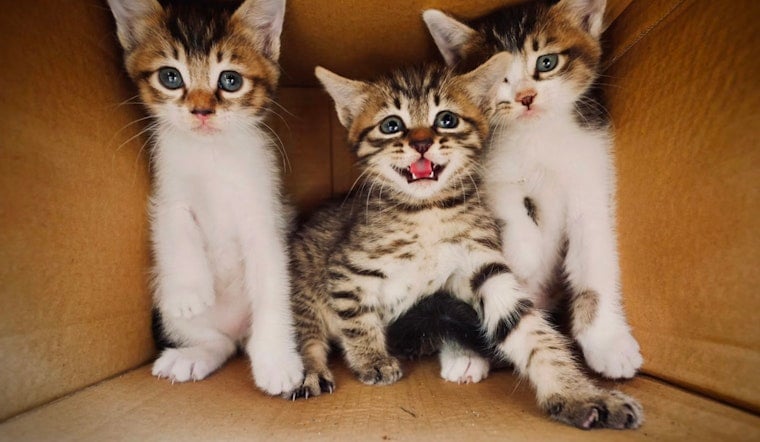
Three kittens found abandoned inside a trash can on Ralph Avenue in Brooklyn are now receiving round-the-clock care, including hand-feedings every two hours, after being rushed to an emergency veterinary clinic on Tuesday. The tiny cats are being kept warm in an incubator as they recover, with plans to transfer them to Animal Care Centers of NYC once they are stable enough to leave intensive care.
The trio were rushed to Veterinary ER for Pets after being discovered in the trash can, according to News 12 Brooklyn. The kittens will eventually be put up for adoption once they are healthy enough, per the same report. News 12 reached out to police about an investigation into who left the cats in the trash can, but as of publication, police had not responded to the outlet's inquiry.
Why the First Hours Matter So Much
Kittens this young cannot regulate their own body temperature, which means exposure to open air or cold surfaces can quickly turn deadly. Neonatal kittens under four weeks old require warming in incubators to around 90 degrees Fahrenheit before they can even safely digest formula, according to the National Kitten Coalition. Feeding a kitten before it has warmed up can lead to fatal digestive failure, which is why the bi-hourly feeding schedule described by News 12 is paired with incubator care rather than food alone.
That kind of intensive, hands-on intervention is exactly what the ASPCA's Kitten Nursery in New York City was built for. The nursery bottle-feeds neonatal kittens every two to five hours and has treated more than 11,000 vulnerable felines transferred from municipal shelters since it opened in 2014, according to the ASPCA.
What Charges Could Apply if a Suspect Is Found
If investigators identify who left the kittens in the trash can, New York law provides several potential charges. Under New York State Agriculture and Markets Law Section 355, abandoning an animal or leaving it to die in a public place is a misdemeanor punishable by up to one year in prison and a fine between $500 and $1,000, according to the New York State Senate. Separately, Agriculture and Markets Law Section 353 makes it a misdemeanor to fail to provide proper sustenance, including food, water, or veterinary care, carrying up to a year in jail and a $1,000 fine, per the NYC Department of Health. Whether investigators determine the kittens were also deprived of food or care before being abandoned remains an open question tied to the case.
Criminal investigations into animal abuse across the five boroughs fall to the NYPD's Animal Cruelty Investigation Squad, which works alongside the ASPCA in a partnership dating back to 2014 — the ASPCA handles medical evaluation, forensic analysis, and rehabilitation for rescued animals like these kittens. The two agencies have jointly assisted more than 5,000 animal cruelty victims since the initiative launched, the ASPCA has said. City residents who want to report suspected ongoing cruelty or neglect can do so through NYC311 or anonymous NYPD Crime Stoppers tips, while crimes in progress warrant an immediate call to 911.
A Rescue That Lands in an Already Strained System
The Brooklyn kittens' eventual transfer to Animal Care Centers of NYC comes as the city's shelter system remains under significant strain. Kittens can make up as much as 83% to 84% of all feline intakes at ACC during the city's annual kitten season, which typically runs from spring through early autumn, according to the ASPCA. That seasonal surge has repeatedly pushed the shelter system toward its limits — Hoodline previously reported that ACC neared its roughly 1,000-animal capacity in July, prompting Mayor Eric Adams to allocate $1 million in emergency funding for staffing and space after a similar intake pause hit the system in 2025.
A decade-long ASPCA study of cruelty cases handled jointly with the NYPD between 2013 and 2022 found that while cats made up only 15% of investigated cases, they were disproportionately likely to suffer intentional harm or severe physical injury compared to dogs, which more often suffered passive neglect. Cats are estimated to make up 43% of the U.S. pet population, yet they remain underrepresented in shelter cruelty reports, the ASPCA has noted. Separately, a New York State law that took effect in December 2024 barred retail pet stores from selling cats, dogs, and rabbits, a measure meant to push prospective pet owners toward shelter adoption and away from mill-driven sales, according to NYC Health.
For now, the three Brooklyn kittens remain under close watch, warm and fed every two hours as they wait to grow strong enough for the next step toward a permanent home. Whether investigators can trace who left them in the trash can on Ralph Avenue, and whether foster caregivers step forward before the kittens leave intensive care, remain unresolved questions in a case still very much in progress.





