

























































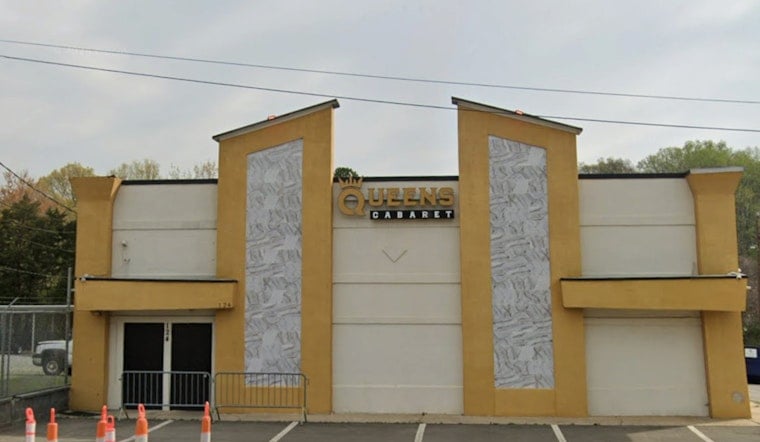
A woman and two men were seriously hurt early Sunday after a gunman opened fire into a car occupied with people outside Queen's Cabaret on Atando Avenue, damaging a Porsche and a Chevrolet Impala parked nearby. The shooting happened around 2:30 a.m., and all three victims were taken to the hospital. No arrests have been made.
According to WBTV, Charlotte-Mecklenburg police filed an incident report detailing the damage to the two vehicles, one a 2018 Porsche Panamera and the other a 2017 Chevrolet Impala. A separate report from WCNC indicates CMPD classified the case as aggravated assault — specifically assault with a deadly weapon inflicting serious injury and discharging a weapon into occupied property — and estimated the combined damage to both vehicles at $5,000.
A Building With a Bloody Track Record
Sunday's shooting is the third violent incident tied to the same building in the 100 block of Atando Avenue since 2023. In November 2025, two people were killed outside the same venue: 29-year-old security guard D'andre Weaver and 44-year-old Glenntavis McCorey, who was shot inside a vehicle and crashed nearby, according to a report from Charlotte Alerts News described by the outlet as occurring around 4:47 a.m. Hoodline previously covered that double homicide investigation when it broke last December.
Before that, the property was the site of another fatal shooting in May 2023, when it operated under the name Diamonds of Charlotte. WSOC-TV reported that 26-year-old security guard Nicholas Davon Cole was killed after stepping in to help another guard during a fight sparked by a patron using a fake ID; CMPD charged suspect Adonis Smith with first-degree murder in that case. Charlotte Alerts News also reported that the property previously operated under owner Corey Headen, who was charged in 2019 with failure to supervise following a separate fatal shooting at his former club, Nikki's.
City Weighs Tighter Rules for Nightlife Venues
The pattern of violence at the Atando Avenue address comes as Charlotte officials consider new restrictions on nightclubs and strip clubs citywide. WSOC-TV reported in June that the city council's public safety committee voted to propose mandatory post-permit safety inspections, a ban on alcohol sales after 2 a.m., and legal grounds to revoke a venue's operating permit if violent crime occurs on site. That proposal still needs approval from the full city council.
State law already gives authorities tools that could apply to a location with a documented history like this one. Under Chapter 19 of the North Carolina General Statutes, the North Carolina Department of Public Safety notes that state and local officials can pursue civil nuisance abatement actions against commercial properties that harbor habitual violence, with penalties that can include padlocking a property, fines, and restrictive covenants. CMPD's own Alcohol Beverage Control Unit also holds authority to conduct administrative inspections of liquor-licensed venues and issue opinions that can affect a business's state ABC permit, per the department's guidance on the unit's role.
Gun Violence Along a Troubled Corridor
The stretch of Atando Avenue near Queen's Cabaret has seen other deadly gunfire beyond the club itself. WCNC reported that a pre-dawn shooting in the 200 block of Atando Avenue in September 2025 killed 18-year-old Jan Keneth Meza Figueroa and left two others, including a 17-year-old, seriously injured.
The violence comes even as citywide numbers have generally trended downward. Charlotte's 2026 midyear public safety briefing showed violent crime falling 8% in the first half of the year compared to the same period in 2025, though homicides ticked up slightly from 39 to 40 cases, according to the city's report. The city's full-year 2025 report had shown an even steeper 21% drop in violent crime and a 13% decline in homicides, alongside a 23% jump in illegal gun seizures by CMPD officers. Despite those broader gains, the repeated bloodshed tied to the building on Atando Avenue underscores how individual commercial corridors can remain persistent trouble spots even as citywide trends improve.





