

























































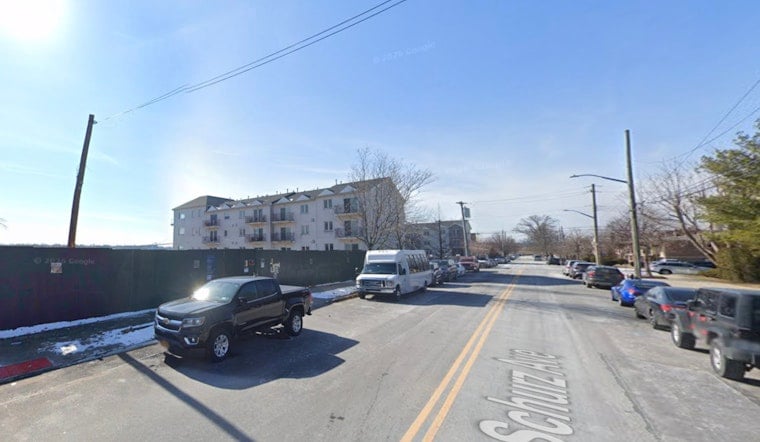
A half-acre stretch of East River waterfront in Throggs Neck, wedged between the Throggs Neck and Whitestone bridges, could become the Bronx Land Trust's first community garden east of the Bronx River, but the plan hinges on winning a competitive round of New York State funding. The parcel at 2670 Schurz Avenue carries deep roots in the neighborhood: it was the last piece of land still held by a member of the Zeumer family, whose patriarch built a beach club and soccer field there in the 1930s. Now, after years of shifting redevelopment proposals for the site, community groups are lining up letters of support to help seal a deal that would preserve it as open space instead.
According to the Bronx Times, the Bronx Land Trust has been soliciting community support to purchase the waterfront lot, contacting local community groups, Community Board 10 and elected officials for letters of support ahead of a state funding application. The Open Space Institute has reached an agreement with the property owner to buy and protect the land as a community garden, according to Terrence Nolan, who described the proposed garden as the neighborhood's crown jewel for generations. Nolan said the property will be transferred to the Bronx Land Trust at closing, and the acquisition would mark the trust's first venture into the East Bronx, where all 18 of its existing gardens currently sit west of the Bronx River, per the same account.
From Zeumer's Beach Club to a Contested Vacant Lot
The proposed acquisition includes two vacant lots located between Redwood Club at 2680 Schurz Avenue and Bridgewater Estates at 2650 Schurz Avenue. The land traces back to Gene Zeumer, who created a beach club and soccer field on the site in the 1930s, complete with tennis courts and a restaurant, according to the report. That complex, later known as Throggs Neck Stadium and originally called German Stadium, was eventually sold off piece by piece for residential development. Carol Gross, Zeumer's daughter, formerly owned the property before it changed hands.
Public real estate records show the parcel sold in May 2021 for $1,275,000, according to PropertyShark, before transferring to Schurz Ave BX LLC. That company razed the former residence — a two-story, two-family brick building between Buttrick and Davis avenues — two years before publication, per the Bronx Times report. Schurz Ave BX LLC originally pitched a condominium project for the property, and city permit records reported by New York YIMBY in November 2021 show the developer, Vertical Community Development, had filed applications for a three-story, 24-unit residential building with 36 parking spaces at the address. The most recent development plan for the site instead called for two detached two-family homes.
Local Leaders Rally Behind the Garden Plan
State Assemblyman Michael R. Benedetto backed the garden project, saying it offers an alternative to constructing more two- and three-family houses in Throggs Neck, per the Bronx Times account. Jack McCarrick, president of the Throggs Neck Homeowners Association, is among those who supported the Open Space Institute's bid for the land. Jewel Moten wrote that the project would transform the vacant lot into a secure, community-driven space, the outlet reported.
The Bridgewater Estates Homeowners Association strongly supports the initiative and plans to partner with the Bronx Land Trust on design and stewardship of the proposed garden once it's established. Ramon Andino serves as president of the Bronx Land Trust board, an organization whose mission is to preserve, improve and promote community-managed open spaces for the benefit of all, according to the report.
Why State Approval Is the Deciding Factor
The deal's fate rests largely with the New York State Department of Environmental Conservation, which controls the funding mechanism the Bronx Land Trust depends on to acquire and permanently protect the property. In November 2025, the agency announced $25.2 million in grant opportunities funded by the 2022 Environmental Bond Act and Environmental Protection Fund, specifically designating urban community garden acquisitions as eligible priority projects, according to the Office of Governor Kathy Hochul. That funding pool has limited availability and heavy competition across New York State, which is why letters of support from Community Board 10 and area homeowners groups carry weight in the application, per the Bronx Times reporting.
The push also fits into a broader state policy goal: legislation Governor Hochul signed in 2022 committed New York to protecting 30 percent of its land and inland waters by 2030, a target known as “30x30” that has made urban open-space protection a priority for state funding allocations, according to the New York State Department of Environmental Conservation. The Bronx Land Trust itself began in 1999, an outgrowth of an earlier Trust for Public Land initiative that purchased 62 New York City community gardens for $3 million to keep them from being sold at a municipal auction under then-Mayor Rudy Giuliani, with ownership of the Bronx parcels eventually passing to the newly formed land trust, according to the Trust for Public Land.
A Neighborhood Wary of More Waterfront Development
The Schurz Avenue effort arrives amid a broader wave of land-use activism along the Throggs Neck shoreline. Bronx Community Board 10 voted 29-5 in March 2025 to advise against Bally's proposed $4 billion casino and hotel project at nearby Ferry Point Park, according to Save the Sound. Ferry Point Park itself, a 413.8-acre municipal park along the East River peninsula, sits as the nearest major public waterfront green space to the proposed garden site.
Community Board 10 oversees advisory land-use decisions across a 6.7-square-mile district spanning Throggs Neck and nine other East Bronx communities, a territory with more than 10 miles of coastline along the East River and Long Island Sound. Whether the half-acre lot on Schurz Avenue ultimately becomes a community garden or more housing now depends on how the state's competitive grant process shakes out — a decision that will determine whether the last piece of the old Zeumer family property returns to public use or continues down the development path other parts of the site have already taken.





