

























































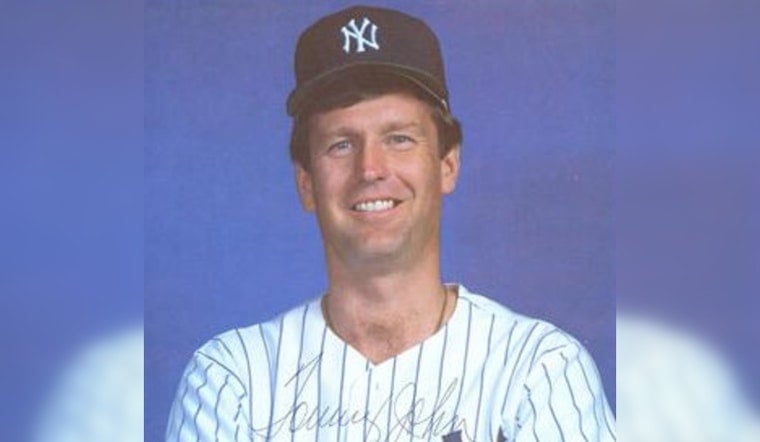
Tommy John, the pitcher who won 288 games across 26 major league seasons and whose name became permanently attached to the most consequential surgery in modern sports medicine, has died at 83. He passed away peacefully at his home in Lakewood Ranch, Florida, surrounded by his wife Cheryl and family, according to a statement from his agent.
The statement, relayed by his agent Mike Maguire, was reported by CBS News. John had been receiving hospice care at his Florida home, and he carried a prior diagnosis of bladder cancer, according to reporting from the New York Post. Just over a week before he died, John shared a farewell letter through the New York Yankees, thanking Dr. Frank Jobe and recalling advice his father gave him in 1961, before he left for his first professional pitching job: that whether he made it big or not, he would always just be Tommy John from Terre Haute, Indiana.
A Career Nearly Ended at 31
Born May 22, 1943, in Terre Haute, Indiana, John graduated from Gerstmeyer High School and signed with Cleveland as an amateur free agent, making his major league debut with the then-Indians in 1963 at age 20. He was later traded to the White Sox before the 1965 season, spent seven seasons in Chicago, and earned an All-Star nod in 1968. The Los Angeles Dodgers acquired him in December 1971 in a trade for Dick Allen, per the Post's account.
Everything nearly stopped on July 17, 1974, when John suffered a devastating left elbow injury pitching against the Montreal Expos, tearing the ulnar collateral ligament in his left elbow. Dr. Frank Jobe recommended an unprecedented operation, replacing the torn ligament with a tendon taken from John's right forearm that September. According to background compiled by UAB Medicine, Jobe privately estimated John's odds of a full recovery and return to pitching at roughly 1 in 100.
The Bionic Man's Comeback
John missed the entire 1975 season recovering from the surgery, then returned to the Dodgers in 1976 and, remarkably, returned to top form, earning the nickname the Bionic Man upon his comeback. He finished second in National League Cy Young voting in 1977 and went on to sign with the Yankees as a free agent before the 1979 season, winning more than 20 games in each of his first two seasons in New York and finishing second in American League Cy Young voting that year. He later finished fourth in AL Cy Young voting in 1980 while leading the league in shutouts, a feat he also accomplished in 1966 and 1967.
John helped the Yankees reach the 1981 World Series, where the Los Angeles Dodgers defeated New York; he started three games in that series and allowed just one run in 13 innings across his three 1981 postseason appearances. The Yankees traded him to the California Angels in August 1982, and after being released by the Angels midway through the 1985 season, he signed with the Oakland Athletics before returning to the Yankees in 1986. He won 164 games after his elbow surgery, out of 288 for his career, and started 700 games over 26 seasons, throwing 4,710.1 innings — a total that ranks 14th in MLB history since 1901, trailing only Hall of Famers and Roger Clemens among pitchers from the modern era, per Cooperstown Cred.
One Last Wild Play
John's longevity produced some strange baseball trivia along the way. During a start for the Yankees against the Milwaukee Brewers on July 27, 1988, he committed three errors on a single play — bobbling a grounder, then throwing wildly past first base, and wildly again past home plate — setting an MLB record that still stands today. He made his final major league start in May 1989 at age 46, throwing one more pitch before being removed from the game under manager Walt Alston during his Dodgers years, and closed out a career that also included stints managing in the minor leagues, managing the Staten Island Yankees in 2004, and working as a broadcaster for the Yankees and Twins.
Hall of Fame Snub Despite the Numbers
Despite his workload and win total, John was never elected to the Baseball Hall of Fame. Across 15 years on the BBWAA ballot from 1995 to 2009, his support peaked at just 31.7% in his final year of eligibility, according to BBWAA voting records — far short of the 75% threshold required for induction. Among modern-era pitchers not enshrined in Cooperstown, only Roger Clemens has more career victories than John, per the Post.
Yankees teammate Ron Guidry remembered John as a knowledgeable presence who provided comfort in the clubhouse, according to the Post's report. Dodgers-era history aside, John also devoted time later in life to the American Foundation for Suicide Prevention, a cause tied to personal tragedy: his son Taylor died by suicide in 2010, while another son, Travis, survived a fall from a third-story window at age 2. In 1984, John attended the dedication of a baseball field named in his honor in Franklin Lakes, New Jersey.
A Surgery That Reshaped Baseball
The operation that saved John's career eventually took his name not because Jobe sought the credit, but because he avoided it. Orthopedic surgeon Dr. Christopher Ahmad has explained that Jobe deliberately declined to name the procedure after himself, instead referring to it in medical circles simply as “the surgery I performed on Tommy John,” a phrase that naturally evolved into the now-universal term “Tommy John surgery,” according to Columbia University Orthopedics.
What began as a 1-in-100 long shot is now closer to routine. A study published in The American Journal of Sports Medicine found an 83% return-to-pitching rate in MLB and a 97.2% return rate across Major and Minor League Baseball combined for pitchers who underwent the procedure. Research from UAB's Heersink School of Medicine published in October 2025 found that roughly 35% of active MLB pitchers have a history of UCL reconstruction, up from about 25% in 2015. Perhaps most striking, physical therapy research from 2026 indicates that 57% of all Tommy John surgeries are now performed on teenage pitchers aged 15 to 19, according to In Motion Physical Therapy, driven by overuse, year-round competition, and early sports specialization — a trend Hoodline has tracked in a recent elbow-surgery comeback story and in coverage of pitchers like Jordan Westburg and Brad Keller losing their seasons to torn UCLs this year.
Current Yankees ace Gerrit Cole, who underwent Tommy John surgery himself in 2025, said John had tremendous success after his own surgery and effectively wrote the book for the generations of pitchers who followed him, per the Post's report. In his farewell letter shared through the Yankees, John thanked Jobe directly for the operation that gave him 14 more years on the mound and, in the process, changed the sport far beyond his own career.




