

























































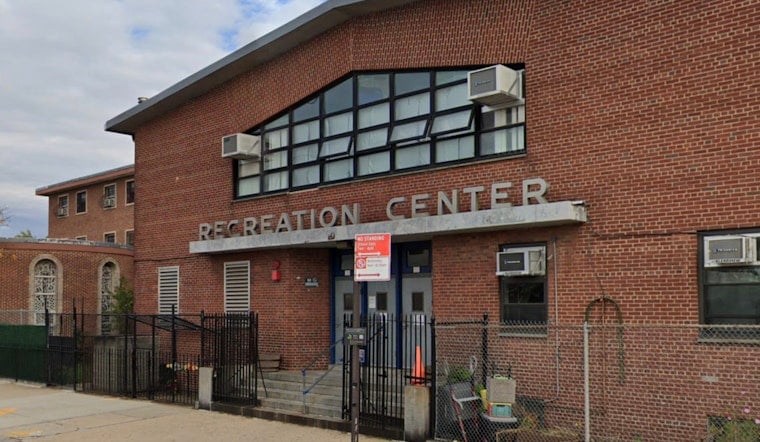
Families at P.S. 372, a special-needs elementary school sitting near Brooklyn's contaminated Gowanus Canal, say their roughly 450 children may have been breathing toxic fumes inside the building for two years despite a state-installed fix meant to clear the air. An air-filtration system installed in 2025 at the school's annex on First Street failed to adequately purify the contaminated air, and hazardous substances including potentially cancer-causing vapors have continued to turn up inside the building.
According to the New York Post, the New York State Department of Environmental Conservation installed the air-filtration system at the P.S. 372 annex, which hosts gym, science, and specialty classes for all grades, as well as pre-K and kindergarten classrooms. The main P.S. 372 building, located at 512 Carroll Street, received no mitigation work at all. P.S. 372, known as The Children's School, was established in 1992 as New York City's first public full-inclusion elementary school, teaching general education and District 75 special education students together in every classroom with multi-educator support teams, according to the school's own PTA.
Julia Finnegan, who has two children entering fifth grade and pre-K at the school this fall, told the Post that chemicals and vapors were still found in the air while the filter system was running. She said officials had reassured the school community that lifetime exposure would be needed for the chemicals to cause health risks, but argued that children in pre-K and kindergarten could spend half their lives in that space exposed to the fumes.
What State Testing Found
The DEC collected air and soil samples from both P.S. 372 buildings in March 2024 and, per the same reporting, determined only the annex results warranted intervention. The DEC and the New York State Department of Health reported that benzene and xylene levels exceeded typical indoor-air levels; both chemicals are described in the Post's reporting as cancer-linked byproducts of the gas industry. Benzene is classified as a known human carcinogen by the U.S. Environmental Protection Agency, with long-term inhalation exposure linked to an increased risk of leukemia and severe blood disorders.
By November 2025, officials found that no secondary source of soil vapor intrusion had been identified, even though the sub-slab depressurization system installed that year was reportedly operating as designed. That system works by applying continuous negative pressure beneath a building's concrete foundation to capture underground toxic vapors and vent them outdoors, a standard remedy the Red Hook Star-Revue notes is commonly used on brownfield sites across the neighborhood. Despite that engineering fix, officials found in July 2025 that air samples remained similar to pre-mitigation results.
The DEC and DOH ultimately determined that the detected chemicals did not pose an increased health risk, according to the Post's reporting. Even so, the agencies reported in July 2026 that officials were unsure whether the bad air was coming from the Gowanus Canal itself or from unknown secondary sources, with some officials suspecting a leaking underground fuel tank or a nearby Con Edison facility. The DEC and DOH are now developing additional mitigation measures for volatile organic compounds, per a state letter cited in the Post's reporting, and plan to add a heat recovery ventilator system that replaces dirty warm indoor air with fresh outdoor air.
Community Pressure Mounts
The Gowanus Community Advisory Group's land use committee formally requested a health risk evaluation for the children on July 31 and sent a letter to the DEC that same day demanding an explanation for the contamination and more transparency about mitigation efforts, urging the agency to respond within 15 days. Established in 2010 following the Gowanus Canal's federal Superfund designation, the CAG is described by the Gowanus Canal Conservancy as the largest EPA Superfund community advisory group in the country, hosting monthly oversight meetings on local environmental cleanup and safety.
Walter Hang, president of an environmental health research group, said the state failed to protect the health of students, faculty, and staff at the school, according to the Post's reporting. The New York City Department of Education said it is committed to keeping schools safe and is working with the state to improve air quality at P.S. 372, but parents like Finnegan say they only recently learned their children may have been endangered for two years. Rosa Amato, the school's principal, and Orlando Ruiz, a priest at Our Lady of Peace Church, which owns the P.S. 372 buildings, are named in the Post's reporting as figures connected to the school's operation.
A Neighborhood Built on Contaminated Ground
P.S. 372's troubles are unfolding against the backdrop of a 1.8-mile waterway the EPA designated a federal Superfund site in April 2010 after more than a century of industrial pollution, including coal tar waste from former manufactured gas plants, PCBs, and volatile organic compounds, per the Gowanus Canal Conservancy. State environmental and health officials have previously held public briefing sessions inside the P.S. 372 gymnasium in April 2023, October 2023, and September 2024 to present soil vapor intrusion findings to neighborhood residents, according to New York State Department of Environmental Conservation records.
During the 2023–2024 heating season, the state conducted a Gowanus-wide soil vapor intrusion investigation that tested 113 buildings and identified 15 properties, including the school, with chemical vapor levels severe enough to require state-mandated mitigation systems, the Star-Revue reported. Community members have connected the lingering contamination to the New York City Council's November 2021 approval of an 82-block rezoning of Gowanus, one of the largest upzonings in city history, which is paving the way for more than 8,500 new housing units. Local advocacy coalition Voice of Gowanus has warned regulators that approving new construction on partially remediated land allows underground toxic plumes to migrate beneath neighboring residential blocks and school sites, according to City & State New York.
Gowanus sits in a FEMA high-risk flood area with a shallow water table, and severe storms can push contaminated groundwater closer to the surface, accelerating vapor migration into building basements, City & State reported. With classes set to resume soon, parents and advocates say P.S. 372 may not be safe for the coming school year, even as the DEC and DOH continue working on additional fixes for the annex basement.





