

























































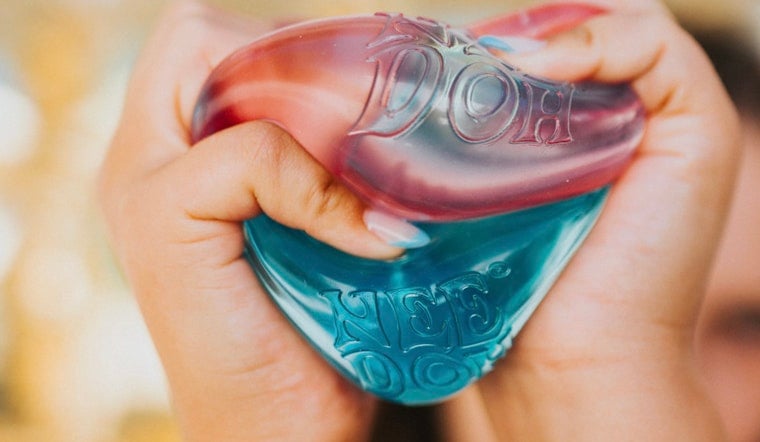
Squishy toys have become an obsession for kids across the tri-state area, but a hands-on test using a store-bought air quality detector found elevated formaldehyde readings in every single toy checked, a discovery that has parents messaging in with worry and a pediatrician urging families to think twice before buying them.
The testing came from News 12's Turn To Tara team, which ordered an air quality detector online specifically to check the toys after hundreds of tri-state parents reached out with concerns and requests for a follow-up, according to News12 New York. Reporter Tara Rosenblum tested multiple squishy toys from several brands and posted the results in an Instagram video showing elevated formaldehyde readings inside the toys, with the detector registering what the outlet described as excessive gas concentration. News 12 was careful to note that its findings amount to a hands-on check with a consumer device, not an accredited laboratory test.
A Pediatrician's Blunt Warning
Rosenblum brought the results to Dr. Gilbert Herzberg, a pediatrician with White Plains Physician Associates, who did not mince words. Herzberg said parents should be very concerned about stuff like that, and told the station that anything potentially toxic should be avoided altogether. He said the News 12 findings should give parents pause, per Herzberg, and urged families to think twice about buying viral squishy toys for their kids.
Herzberg pointed to how the toys are made and what happens when kids take the viral trend a step further. Squishy toys are typically made of polyurethane foam, and Herzberg explained that heating that foam in a microwave, a stunt that has spread widely on social media, can transform its chemical bonds and create toxic substances. Children microwaving squishy toys as part of the trend has already led to burns elsewhere in the country.
What Independent Testing Has Already Found
The tri-state findings track with broader lab work on the same toys. Consumer Reports tested several popular squishy toys in 2025 and found that one had a pH level as acidic as lemon juice, a discovery serious enough that the organization formally petitioned the U.S. Consumer Product Safety Commission in March 2025 to investigate chemical burn risks from gel-filled squeeze toys like the NeeDoh Nice Cube, according to Consumer Reports. A follow-up lab analysis in December 2025 examined eight popular squishy fidget toys and found that while seven kept neutral pH levels, the NeeDoh Groovy Glob contained internal gel with a pH of 2, matching the acidity of lemon juice or vinegar, as reported by CTV News. That same round of testing showed microwaving gel-filled squishy toys for as little as 15 seconds, mimicking the viral trend, can cause the outer shell to burst and push internal material temperatures above 200 degrees Fahrenheit.
The federal government has taken notice too. On the same day the tri-state testing was published, the U.S. Consumer Product Safety Commission issued a safety alert warning parents to avoid unbranded or counterfeit squishy toys that give off strong chemical odors or have an oily texture, citing elevated risks of skin irritation and burns, according to Click2Houston. An analysis of federal CPSC data published in July found at least 16 formal reports involving NeeDoh-brand squishy toys in early 2026 alone, compared with just three total reports for all of 2025, as Hoodline previously reported.
A Regulatory Gap Years in the Making
The concerns raised by the tri-state testing echo warnings that international regulators flagged years ago. Back in 2018, the Danish Environmental Protection Agency analyzed a dozen foam squishy toys and detected unacceptably high emission rates of volatile organic compounds, including N,N-dimethylformamide and toluene, prompting Denmark to order a nationwide commercial sales ban. In 2021, the European Commission's Scientific Committee on Health, Environmental and Emerging Risks concluded that chemical risk evaluations for the toys must account for oral and dermal exposure in addition to inhalation, since children frequently bite, suck, or sleep with them. More recent research from the Norwegian Institute for Air Research, published this year, identified nearly 150 different volatile organic compounds across tested squishy toys and warned that an off-gassing toy left in a child's bedroom can generate higher VOC concentrations than the room's furniture and building materials combined, per Nation Thailand.
In the United States, the mandatory toy safety standard known as ASTM F963-23 became federally enforceable in April 2024 under 16 CFR Part 1250, and it regulates heavy metals, lead, and liquid cleanliness. But it does not set maximum emission limits for off-gassing volatile organic compounds or formaldehyde from solid polyurethane foam, according to the Consumer Product Safety Commission. Updated guidance from the Agency for Toxic Substances and Disease Registry notes that airborne formaldehyde exposure below 1 part per million can trigger acute eye, nose, and throat irritation, with children facing heightened vulnerability because of smaller airway dimensions and higher relative inhalation volume.
The tri-state findings add to a string of similar warnings that have surfaced across the country this year, including reports of children burned in Las Vegas, Boston, Pittsburgh, and Long Island after squishy toys ruptured or were heated as part of viral trends. For now, families in New York, New Jersey, and Connecticut are left weighing a genuinely popular kids' toy against a pediatrician's plain advice: if something is potentially toxic, it is better left off the shelf.




