

























































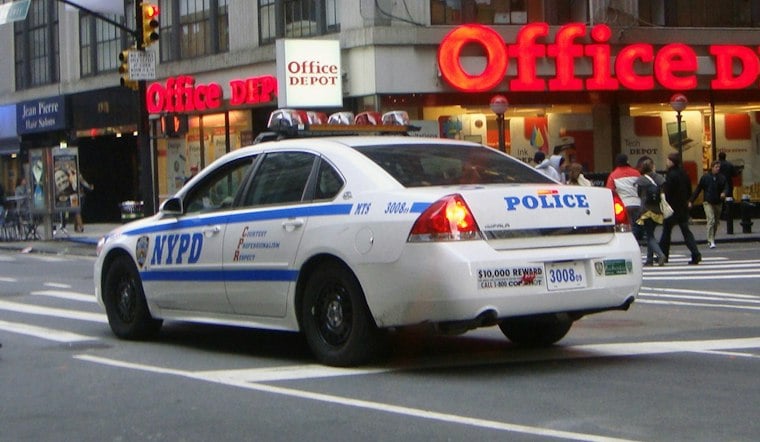
An off-duty NYPD officer was arrested after he allegedly jumped into a car stop in Inwood and grabbed one of the officers handling it. Daniel Almonte, 35, was taken into custody following the early-morning confrontation and has since been suspended from the department without pay.
According to cops and sources cited by the New York Post, Almonte was arrested after interfering with the Upper Manhattan stop and grabbing an officer who was conducting it. Law enforcement sources told the paper that Almonte intervened after seeing officers interacting with a person who had been pulled over near Dyckman Street and Vermilyea Avenue in Inwood, a stop that took place around 2:30 a.m.
Sources said officers initially warned Almonte to move back before the situation escalated. He was ultimately placed in handcuffs, according to the same sources.
Charges and a Desk Appearance Ticket
Police charged Almonte with obstructing governmental administration and disorderly conduct, per officials cited in the report. Prosecutors said he was released with a desk appearance ticket, which requires him to return to court at a later date rather than being held in custody for arraignment. Under New York State's court system, a desk appearance ticket means a defendant is not held for arraignment but is instead given a ticket specifying when they must appear, according to New York Courts.
The NYPD itself maintains guidelines for when such tickets are issued instead of a full custodial arrest, a practice governed by state Penal Law section 140.20(1), according to the department's own quarterly reporting.
Suspended Without Pay
Cops told the outlet that Almonte was suspended without pay following his arrest.
Department disciplinary materials note that officers are given wide latitude in carrying out their duties, including the power to restrict individuals' freedom and, in some circumstances, use force. But that discretion comes with an expectation of good judgment: officers are required to stay within the bounds of the law and NYPD policy, according to the department's disciplinary penalty guidelines.
Who Decides an Officer's Fate
Even when outside oversight bodies get involved in misconduct cases, final say rests with the department's top official. The city's Civilian Complaint Review Board can recommend a level of discipline, but the police commissioner retains final authority over the outcome, the board states on its own page describing member-of-service records.





