

























































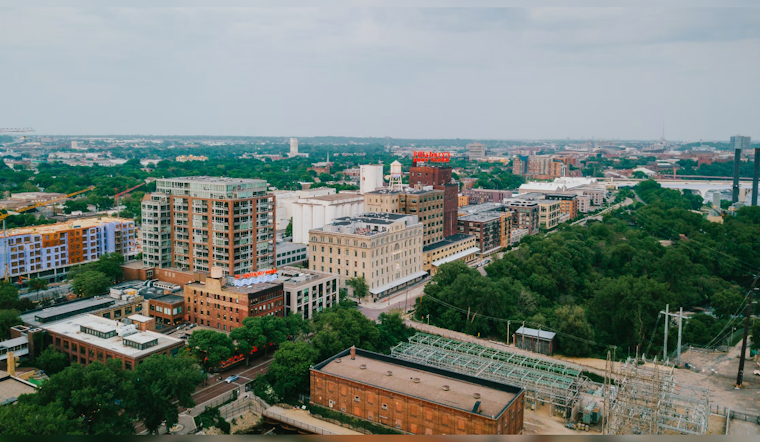
Building a single affordable apartment in the Twin Cities can now cost taxpayers as much as $900,000, according to a review of at least nine subsidized housing projects across the metro. The eye-popping per-unit price tags — driven by historic preservation rules, layered public financing, and specialized services for vulnerable tenants — are reigniting a debate over whether the region's affordable housing strategy needs an overhaul.
The review, conducted by 5 Eyewitness News, found per-unit development costs ranging from $400,000 to more than $900,000 across the projects examined, according to KSTP. Among the priciest was Upper Post Flats at Fort Snelling, where converting 26 historic buildings across 42 acres into 192 affordable units carried an estimated per-unit cost exceeding $900,000 — a project supported by $70 million in Low-Income Housing Tax Credits, per REJournals. The full Fort Snelling redevelopment, led by Dominium and designed by BKV Group, totaled $160 million.
A Downtown Rehab's Price Tag Balloons
In downtown Minneapolis, the Bimosedaa project — a partnership between nonprofit Beacon Interfaith Housing Collaborative, the Red Lake Nation, and service provider Avivo — converted the old film exchange building into 48 permanent supportive housing units for Native American adults exiting homelessness. The station's report notes the project's terra cotta facade was in dangerous condition before renovation. Beacon Interfaith originally estimated the renovation would cost $22 million, but according to city meeting records cited by KSTP, that figure climbed to more than $28 million, putting the per-unit cost at $589,465. Beacon Interfaith did not respond to multiple emails from KSTP seeking comment.
South Minneapolis's Opportunity Crossing tells a similar story on a different site: the Wells Fargo branch that burned during the unrest following George Floyd's killing in 2020. Developed by Project for Pride in Living, the mixed-use project ultimately cost $66 million to build 110 units reserved for people making no more than 50% of area median income, putting its per-unit cost near $500,000. The Minneapolis Public Housing Authority's own records describe the site's broader redevelopment, which also includes commercial space for BIPOC entrepreneurs and a rebuilt Wells Fargo branch.
City Says It's Often the Last Money In
Minneapolis City Council Member Michael Rainville, who joined the council in 2022, told KSTP that affordable housing development has slowed in the city since he took office. When he first arrived, he said, the focus was on building new affordable units, but funding later dried up. Rainville said the city is often the last funder to step in when developers are trying to close financing gaps, and argued that regional leaders need to maximize taxpayer dollars to support as much affordable housing as possible.
The city of Minneapolis declined an on-camera interview with KSTP and instead provided written responses. In those responses, the city said Myron Orfield's research raises important questions but argued that individual affordable housing developments should not be judged solely on neighborhood-wide crime, education, or public-health indicators.
A Professor Questions Decades of Concentrated Investment
That research comes from Myron Orfield, a professor at the University of Minnesota Law School, who published a review in May 2025 examining decades of effort to develop affordable housing in Minneapolis's Phillips neighborhood, where more than $1 billion in public and philanthropic funding was concentrated over recent decades. Orfield's study pointed to worsening health outcomes and rising crime in the neighborhood over that period. He told KSTP the housing produced was neither affordable for the government to build nor affordable for tenants to rent, and said the units did not appear to cause the neighborhood's worsening health outcomes and rising crime — but they didn't improve them either.
Elfric Porte, director of housing, policy and development, told the station that increased building-material prices, higher labor costs, and rising insurance expenses have hit both affordable and market-rate projects alike. Karla Henderson, president and CEO of Project for Pride in Living, attributed the high per-unit costs specifically to rising construction, insurance, and security expenses. Henderson and other affordable housing executives have appealed to state lawmakers for more money to help fill potential gaps in federal funding.
Cash Flow Crunch Hits Existing Buildings Too
The cost pressures aren't limited to new construction. Scott Cordes, an executive at Project for Pride in Living, said only 25% of the organization's properties had positive cash flow in 2024, and that its newer properties are focused on stabilization rather than growth. Older affordable housing properties, KSTP reports, increasingly struggle to compete with newer buildings offering amenities like air conditioning and in-unit washers and dryers.
Those pressures came to a head at Huntington Place Apartments in Brooklyn Park, where nonprofit Aeon sold the 834-unit complex to an out-of-state investment firm to avoid potential foreclosure — a deal CCX Media reported required the Brooklyn Park Economic Development Authority to forgive a $3.8 million loan to Aeon in March 2025. The building will retain its affordability requirements for now, but residents told KSTP they're worried rents may eventually rise. Aeon has since brought in former Minnesota Housing Deputy Commissioner Rachel Robinson as its new CEO following the financial strain.
Public Money Isn't Keeping Pace With Demand
The funding gap extends well beyond any single project. Hennepin County approved a $19.2 million affordable housing package in May 2026 to assist roughly 1,400 units across five programs, but county staff reported that developer funding requests were more than double the available budget. The Metropolitan Council separately awarded $15.75 million in Livable Communities grants in November 2025 to 15 transit-oriented developments, aiming to create 1,672 new affordable units and preserve 306 existing ones across 10 metro cities.
Minneapolis has tried to stretch preservation dollars further, too, allocating $1.68 million from its Affordable Housing Trust Fund in November 2025 to renovate the 80-unit Hiawatha Commons complex in Ward 9. Meanwhile, some developers are drawing the opposite lesson from the cost data: Zachary Development Group acquired the former ADM grain mill on Hiawatha Avenue in June 2026 with plans to demolish it rather than adapt it, arguing that full demolition allows for significantly lower per-unit costs than historic rehabilitation. The competing approaches — expensive adaptive reuse versus cheaper teardown-and-build — underscore the choice facing regional leaders as they try to stretch limited public dollars across a demand that keeps outpacing them.





