

























































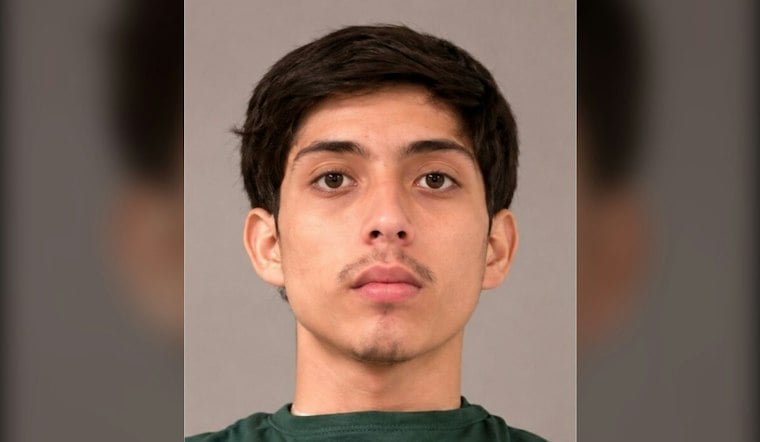
An 18-year-old Brooklyn Center man is charged with second-degree murder in Scott County District Court after his 53-year-old boss was found shot to death in a weedy ditch at Shakopee's Wilkie Park. Emilio Vallejo Ortiz is accused of fatally shooting Ramiro Balmaceda Barrera, a landscape operator from Shakopee, and remains jailed on $2 million bail while a court appearance is scheduled for Friday.
Police were alerted to a body in the park and found Balmaceda Barrera shortly after 7 p.m. on Oct. 4 in weeds roughly 30 feet off a trail, according to the Minnesota Star Tribune. Investigators saw drag marks leading from a large pool of blood to the body, and KSTP reports the man was found with dried blood on his face and signs that he had been dragged.
At the scene, investigators recovered a large pool of blood and ammunition evidence, though accounts of the exact count differ. KSTP reported three spent 9 mm casings and one live round near the trail, while a separate account from the same day, per WJON, put the number at four spent casings and one live round. An autopsy determined Balmaceda Barrera had been shot four times, WJON reported.
Cellphone Data and a Missing Pickup Point to a Suspect
The station's report notes that cellphone data and Menards surveillance footage placed Vallejo Ortiz with the victim on Oct. 3 and contradicted his account of when he returned home that evening. According to the Star Tribune, a Flock street surveillance camera system detected Balmaceda Barrera's unaccounted-for pickup truck in Brooklyn Center the day before the shooting.
That vehicle, a Ford Raptor, turned up a day later. Per Yahoo News, the missing Raptor was found Oct. 5 in an apartment lot about 1.1 miles from Vallejo Ortiz's address, matching the Star Tribune's account that the vehicle was found parked about a mile from his home the day after the shooting.
Police arrested Vallejo Ortiz at his home on Oct. 6, after a detective confronted him about inconsistencies in his account, KSTP reported. Cellphone data placed the men's phones near the park, while surveillance video showed them at Menards. Vallejo Ortiz told investigators he did not remember the day. As of Oct. 9, investigators had not located the gun used in the shooting, according to Fox 9.
A Close Relationship, but No Stated Motive
Balmaceda Barrera's sister told police that her brother and Vallejo Ortiz were very close, and she believed the two were romantically involved. Balmaceda Barrera reportedly let Vallejo Ortiz drive his vehicles, according to the Star Tribune's reporting. The criminal complaint did not address a potential motive for the killing.
Flock Cameras Face Scrutiny Even as They Crack Cases
The role Flock's automated license-plate readers played in tracking down a suspect comes as the technology has become a source of intense debate in Minnesota and around the country, with some law enforcement agencies dropping the cameras while others continue using them as an effective crime-fighting tool. Officials in Plymouth voted Sept. 22 to end the city's Flock contract after expanding its system to 16 permanent and two portable cameras, citing data privacy concerns and declining public trust, according to MPR News. Plymouth joins a growing list of more than a dozen Minnesota jurisdictions that have paused or ended Flock use, though Plymouth police had previously credited the cameras with helping detain suspects after a drive-by shooting and locate a domestic-assault suspect.
Duluth announced it would stop using the technology when its one-year, grant-funded contract ended in early September, and as of Aug. 17, at least seven Minnesota communities reported their Flock cameras had been vandalized, according to the Star Tribune.
The backlash has not been confined to Minnesota. In Florida, a Flock camera captured Lindsey Isaacs's actual vehicle; she did not claim the camera misidentified her SUV, while other evidence pointed to a maroon Dodge Durango, according to Fox 13 News. A congressional hearing has also addressed license-plate readers and data-sharing concerns.
What Minnesota Law Requires
Minnesota law places restrictions on the use of automated license-plate-reader data, according to the Minnesota Office of the Revisor of Statutes. State law also regulates agency use of the readers, per the Minnesota Office of the Revisor of Statutes.





