

























































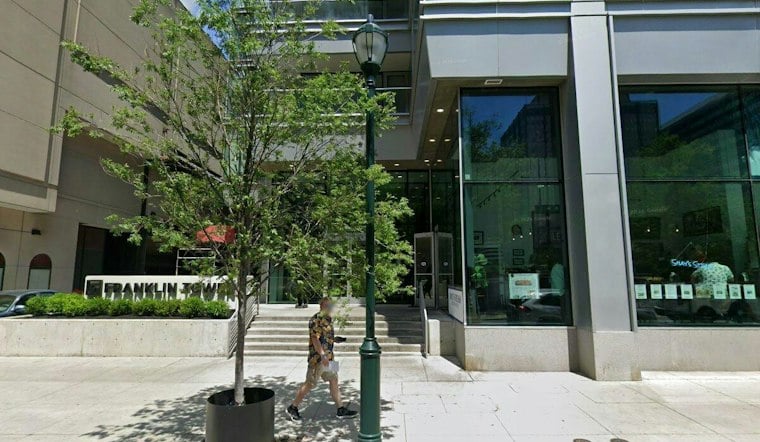
Windows have been shattering and falling from the sides of Philadelphia apartment towers since 2024, and the company that owns those buildings is now suing the Minnesota-based parent company of a glassmaker and a window-unit maker for the second time, trying a new legal strategy to make it pay. PMC Property Group says broken glass has landed on sidewalks, balconies and patios at its properties, forcing the company to hire outside experts and put up emergency scaffolding to protect residents.
PMC filed its latest federal complaint on Oct. 27 in the U.S. District Court for the District of Minnesota, this time naming Apogee Enterprises directly rather than only its subsidiaries. According to the USGlass, the new complaint alleges that Apogee controlled its subsidiaries, Wausau Window and Wall Systems and Viracon, and directed their responses to complaints about the spontaneous glass breakage. Apogee, based in Bloomington, Minnesota, is the parent company of glassmaker Viracon and window-unit maker Wausau; the Star Tribune describes it as reporting nearly $109 million in adjusted profit in fiscal 2025.
The dispute traces back to window systems PMC installed at three Philadelphia properties — Franklin Tower, Riverwalk Tower I and Riverwalk Tower II — in 2021 and 2022. PMC paid Wausau roughly $50 million for those systems, and court documents indicate Viracon manufactured at least some of the insulating glass units Wausau used in them. The exteriors of the Riverwalk buildings consist of almost entirely window systems, per the Star Tribune's reporting, meaning any defect has an outsized impact on residents.
Breakage Blamed On Microscopic Stone Inside The Glass
PMC alleges that nickel-sulfide inclusions contaminated the glass during manufacturing and caused windows to spontaneously break as the panels expanded and contracted with temperature changes, according to the lawsuit cited by USGlass. The developer says breakage at the three properties has increased since 2024 and that it expects glass-related expenses to reach millions of dollars.
Vitro Architectural Glass, a glass manufacturer not involved in the case, explains on its own site that nickel-sulfide inclusions are tiny stones measuring between 0.003 and 0.015 of an inch in diameter that may grow over time and cause tempered glass to shatter for no apparent reason. The company cautions, however, that spontaneous breakage more often has a mundane cause, such as edge or surface damage from handling and glazing, building or framing movement, or poor engineering. Vitro also notes that heat-soaking, a process meant to destroy flawed panels before installation, does not guarantee complete elimination of nickel-sulfide inclusions.
One Riverwalk resident described a frightening incident to a Fox 29 television segment, saying a glass panel fell more than 20 stories and shattered on his balcony, according to the Star Tribune's account of local coverage. PMC is described in local media as Philadelphia's largest apartment owner.
A Legal Detour Through Pennsylvania
PMC's fight with the glassmakers did not start in Minnesota. The developer first filed a federal complaint against Apogee in Pennsylvania, but a district judge removed Apogee from that case on personal jurisdiction grounds. As the legal database VitalLaw reported in August, the court dismissed the claims against Apogee for lack of personal jurisdiction while the case continued against the subsidiaries.
The Pennsylvania court allowed PMC's manufacturing-defect claim to proceed. In that earlier filing, Wausau claimed it did not manufacture the glass and had no way of knowing its source, while Viracon said it could not conclusively identify where the glass came from — conflicting accounts that left PMC pursuing both companies simultaneously. PMC also said Wausau refused to honor express warranties against premature failure of the window or glass, and that Apogee ignored warranty demands sent to both subsidiaries.
Trying To Pierce The Corporate Veil
Having lost its direct claim against Apogee in Pennsylvania on jurisdictional grounds, PMC sued Apogee again, this time in Minnesota, where the parent company is based. The new complaint includes an unjust-enrichment count and two requests for declaratory judgments seeking to establish that Wausau and Viracon are alter egos of Apogee, per USGlass. PMC alleges Apogee used its subsidiaries to obscure which companies supplied products and services, allowing it to avoid warranty liability.
PMC is asking the court to pierce the corporate veil separating Apogee from Wausau and Viracon so that any judgment against the subsidiaries could be enforced directly against the parent company. The complaint does not specify a total damages amount, though PMC is seeking actual, incidental and consequential damages along with interest and attorneys' fees. Apogee has not yet responded to the complaint in court.
Peter Oh, a business law professor at the University of Pittsburgh School of Law, told the Star Tribune that complex corporate structures can exploit limited liability between company entities, but that plaintiffs may still reach a parent company's assets by piercing the corporate veil in certain circumstances. Oh said plaintiffs seeking to do so typically must show wrongdoing along with shareholder control over the subsidiary — the exact theory PMC is now testing against Apogee in its home state.
Viracon glass has been used in more than 100,000 buildings since 1970, according to the company's own website, including Minneapolis's U.S. Bank Stadium. That track record is now part of the backdrop to a case that could determine how far Philadelphia's largest apartment landlord can reach up a corporate chain to recover the cost of windows that keep coming apart.





