

























































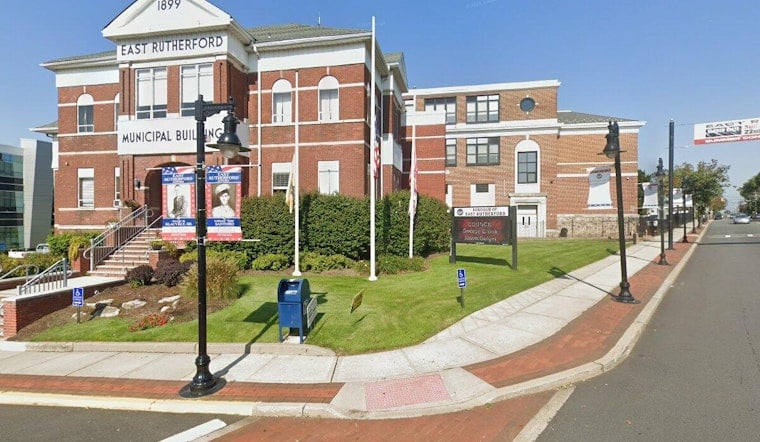
Two New Jersey towns just made an expensive point: that clump of bamboo along your fence line could cost you $100 a day if it creeps onto someone else's property. East Rutherford's borough council and Brigantine's city council both adopted new ordinances this month: East Rutherford's targets running bamboo specifically, while Brigantine's covers bamboo and other invasive plants, joining a growing list of municipalities willing to fine homeowners who let the fast-spreading species get out of control.
East Rutherford's borough council adopted its bamboo ordinance on August 18, according to NJ.com, after the measure was first introduced on July 21. Brigantine's city council followed close behind, introducing its own invasive species ordinance on August 5 and formally adopting it on August 19. Both towns now allow fines of up to $100 for each day a violation continues, and both treat every day of an ongoing violation as a separate offense.
What the New Rules Actually Require
Under East Rutherford's ordinance, property owners, tenants and occupants may no longer plant or install bamboo, and existing bamboo cannot be replanted or replaced once it dies or is removed. Owners with bamboo already growing on their land must notify the borough's code enforcement officer within 180 days of the ordinance's adoption, and they're required to keep any existing bamboo from spreading onto neighboring property, public land or a public right-of-way. The borough is also requiring a 10-foot buffer around property lines, streets and neighboring properties where bamboo cannot be allowed to grow.
Brigantine's version works similarly but casts a wider net, prohibiting the planting of any species on New Jersey's official invasive plant list — not just bamboo. Property owners there must also stop existing invasive plants from spreading onto neighboring or public property, though the requirement doesn't apply if an owner can show the plant actually originated on someone else's land. Neither ordinance forces homeowners to rip out invasive plants that are simply growing on their own property and staying there; the mandate kicks in only once the plants start spreading.
Notice, Deadlines, and Who Pays
Both towns build in a notice-and-cure process before penalties hit. East Rutherford residents who receive a violation notice must submit a removal and restoration plan within 30 days, and once approved, the work must be completed within 60 days. Brigantine gives violators a bit more breathing room — 45 days to submit a plan and 120 days to complete it. In both towns, officials say they'll provide notice and time to address problems before issuing fines.
If an East Rutherford property owner fails to act, the borough may remove bamboo that has spread onto borough property or a public right-of-way itself, then charge the owner for the cost — a bill that could become a lien against the property. Brigantine similarly requires violators to cover their own removal and restoration costs. A Brigantine code enforcement officer will order removal of an invasive plant once a complaint is filed and a spread is confirmed.
Brigantine officials said invasive plants can alter soil and water conditions, crowd out native vegetation, reduce wildlife habitat and complicate future land restoration efforts, according to NJ.com's report on the ordinance. Brigantine's ordinance formally adopted the invasive species list maintained by New Jersey's Department of Environmental Protection and Department of Agriculture, and the borough renamed its municipal code section from simply “bamboo” to “bamboo and invasive species” to reflect the broader scope.
The Real Cost If You Wait
Professional removal of an established bamboo infestation in New Jersey typically runs anywhere from $5,000 to more than $30,000, depending on soil access, rhizome depth and local disposal rules, according to NJ Bamboo Landscaping. Contractors sometimes initially underbid jobs because underground rhizomes can be hidden below the surface.
That underground spread is exactly why local governments treat running bamboo as more of an infrastructure hazard than a garden dispute. Running bamboo species spread laterally through rhizomes that can grow 10 to 20 feet per year and are capable of penetrating asphalt, concrete driveways and even building foundations, according to Brush Busters. Those rhizomes can travel quietly underground for years before any shoots ever break the surface in a neighbor's yard. According to a Rutgers University publication, bamboo spreads underground through rhizomes that connect individual plants and allow them to share water and nutrients.
Not Every Town Has Found This Easy
East Rutherford and Brigantine aren't the first New Jersey municipalities to try this. Edison Township adopted its own bamboo restrictions in 2025, and Flemington adopted similar rules this year. Brick Township and Lacey Township have also been mentioned in discussions of bamboo control, while Belmar proposed a bamboo ordinance in 2021, according to Patch. The Borough of Bradley Beach strengthened its own bamboo and invasive vegetation ordinance, updating Chapter 120 of its municipal code in both 2025 and 2026 to specifically regulate running bamboo alongside prohibited species like Japanese knotweed and tree-of-heaven, per records from the Borough of Bradley Beach.
But enforcement hasn't gone smoothly everywhere. Edison recently considered repealing its own bamboo restrictions after residents pushed back, and the township received 25 formal complaints about encroaching bamboo even as officials weighed walking the ban back, according to New Jersey 101.5. Property owners there argued it was unfair to penalize bamboo that had often been planted decades earlier, long before anyone anticipated a fine for it.
A New Statewide Framework Behind the Local Rules
The municipal crackdowns are unfolding against the backdrop of a new statewide law. On January 20, 2026, then-Governor Phil Murphy signed the New Jersey Invasive Species Management Act on his final day in office, establishing a permanent regulatory framework and re-establishing the state's Invasive Species Council, according to New Jersey Audubon. New Jersey had previously been one of the few regional states without statutory restrictions on invasive plant sales. An earlier version of the bill was vetoed by Murphy in January 2024 over agency jurisdictional concerns, and lawmakers spent over two decades pushing for state oversight before the revised legislation finally passed, per Princeton Hydro.
Starting January 1, 2027, the state will ban propagating plants on its prohibited list unless the grower holds a conditional use permit, and by January 1, 2030, New Jersey will restrict selling, distributing and exporting those listed species altogether. The state's invasive plant list includes running bamboo, tree-of-heaven, Bradford pear trees, Norway maple, English ivy and Japanese barberry. Brigantine's ordinance explicitly follows the state's adoption of the Invasive Species Management Act.
The financial argument for state action dates back further. A 2009 report from New Jersey's original Invasive Species Council found that invasive plants caused an estimated $290 million in annual economic damage to state agriculture, before that council was disbanded in 2010. Former Governor Jon Corzine had created the initial council in 2004, but oversight lapsed under later administrations until this year's law revived it.
Separately, New Jersey Senate Bill 336, introduced in January 2026, addresses the sale, planting, containment and liability related to running bamboo, according to the New Jersey Legislature. Because the state law itself doesn't mandate removing existing home landscaping, it's still up to towns like East Rutherford and Brigantine to sort out property-line disputes and remediation orders — and, as Edison's experience shows, that enforcement can get complicated once daily fines are actually on the table.





