

























































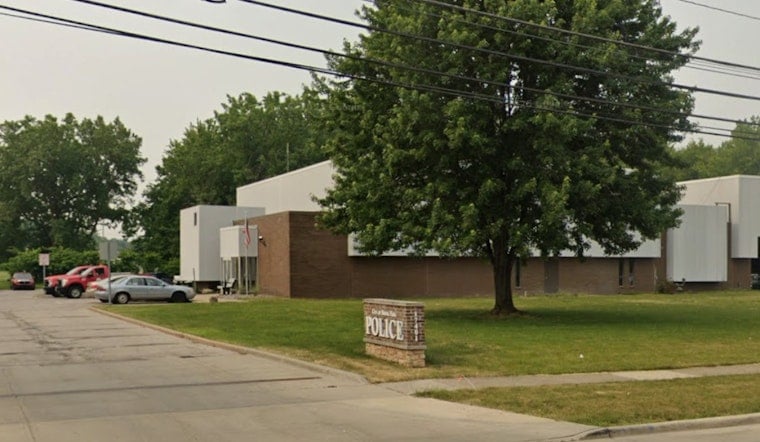
Two motorcyclists on unplated bikes led police on separate high-speed chases through Brook Park within a 12-hour span in late July, both riders running red lights and topping 90 mph before vanishing into Cleveland traffic. Neither rider has been identified, and both cases remain open.
The first chase began around 8:30 p.m. on July 29 when Ohio State Highway Patrol troopers tried to pull over a motorcycle with no license plate traveling northbound on Interstate 71 near Ohio 82, according to Cleveland.com. The rider, described as a man in a black helmet, black hoodie with white lettering on the back, and khaki pants, weaved recklessly through traffic and hit speeds of 100 mph on a maroon sports bike. Troopers lost sight of him before he ran a red light while turning from the I-71 exit ramp onto westbound Snow Road, then ran another light on Snow Road west of Engle Road.
Brook Park police picked up the pursuit and activated their overhead lights and siren, but the rider turned northbound onto Ohio 237, running yet another red light, before merging back onto I-71 northbound. Brook Park officers terminated that leg of the chase north of Brookpark Road on Ohio 237, a decision consistent with statewide vehicular pursuit standards set by the Ohio Collaborative Community-Police Advisory Board, which certifies the department and requires officers to weigh road conditions and public safety risk before continuing a pursuit. State troopers then picked up a drone to track the fleeing motorcycle from the air.
A Second Rider, a Second Chase, Less Than a Day Later
Roughly 12 hours later, at around 8:30 a.m. on July 30, police tried to stop a second unplated motorcycle — this one a green sporty bike — traveling eastbound on Brookpark Road near West 139th Street. The rider, an unidentified man in a black helmet, black hoodie, and tan or brown pants, accelerated after looking back and spotting police, according to the same Cleveland.com report. He then ran several red lights and stop signs while exceeding 90 mph, cutting eastbound through Parma and Brooklyn before entering Cleveland.
Police lost sight of that rider at Dellbank and Brookside drives in Cleveland, and he too remains at large. Both incidents unfolded along Snow Road and Ohio 237, arterial routes that ring Cleveland Hopkins International Airport and feed directly into Interstate 71 and Interstate 480 — corridors already burdened by dense airport traffic and frequent signalized intersections, according to OKRoads.
Why Troopers Turned to Drones Instead of a Longer Ground Chase
The aerial tracking deployed during the first chase reflects a statewide upgrade the Ohio State Highway Patrol completed in February 2025, when Governor Mike DeWine announced the completion of an aerial downlink expansion that beams live video feeds from aircraft and drones directly to ground commanders during pursuits, per the Ohio Governor's Office. The technology lets troopers keep eyes on a fleeing vehicle even after ground units break off, coordinating response without prolonging a dangerous street-level chase.
Under Ohio Revised Code Section 2921.331, willfully fleeing or eluding police after a visible or audible signal to stop is a felony, according to the Ohio Revised Code. The offense is typically a fourth-degree felony but escalates to a third-degree felony when the driving creates a substantial risk of serious physical harm to people or property — a threshold both riders' reported speeds and red-light running could potentially meet if either is caught. A conviction carries a mandatory license suspension of six months to three years and six points on the driver's record, and courts can impose up to 18 months in prison for a fourth-degree felony or 36 months for a third-degree felony, according to the Dominy Law Firm.
The Broader Risk of High-Speed Motorcycle Pursuits
Ohio recorded more than 3,600 motorcycle crashes in 2025, including 191 fatal ones, with troopers pointing to high speeds and failure-to-yield incidents at intersections as leading factors in the worst collisions. A state safety bulletin also found that 53% of motorcyclists deemed at fault in fatal crashes lacked a valid motorcycle license endorsement, and 10% of motorcycle crashes involved alcohol or drug impairment. Neither of those statistics has been tied to either Brook Park rider, but they underscore why officers weighed calling off ground pursuit rather than chasing at triple-digit speeds through populated intersections.
Nationally, a November 2024 study published by the National Institutes of Health found more than 3,000 pursuit-related fatal crashes across the country between 2017 and 2021, a trend that has pushed law enforcement agencies toward stricter pursuit-termination guidelines rather than chasing every fleeing vehicle to its end. Brook Park's decision to break off the first pursuit on Ohio 237 fits that broader shift.
The stretch of road where both chases occurred sits near planned infrastructure work: the Northeast Ohio Areawide Coordinating Agency approved an $82 million improvement package in January 2026 that includes upgrades to the I-71 interchange at Snow Road, intended in part to ease congestion expected near the proposed $3.4 billion Cleveland Browns stadium project. Whether investigators can use the state's aerial video or nearby traffic cameras to identify either unplated motorcycle or its rider remains an open question, and as of the latest reporting, both men remain unidentified.





