

























































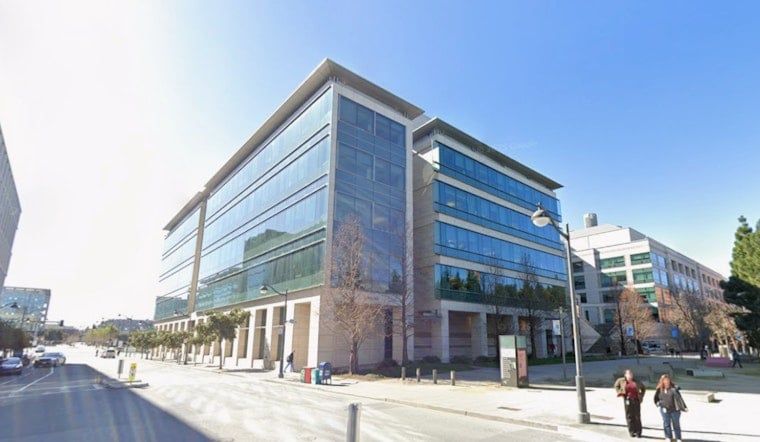
UCSF's Quantitative Biosciences Institute has landed a $46 million grant to scale up research into the genes tied to autism and turn that genetic map into potential drug targets. The money comes from Aligning Research to Impact Autism, an initiative backed by Sergey Brin's family foundation, and lands at a moment when California reports the nation's highest rate of autism diagnoses among the states surveyed.
The grant, first reported by the San Francisco Chronicle, was awarded by Aligning Research to Impact Autism, known as ARIA, to fund scaling up QBI's research on genes associated with autism, according to the Chronicle. QBI is a research unit within UCSF, and its researchers study genes tied to autism and the proteins those genes produce, examining how those proteins interact with one another and how those interactions may shape brain development and autism risk, the Chronicle reports. Nevan Krogan, a UCSF professor and director of QBI who is also a senior investigator at Gladstone Institutes, said the research could lay the groundwork for therapies to treat autism, per the same account.
Mapping 1,800 Protein Connections
The grant's announcement coincided with a landmark paper published in the journal Science, in which QBI researchers mapped more than 1,800 protein interactions across 100 autism risk genes, according to Morning Star. That work demonstrated how hundreds of distinct genetic mutations linked to autism actually converge on a small set of shared molecular complexes, rather than acting through hundreds of unrelated pathways. The Chronicle notes that QBI's research aims to identify the protein connections that appear particularly important in driving autism, and to pinpoint the most important proteins to target for potential therapies.
Krogan said the approach gives researchers “more shots on goal” to potentially develop small-molecule drugs, the Chronicle reports, since targeting a shared protein complex could theoretically help a broader group of patients than chasing each individual gene mutation separately. That research approach provides both a deeper understanding of autism and more opportunities to potentially develop targeted small-molecule drugs, per the outlet's reporting.
A Global Research Hub Anchored in San Francisco
The $46 million grant establishes UCSF's QBI as a key participant in ARIA's Protein-Protein Interactions Hub, an international collaboration spanning researchers in San Francisco, New York, Germany, and Switzerland, according to Business Wire. ARIA was launched by the Sergey Brin Family Foundation, with UCSF Psychiatry Department Chair Dr. Matthew State serving as its scientific director, as reported by The Transmitter — a detail that underscores how tightly UCSF leadership is already woven into Brin's autism philanthropy.
UCSF's award follows a string of major ARIA grants distributed around the country over the past year. ARIA gave $27.7 million to Yale School of Medicine last July and $17.25 million each to Boston Children's, Cincinnati Children's, and Texas Children's Hospitals this past June, according to Breaking News ABA. Those grants have built out both basic science and clinical trial readiness across the initiative's partner institutions.
California's Outsized Autism Numbers
The grant lands against a backdrop of rising autism identification nationally. Centers for Disease Control and Prevention data released in April 2025 found that autism spectrum disorder prevalence among 8-year-old children in the United States rose to 1 in 31, or 3.2%, based on 2022 surveillance data, up from 1 in 36 in 2020, according to the Centers for Disease Control and Prevention. Among the 16 states surveyed in that report, California recorded the highest identified prevalence of any state, with 1 in 19 eight-year-old children identified on the autism spectrum, according to the Autism Society of America.
The same CDC surveillance data indicated that roughly 39.6% of 8-year-olds diagnosed with autism spectrum disorder also have a co-occurring intellectual disability, per the Autism Society of America, underscoring the substantial subset of people on the spectrum who need intensive daily support and stand to benefit most from targeted therapies.
Brin's Broader Bet on Brain Disorders
The UCSF grant is one piece of a much larger philanthropic push. Sergey Brin's total lifetime giving has exceeded $4 billion, with more than $2 billion of that directed specifically at central nervous system disorders, including Parkinson's disease, bipolar disorder, and autism, according to a July 2025 report from Lifestyles Magazine. Brin's philanthropy runs through a broader initiative called CNS Quest, supported by the Sergey Brin Family Foundation and Catalyst4, a nonprofit he founded, which funds research on Parkinson's disease, bipolar disorder, and other central nervous system conditions, the Chronicle reports. His giving has also focused on climate change. Forbes has estimated Brin's donations at $5.1 billion during his lifetime and put his net worth at roughly $240 billion, according to the Chronicle's reporting; Brin is 53 years old.
QBI's mega-grant track record predates this award. In May 2022, Krogan received a $67.5 million NIH grant, then the largest single research grant in UCSF history, to establish an antiviral drug discovery center using similar quantitative protein-mapping technologies, according to UC San Francisco. The mass spectrometry and affinity purification techniques QBI is now applying to autism genes were originally refined early in the COVID-19 pandemic to map how SARS-CoV-2 interacts with human proteins, per the Addgene Blog — a reminder that the same lab tools built to fight a virus are now being aimed at one of neuroscience's hardest problems.





-4.webp?w=160&h=400&fit=crop&crop=edges)