

























































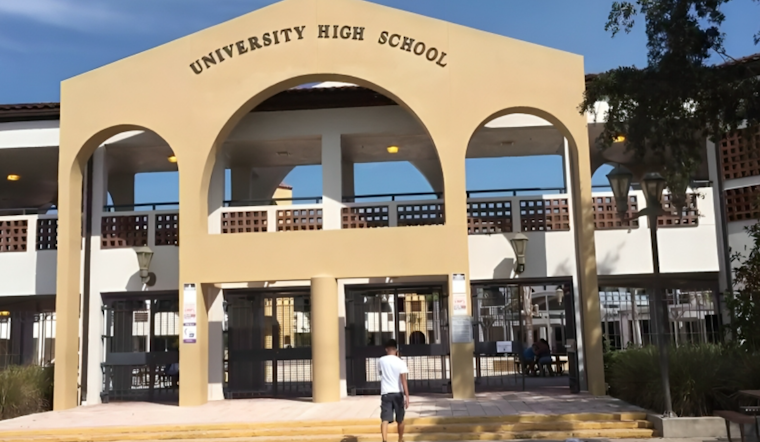
Students at University High School in Orlando are heading into their second week of the 2026-2027 school year sweating through class, as unreliable air conditioning has left classrooms uncomfortably hot just as Central Florida bakes under a dangerous heat advisory. Parents say the heat is taking a real toll on their kids, and the timing could hardly be worse.
The cooling problems at the roughly 2,500-student campus were first reported by WKMG, which detailed how students are enduring stifling conditions inside a school that includes a main building around a central plaza, a 2011 auxiliary building, and portable classrooms. The outage arrives as the National Weather Service issued a Heat Advisory this week for Central Florida, with air temperatures reaching 97 degrees and heat index values climbing between 105 and 115 degrees across the region. Those conditions make it especially difficult for students to cool down naturally when indoor air conditioning falters.
Orange County Public Schools opened its academic year during the second week of August, according to reporting shared on Facebook, meaning students returned to class right as Central Florida hits its hottest and most humid stretch of the year. That timing has repeatedly put pressure on the district's cooling infrastructure just as demand peaks.
A Pattern of Overheated Classrooms
This is not the first time an OCPS campus has struggled with air conditioning failures during the sweltering start of the school year. In September 2024, an air conditioning breakdown at Ocoee Middle School led to three students being hospitalized for heat-related symptoms, and district leaders responded by allowing early parental checkouts, deploying contractors, and relocating classes to cooler parts of campus, as Hoodline previously reported in its coverage of that incident.
Documentation gathered by the Orange County Classroom Teachers Association has shown classroom temperatures climbing above 85 degrees during past district HVAC outages, according to In These Times. That figure is notable because early childhood health standards recommend indoor maximums of 82 degrees, leaving a gap between recognized safety benchmarks and what some classrooms have actually experienced. The same reporting noted that a 2024 Florida school safety law bars teachers from propping open exterior doors or classroom access points during instructional hours, a security measure that also removes cross-ventilation as an option when mechanical cooling fails.
Funding Secured, But Repairs Take Time
Orange County Public Schools has a long-term funding stream in place to address aging HVAC systems: a voter-approved half-cent capital sales tax, reauthorized in November 2024 for another decade, that pays for campus HVAC, chiller, and roof replacements, according to the district. Officials have warned that without the tax extension, capital maintenance needs would have exceeded projected revenues by more than $4 billion by 2035. Still, that funding stream doesn't guarantee instant fixes when a specific campus system breaks down mid-heat-wave.
Executing repairs falls to specialized crews, including workers hired under the district's master-level “AC Tech M” classification, according to a job listing on BeBee. Those technicians handle mechanical repairs, system monitoring, and dehumidified cooling maintenance across assigned zones, but swift resolution depends on having enough certified trades workers to service a district that operates more than 200 facilities.
Legal Gaps for Indoor Heat Protections
Florida's heat-safety laws have largely focused on outdoor youth athletics rather than indoor classroom conditions. Under House Bill 865, enacted in 2024, public schools must ensure athletic staff hold CPR, first aid, and AED certifications, and FHSAA rules mandate designated cooling zones once outdoor heat stress reaches high levels, according to WKMG's earlier reporting on the new law. No comparable statutory maximum temperature exists for indoor public school classrooms in Florida, leaving districts, teachers unions, and parents to navigate HVAC breakdowns like the one at University High School on a case-by-case basis.
The AC troubles add to a rough start to the school year for Orange County families. The district also entered the 2026-2027 year short roughly 50 bus drivers, a shortage Hoodline reported earlier this month that forces remaining drivers to double back on routes, extending heat exposure for students already commuting on air-conditioned buses meant to shield them from the outdoor swelter.





