

























































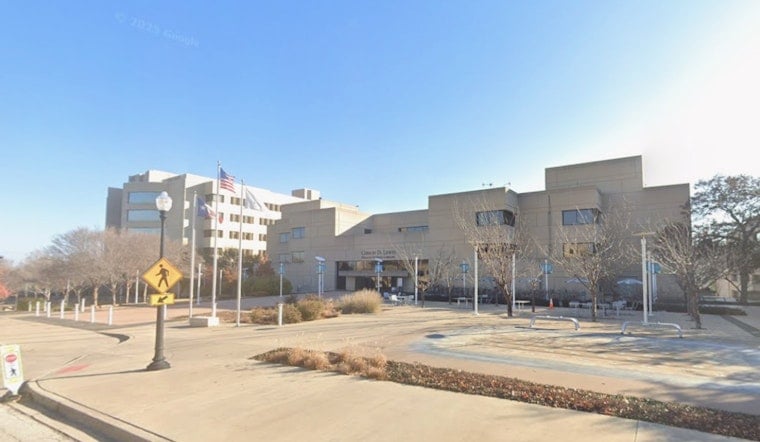
UNT Health is planting a new flag in Frisco, and it's aimed squarely at Texas's growing doctor shortage. The University of North Texas Board of Regents has approved a plan for UNT Health to acquire and renovate the Inspire Park building in Frisco, transforming the 52,000-square-foot property into an expansion site for the Texas College of Osteopathic Medicine, known as TCOM. The project carries a total cost of $23.9 million before construction even begins, according to board documents.
The move, first reported by Fort Worth Report, means UNT Health will take over $12.25 million in remaining debt on the building and pursue a multi-phase renovation projected to run through 2030. UNT acquired Inspire Park through a 2018 land agreement with the City of Frisco. Board documents describe the building as underused; it was originally intended to house teaching laboratories and partnership-based incubator space, but has fallen short of that vision.
UNT Health would occupy about two-thirds of the second floor and one-third of the first floor initially, with plans to eventually take over the entire building as it adds programs. UNT will continue using two recently renovated second-floor laboratories for microbiology and organic chemistry. Jeff Brown said the expansion will support TCOM's presence in Frisco, while Kirk Calhoun said the strategy aims to increase healthcare training students and opportunities across UNT campuses.
A Timeline Stretching to 2030
The numbers behind the project break down in phases. Initial authorization includes $10.15 million for acquisition and $1.5 million for design and preconstruction work, with bonds covering the $11.65 million initial authorization. Project planning begins next month, with design running from February 2027 through January 2028, and construction stretching from January 2028 through October 2029, according to the same report. Project occupancy is projected between May and July 2030.
The first phase covers a 30,000-square-foot project area and will create about 22,000 square feet of usable space, according to Fort Worth Report. UNT's long-range plan projects $22.5 million for the renovation, plus an additional $15 million set aside for future health programs. Expansion plans include classrooms, specialized laboratories, and support space for TCOM and future programs. Construction still requires full approval from the Board of Regents before it can move forward.
Why Frisco, Why Now
Frisco isn't a random pick. UNT Health already offers physical therapy classes at UNT Frisco Landing, the $100 million, 135,000-square-foot facility that opened in January 2023 on 100 acres gifted by the City of Frisco as part of a master plan eventually meant to serve up to 25,000 students, according to Dallas Innovates. The city's northern corridor has since grown into a major healthcare hub anchored by projects like the $270 million Texas Health Hospital Frisco and UT Southwestern Medical Center complex, per LoopNet. Just this month, Baylor Scott & White Medical Center in Frisco authorized its own $1.55 million capital project for a cardiac rehab facility at its PGA Parkway campus, as Hoodline previously reported.
TCOM itself carries serious academic weight. The school ranks No. 11 nationwide for primary care education and is the top-ranked osteopathic medical school in Texas, according to the American Association of Colleges of Osteopathic Medicine. Graduating TCOM seniors posted a 99.1% residency match rate for the Class of 2025, well above the record 92.6% national match rate for osteopathic seniors that year, per the Texas Medical Association. TCOM enrollment represents nearly 38% of the university's total enrollment, and UNT Health expects the college to enroll 954 students this fall.
Clinical Rotations Concentrated in North Texas
About 85% of TCOM cohorts are assigned to the Dallas-Fort Worth region for clinical rotations, which include surgery, pediatrics, medicine, psychiatry, geriatrics, and obstetrics and gynecology, according to the Fort Worth Report's reporting on board documents. That heavy regional concentration is part of why Frisco's growing medical corridor matters for the university's training pipeline. TCOM traces its roots to 1970, when it opened as a private osteopathic medical college before merging with what is now the University of North Texas in 1975.
The Frisco push is not happening in isolation. Regents also approved an off-campus instructional site at UNT Dallas in May, and UNT Health plans to begin offering nursing courses there starting in fall 2027. The university is also exploring pharmacy training in Dallas and future health programs in Denton. Calhoun said placing health programs across campuses is central to the university's growth as demand for healthcare training rises.
A Statewide Shortage Looms
The Frisco expansion lands against a stark statewide backdrop. Texas Department of State Health Services projections estimate the state will face a shortage of more than 10,000 physicians by 2032 as population growth outpaces medical school cohort expansion, according to the San Antonio Current. Texas currently averages 204.6 patient care physicians per 100,000 residents, well below the national average of 247.5, and 25 of the state's 254 counties have no primary care physician at all as of early this year, per the Texas Medical Association.
State lawmakers have already moved on a parallel front. Texas enacted House Bill 2038, known as the DOCTOR Act, in 2025 to create streamlined licensing pathways for foreign-trained physicians. Public medical schools and health science centers in Texas remain eligible to submit new H-1B visa petitions for foreign physician faculty hires with Texas Workforce Commission approval, even amid a broader state university visa freeze put in place earlier this year, the Texas Medical Association notes.
The Frisco project also fits into UNT's broader financial strategy. UNT Denton confronted a $45 million budget shortfall earlier this year, pushing university system leadership toward cost reductions and revenue-generating academic initiatives, as Hoodline reported in February. Turning an underused incubator building into a medical training hub tracks with that broader push to optimize campus real estate while capturing growth in high-demand health programs. Long-term financing, accreditation, and clinical rotation placements across Collin and Dallas counties remain steps to watch as the project moves toward its 2030 target.




