

























































Federal officials on Wednesday announced more than $100 million in rewards for the capture of top leaders of the Cártel de Jalisco Nueva Generación, alongside new indictments accusing the group's leadership of drug trafficking, murders, attempted assassinations, weapons acquisition, and money laundering. The push comes just months after the killing of the cartel's founder touched off a violent scramble for control of one of Mexico's most feared criminal organizations.
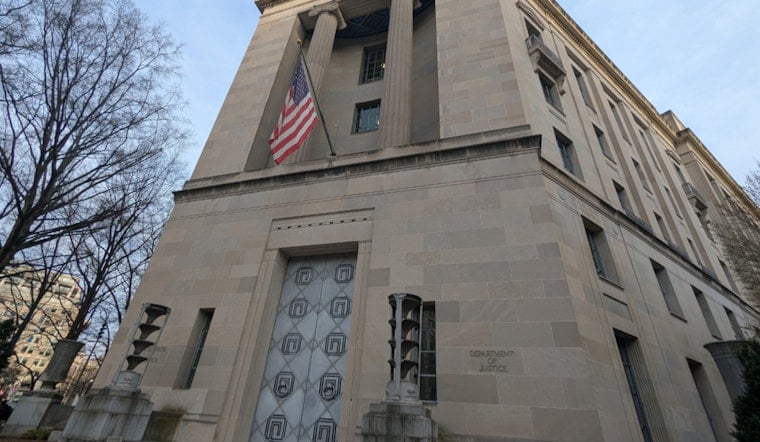
The announcement came during a news conference at the Robert F. Kennedy Department of Justice building in Washington, according to KABB. Deputy Attorney General Todd Blanche said the rewards and charges are part of the Trump administration's broader effort to dismantle cartels, describing CJNG members as responsible for countless deaths of Americans. DEA Administrator Terry Cole called the cartel "one of the world's most dangerous and ruthless foreign terrorist organizations."
El Pelón: The California-Born Boss Now DEA's Top Target
The steepest reward hike targets Juan Carlos Valencia González, known as El Pelón, whose bounty officials raised from $5 million to $25 million. He is believed to have taken over CJNG's leadership after the death of his stepfather, founder Nemesio Rubén Oseguera Cervantes — better known as El Mencho — and the DEA now considers him its No. 1 priority, per KABB. Born in Santa Ana, California, Valencia González holds dual U.S.-Mexican citizenship, according to EL PAÍS English, a detail that complicates prosecuting the de facto head of one of Mexico's most violent cartels.
El Mencho, who founded CJNG, was killed in February during a Mexican military operation in Tapalpa, Jalisco, supported by U.S. intelligence, according to The Guardian. His death triggered nationwide cartel retaliation and opened the leadership vacuum Valencia González has since stepped into. The cartel now tops the federal target list under the State Department's February 2025 designation of CJNG as a Foreign Terrorist Organization and Specially Designated Global Terrorist, a status confirmed by the U.S. Department of State that enables enhanced terrorism charges against its members.
The $350 Million Timeshare Fraud Targeting Americans
According to the new indictment, CJNG members orchestrated a timeshare fraud scheme that targeted elderly Americans by promising profits from selling or renting Mexican timeshares. Victims were told to pay upfront taxes and fees before receiving any promised money, and many were later threatened with arrest unless they paid still more. Impostors posing as lawyers or officials pressured victims further, and a superseding indictment now charges several defendants with participating directly in the scheme.
U.S. law enforcement agencies estimate the scheme's call centers in Mexico defrauded more than 6,000 American property owners out of roughly $350 million between 2019 and 2024, according to OpusDatum. In February, the Treasury Department sanctioned Kovay Gardens, a luxury resort near Puerto Vallarta, along with 17 affiliated companies and five individuals, for functioning as a timeshare fraud factory for the cartel, per the U.S. Department of the Treasury. Federal authorities separately estimate that up to 80 percent of American victims of these scams never report the crime, due to embarrassment, fear, or a lack of legal resources, according to a joint FBI-FinCEN advisory.
Five More Cartel Figures Added to the Wanted List
Federal prosecutor Tysen Duva named five senior CJNG members in the new indictments on drug trafficking and firearms offenses, with rewards for their capture ranging from $2 million to $15 million. Those named include Carlos Andrés Rivera Varela, known as La Firma; Ricardo Ruiz Velasco, known as Tripa; Julio Alberto Castillo Rodríguez, known as Chorro; Hugo Gonzalo Mendoza Gaytán, known as El Sapo; and Julio César Montero Pinzón, known as El Tarjetas. Duva said prosecutors had already obtained a superseding indictment last fall against two of the five named suspects, along with a sixth defendant, Griselda Margarita Arredondo Pinzón.
Officials asked anyone with information on Valencia González, Mendoza Gaytán, Castillo Rodríguez, or Ruiz Velasco to contact the DEA, which can be reached at (213) 237-9990 by phone, text, WhatsApp, Signal, or Threema, or by email at [email protected]. Tips on Montero Pinzón, Rivera Varela, or Arredondo Pinzón should go to the FBI, which takes calls at 1-800-CALL-FBI or WhatsApp messages at (212) 384-1778, with online submissions accepted at fbi.gov/cjngrewardtips. Information on Audias Flores Silva, known as Jardinero, should be directed to Homeland Security Investigations at (866) 347-2423 or through ice.gov/tips. People outside the United States were told to contact the nearest U.S. embassy or consulate, while those inside the country should reach their local DEA, FBI, or Homeland Security Investigations office.
A Wave of Convictions Against CJNG's Founders
Todd Blanche highlighted the recent sentencing of Ismael "El Mayo" Zambada Garcia, the 76-year-old co-founder of the rival Sinaloa Cartel, who was sentenced in Brooklyn federal court on July 20 to life in prison and ordered to forfeit $15 billion, according to the U.S. Department of Justice. That case has become a precedent federal officials point to as they pursue CJNG's leadership. Last Friday, Antonio Oseguera Cervantes, El Mencho's brother, pleaded guilty in Washington, D.C. federal court to narcotics trafficking and firearms charges following his February 2025 extradition from Mexico, Hoodline previously reported.
In April, CJNG co-founder Erick Valencia Salazar, known as El 85, who later broke away to form the rival La Nueva Plaza cartel, pleaded guilty in the same Washington, D.C. courthouse to a federal drug trafficking conspiracy charge, as Hoodline reported at the time. The plea marked another blow against the cartel's founding architects, following his extradition to the U.S. in February 2025.
Treasury's Record Sanctions and the Road Ahead
Earlier this month, the Treasury Department executed its largest-ever financial action against CJNG, sanctioning more than 50 Mexican individuals and corporate entities tied to the cartel's leadership and financial operations, a move Hoodline covered in detail at the time. The State Department has also imposed new visa restrictions on dozens of people believed to be CJNG associates, according to KABB. Officials say pairing criminal charges, terrorism designations, and financial sanctions is meant to choke off the cartel's ability to operate through seemingly legitimate businesses.
The Trump administration has extradited, transferred, and secured convictions against hundreds of drug traffickers since the president returned to office, KABB reported, with Wednesday's rewards and indictments marking the latest escalation in that campaign. Whether the bounty money can meaningfully disrupt a cartel built on a decentralized network of call centers and front companies scattered across Mexico remains an open question, even as prosecutors add to a growing list of guilty pleas from the group's own founders.





