

























































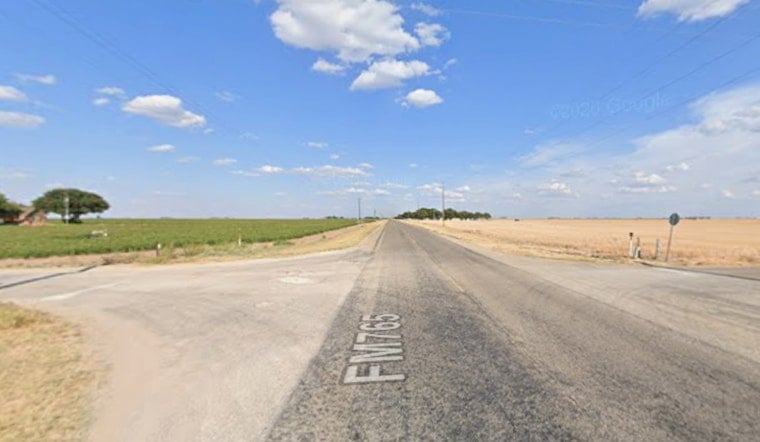
A United States Postal Service driver on her first day behind the wheel plowed through a rural Texas highway intersection without looking, braking, or slowing down, sending a minivan airborne and leaving three people hospitalized with brain injuries. More than three years later, a federal judge has ordered the Postal Service to pay over $8.6 million for the crash, ruling the agency solely liable for what he called an entirely avoidable collision.
The wreck happened on February 12, 2023, near the intersection of Olsak Road and FM 765 southeast of San Angelo, according to San Angelo Live!. USPS driver Jayleah Everitt was delivering Amazon packages southbound on a gravel road when she entered the highway intersection without yielding, driving her postal van into the path of a minivan traveling westbound at the 75 mph speed limit. Alexandria Nieto, who was driving the minivan while transporting her 14-year-old daughter and her daughter's friend, was ejected from the vehicle along with her daughter; the friend remained inside as the impact sent the minivan airborne.
U.S. District Judge James Wesley Hendrix found that Everitt was wearing headphones at the time, did not look left or right, and failed to look, brake, or slow down before entering the intersection. The postal van entered the highway at 41 miles per hour, according to the judge's account of the crash as detailed by San Angelo Live!. The judge described Everitt's testimony as, per the outlet, a shocking testament to distracted or mindless driving, and found she was not looking at the road or had her attention glazed over in complacency.
A First Day on the Job Turns Catastrophic
All three people in the minivan required hospitalization, and the court found each victim suffered a mild traumatic brain injury. The daughter's friend was transported by air to Fort Worth. The victims have since recovered from the mild traumatic brain injuries and face no increased dementia risk, though the final judgment still covered ongoing physical pain, scarring and mental-health injuries tied to the crash.
National Trial Law partners Jamal Alsaffar and Tom Jacob represented the families in the case. Alsaffar said the postal service's driver was shocking, careless and dangerous, and argued that the government spent three years blaming others rather than accepting responsibility, according to San Angelo Live!. Tom Jacob emphasized that the postal van entered a highway intersection at 41 miles per hour without ever braking.
Government's Defense Arguments Rejected
The Postal Service's legal defense tried to shift blame elsewhere during the litigation. The court rejected the claim that a missing stop sign at the intersection caused or contributed to the harm, finding that the Texas Department of Transportation had no notice the sign was missing and that Tom Green County had no duty over it. The judge ruled the crash would have occurred even if the stop sign had been present, since Texas Transportation Code Section 545.151 already required Everitt to yield to highway traffic regardless of signage, as explained by FindLaw.
The defense also argued that Alexandria Nieto's failure to wear a seat belt contributed to the injuries, but the court rejected that claim as well, finding the victims' injuries were broadly similar regardless of seat-belt use. Texas has no statewide law explicitly banning headphone use while driving, but courts and law enforcement can treat it as evidence of distracted or reckless driving under state traffic code, per MySA. Official USPS driver safety guidelines separately mandate that operators stay alert and avoid earbuds, Bluetooth devices, or anything else that diminishes situational awareness while on duty, according to the United States Postal Service.
Why a Judge, Not a Jury, Decided the Verdict
Because the Postal Service is a federal agency, the case was tried entirely before Judge Hendrix rather than a jury. Federal law requires that lawsuits against the government under the Federal Tort Claims Act be resolved in bench trials, a sovereign immunity rule that also strictly bars punitive damages, according to the Archuleta Law Firm. That is why the entire $8.6 million judgment was structured around compensatory damages covering past and future medical expenses, future lost earning capacity, disfigurement, mental anguish, and pain and suffering rather than any punitive award.
The final judgment awarded Alexandria Nieto $2,022,929.04, her daughter $2,838,973.16, and the daughter's friend $3,750,606, bringing the total above $8.6 million. Before the family could sue, they had to complete a mandatory administrative process, submitting a Standard Form 95 claim to the Postal Service within a two-year deadline before federal litigation could proceed, a requirement the Archuleta Law Firm notes is standard under FTCA procedure.
Part of a Larger Pattern for USPS Fleet Safety
The San Angelo case is not an isolated one. The Postal Service operates a nationwide delivery fleet of more than 200,000 vehicles involved in roughly 29,000 motor vehicle crashes annually across the country, according to the Archuleta Law Firm. Internal audits from the USPS Office of Inspector General have found the agency pays out more than 12,000 tort claims a year, totaling nearly $80 million in compensation for personal injury and property damage caused by postal employee negligence, per the USPS Office of Inspector General.
National Trial Law, the Austin-based firm representing the Nieto family, specializes in Federal Tort Claims Act litigation and has previously secured FTCA bench trial verdicts exceeding $30 million against federal agencies, according to the firm's own case history. Judge Hendrix, in his ruling, said the events of February 12, 2023, were entirely avoidable — a conclusion that turned on a first-day postal driver's failure to look, brake, or slow down before entering a highway she never should have crossed without yielding.





