

























































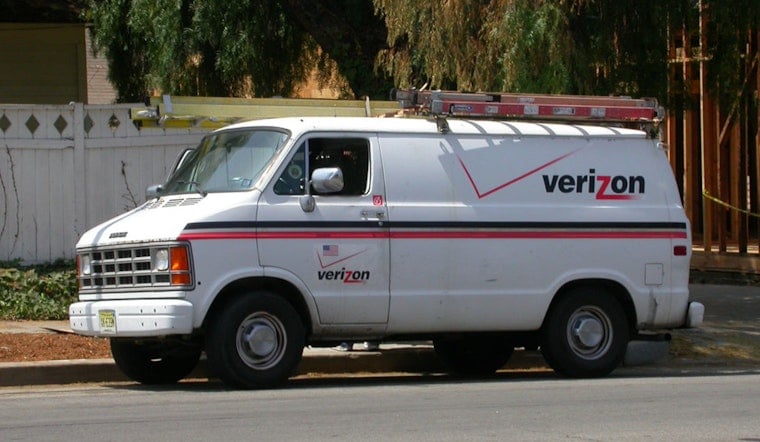
Verizon customers across Los Angeles and other parts of Southern California woke up to spotty or dead mobile and internet service Sunday morning after vandals cut multiple fiber optic lines feeding the network. Outages first surfaced in the San Fernando Valley before spreading to other areas, disrupting service for an undisclosed number of mobility and internet customers.
Verizon confirmed that multiple fiber cuts tied to vandalism triggered the interruption, according to KTLA. Company engineers were working alongside third-party vendors to make repairs at the affected sites, though Verizon has not said when full service will be restored or how many customers were affected. The company has also not released additional details about the circumstances surrounding the vandalism, including the exact locations that were targeted, and it remains unclear whether authorities are investigating the incident.
Verizon was direct about the stakes involved, describing the vandalism as a threat to public safety rather than a routine act of property destruction. The company noted that damaged communications infrastructure can leave entire neighborhoods without access to essential services, including emergency lines and healthcare networks, and urged affected customers to check its network status page for updates.
A Familiar Pattern Across Los Angeles County
This is not the first time Southern California's fiber network has been sliced open. Verizon experienced a nearly identical disruption across Los Angeles County in October 2025 caused by multiple fiber cuts, which local officials and district attorneys attributed to scrap thieves mistaking fiber optic lines for valuable metal cable, according to the Los Angeles Times. The recurring nature of these incidents points to a systemic problem rather than an isolated act of sabotage.
The disconnect between motive and damage is stark: thieves hunting copper often walk away with nothing, since fiber optic cables are made of glass and plastic rather than metal, yet the resulting outages can cost millions of dollars to repair. Telecommunications providers in Los Angeles have noted that fixing severed fiber lines requires labor-intensive optical glass splicing, a process that takes far longer than reattaching conventional copper wire, which helps explain why these outages tend to drag on.
Mounting Costs and a Growing Government Response
The financial toll extends well beyond any single outage. A 2026 economic analysis prepared for telecommunications trade groups estimated that utility wire theft and infrastructure vandalism caused between $294 million and $1.47 billion in total societal and consumer damage nationwide during 2025, as Hoodline reported in a related case involving a Philadelphia homeowner. Locally, the Los Angeles County Board of Supervisors unanimously approved a motion in March directing law enforcement and utility providers to build a coordinated anti-theft plan, citing more than $100 million in regional repair costs racked up since 2020.
State lawmakers have also moved to choke off the resale market driving the thefts. Governor Gavin Newsom signed Assembly Bill 476 in October 2025, heightening penalties for metal theft and requiring scrap recyclers to verify seller identification and proof of ownership before buying copper and scrap materials. The Los Angeles Bureau of Street Lighting, meanwhile, received more than 46,000 service requests in 2024 tied to wire theft, prompting the city to begin swapping tens of thousands of traditional wired streetlights for solar-powered fixtures that remove accessible wiring from poles and underground vaults.
Legal Exposure Can Reach the Federal Level
Under California Penal Code Section 591, maliciously damaging, severing, or obstructing telephone, cable, or electrical lines is a wobbler offense punishable by up to three years in county jail and fines up to $10,000. If cable sabotage disrupts emergency networks or interstate telecommunications backbones, federal jurisdiction can also apply: under 18 U.S. Code § 1362, willfully or maliciously injuring or destroying communication lines used for civil defense or federal communications is a felony carrying up to 10 years in federal prison.
The threat has drawn a coordinated industry response as well. Major broadband providers and federal officials launched the Strategic Threat Response & Infrastructure Knowledge Exchange, or STRIKE, coalition in October 2025 to combat escalating cable cuts and physical sabotage on U.S. communications networks, sharing technical intelligence to identify patterns behind deliberate cuts. Deliberate fiber attacks are not new to California; the FBI previously opened a major investigation in Northern California after at least 11 intentional fiber optic cuts in 2014 and 2015 disrupted 911 emergency communications and internet service across the San Francisco Bay Area.
For now, Verizon has offered no timeline for when Southern California customers can expect full service back, and the company has not said whether investigators have identified suspects in this latest round of cuts. Customers experiencing outages are being directed to Verizon's network status page for the most current updates as engineers continue repair work at the affected sites.





