

























































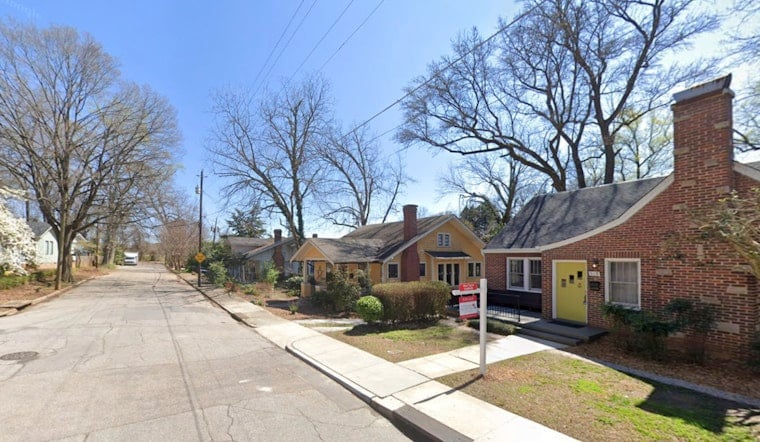
A majority of Wake County voters think the region already has enough different housing options, but a newly launched campaign from the local realtors association says the numbers tell a very different story. According to a March survey of 500 Wake County voters conducted by Statara, 62% of respondents said existing housing options are sufficient, even as the county is projected to be 110,000 homes short of demand by 2029.
That gap between perception and projection is exactly what Raleigh Rising, an initiative from the Raleigh Regional Association of REALTORS, is trying to close. As first reported by the Raleigh News & Observer, the campaign was launched to educate residents about housing availability and affordability, and it arrives as Wake County voters increasingly describe housing costs as a very big or fairly big problem. Danielle Plourd, government affairs director for the Raleigh Regional Association of REALTORS, told the paper that an informed community that understands the need for more housing and the rezoning process makes homeownership possible for people who hold the community together.
A Shortfall Business Groups Call Urgent
The 110,000-home shortfall figure traces back to a broader statewide warning. According to the NC Chamber Foundation, North Carolina faces a total five-year housing gap of 764,478 units through 2029, split between 322,360 rental homes and 442,118 for-sale homes, with the statewide for-sale availability rate sitting at just 0.8%, far below the 2% to 3% benchmark for a balanced market. The same February 2025 research estimated that fully closing that statewide gap could generate $489 billion in economic activity and support nearly 2.2 million jobs.
Locally, the price pressure behind those numbers is already visible. Median home prices in Wake County reached $465,000 by mid-2026, a 47% increase since 2020, per Doorify MLS data cited by Raleigh Rising, and survey data indicates 82% of respondents believe essential workers cannot afford to live in the communities where they work. Raleigh Rising says it wants to give teachers, first responders, nurses and young families opportunities to live in the communities they serve, and its planners point to that widening cost gap as the reason.
Videos, Handbooks and a Town Hall at Chavis Park
Raleigh Rising, which the report notes is funded by a grant from the National Association of REALTORS, plans to give residents information to understand and participate in community growth and development. The campaign runs through February and will share a video series showcasing the real people behind housing statistics — its first episode focuses on a Wake County educator who left public schools for a private-school job in order to afford a home.
The initiative has also published a free community advocate handbook online that covers housing types, zoning terms, the zoning process, and contact information for Raleigh and Wake County leaders, along with email templates and phone scripts residents can use to weigh in on rezoning or housing-project proposals. The campaign's first public town hall, titled Who Can't Afford Raleigh?, is scheduled for September 17 at the Chavis Park Reception Hall, where organizers will discuss the Statara survey results and hear from the Wake County Housing Authority. The event, like other Raleigh Rising town halls, is free, and attendees will also receive advocacy resources.
Walking Tours Aim at North Hills Density Debate
Beyond the town hall, Raleigh Rising has scheduled three free in-person events for the fall, including neighborhood walking tours planned for October and November that will focus on density and walkability. One tour is planned for the North Hills area, which the campaign highlights as a neighborhood where residents can walk to stores and restaurants without driving. Plourd said proper neighborhood planning should decrease time spent in traffic, and argued that neighborhood character can be maintained while still providing housing options — pointing to the Pointe at Midtown, a 365-unit complex on Navaho Drive that is being demolished and replaced, as an example of how redevelopment reshapes an area's housing stock.
Plourd attributed opposition to dense development to a misunderstanding of what affordable housing actually means, and the survey found that a share of Wake County respondents opposed changing zoning laws to allow more dense development. That resistance has already spilled into the courts: the North Carolina Court of Appeals ruled in December that a procedural lawsuit filed by Hayes Barton residents challenging the city's missing-middle zoning reforms could proceed in state court, according to WBT Charlotte's News Talk. Opponents in that case alleged the city improperly classified citywide zoning changes as text amendments rather than map amendments, bypassing property-owner notification rules.
City Hall Warns of Rising Legal Fights Over Density
The zoning tension extends well beyond one neighborhood lawsuit. The City of Raleigh submitted an amicus brief to the North Carolina Supreme Court this month warning that rapid population growth and increased development applications have triggered unprecedented levels of civil litigation from residents opposing higher density, as reported by Carolina Journal. Municipal attorneys asked the state's high court to establish clearer legal standing rules for challenging local land-use decisions, a request that underscores just how contested Raleigh's zoning code has become since the city eliminated per-acre unit limits and opened single-family districts to duplexes, triplexes and townhomes through its TC-5-20 and TC-20-21 text amendments.
All of this is unfolding as Raleigh's population keeps climbing — the city surpassed 500,000 residents in March, according to the survey timeline cited alongside the Statara poll — and as city leaders separately weigh how large a new affordable housing bond to put before voters in November. Raleigh's previous $80 million affordable housing bond, approved in 2020, funded the construction or preservation of nearly 2,500 affordable residential units over five years, per INDY Week. Raleigh Rising's organizers say their handbooks and walking tours are meant to let residents decide for themselves how they want to get involved as that debate over housing supply, zoning and affordability continues to play out across Wake County.



