

























































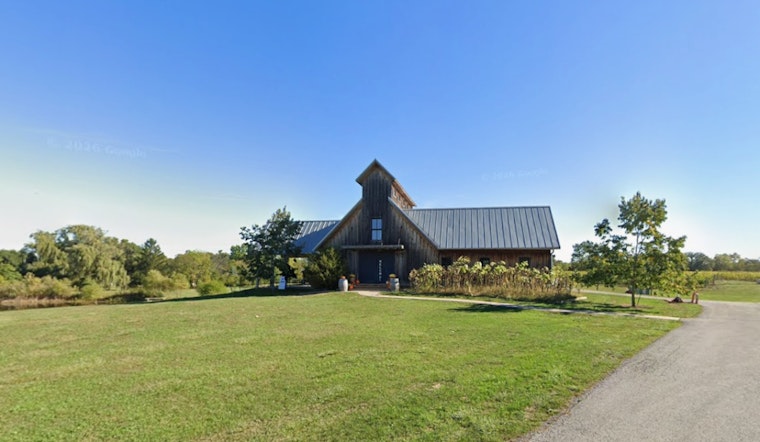
Vermilion Valley Vineyards is rolling out five late harvest wines over the next several weeks, all bottled in standard 750 ml formats rather than the tiny half-bottles typically reserved for dessert wine. The Wakeman, Ohio winery, located about 40 miles southwest of Cleveland, is topping off the lineup with a full-on botrytis-style riesling — something winemaker and co-owner Joe Juniper says he has never produced before in his 22-year career.
The release, first detailed in an article by Paris Wolfe for Cleveland.com, comes after four consecutive years of bumper harvests at the 102-acre estate. Juniper said grapes can remain on the vine into October and beyond if fall conditions stay hot and dry enough, allowing fruit and sugar to concentrate well past the traditional harvest date. Late harvest wines are made from grapes left hanging on the vine beyond that point, and the resulting bottles are sweeter than the winery's usual releases but noticeably less sweet than ice wine.
That distinction matters for how the wines are made. Late harvest wines are not ice wines, which are typically produced from vidal blanc grapes hung on the vine into the coldest winter nights. Instead, several of Vermilion Valley's new releases rely on Botrytis cinerea, a fungus that dehydrates grapes and concentrates their flavors and sugars, producing what winemakers call noble rot.
How Noble Rot Actually Forms
Botrytis cinerea produces that prized noble rot only under a narrow set of conditions: humid morning mist followed by dry, sunny afternoons, according to research published in Frontiers in Plant Science. Under those conditions, fungal threads pierce the grape skins and evaporate the berries' water content, leaving behind fruit acids and flavor compounds at far higher concentrations. Continuous rain or humidity instead produces destructive grey rot, meaning the window for a successful botrytized wine is narrow and weather-dependent.
That window is wider along the Ohio shoreline than it would be further inland. The Lake Erie American Viticultural Area, established in October 1983, spans 2.24 million acres across Ohio, Pennsylvania and New York, and Lake Erie's thermal mass moderates winter temperatures while extending the autumn growing season, according to Cornell CALS. That extended hang time is exactly what allows grapes to either accumulate extra sugar naturally or contract botrytis in the first place.
A Fundraiser for Pediatric Cancer Research
The 2024 botrytis-style riesling will be released this fall as a fundraiser for Prayers from Maria, with the winery planning to donate $10 from every bottle sold to the organization's cancer research efforts. The Prayers from Maria Children's Glioma Cancer Foundation was established in 2007 in memory of seven-year-old Maria McNamara and has directed over $12 million toward pediatric brain tumor research, according to the foundation. The group also maintains the 18-acre Maria's Field of Hope sunflower field in nearby Avon, Ohio.
Juniper has deep roots in the region's vineyards. He began working in Sandusky vineyards at age 13 and became managing partner and co-owner of Vermilion Valley Vineyards in 2009 at age 22, according to Cleveland Magazine. The estate operates entirely on estate-grown fruit, refraining from importing grapes or bulk juice from outside suppliers, and its Wakeman tasting room sits on a 23-acre parcel built with passive ventilation roofing and locally harvested white oak and black walnut woodwork, per the same account.
What's In the Five-Wine Lineup
Beyond the riesling, the winery's late harvest slate includes the 2024 Pinot Gris, now available for $26, and the 2024 Petit Manseng, also now available, priced at $32. A 2023 Pinot Noir Cherry Barrique, fermented and aged in cherry barrels and made from Pinot Noir grown on the winery's Limestone Quarry Vineyard, is expected to release in September at $34. Rounding out the lineup is a 2025 Gewürztraminer, set for release this fall at $26. The late harvest wines will be available at Vermilion Valley Vineyards, through the winery's online store, and at The Winerie at Sandusky, located at 6413 Hayes Ave.
Vermilion Valley isn't alone in chasing this style. Gervasi Vineyards in Canton has a late harvest Riesling Dolce Sera, described as a sweet evening wine aged in bourbon barrels. M Cellars in Geneva, Ohio produces a 2024 late harvest Gewürztraminer, and Laleure Vineyards in Parkman, Ohio makes a late harvest Vignoles. Some of these late harvest varieties are expected to reach local wine shops by fall, per Cleveland.com's reporting.
Rooted in a Rebounding Industry
The timing lines up with a broader resurgence in Ohio winemaking. Before federal Prohibition took effect in 1920, Ohio was the leading grape-producing state in the country, anchored by extensive commercial vineyards along the Lake Erie shoreline, according to DrinkUp Columbus. Prohibition forced most of those vineyards to convert to juice production or shut down entirely, and the state's craft wine scene has been rebuilding ever since — growing from roughly 80 operating wineries in the early 2000s to more than 400 statewide by this year, according to the Ohio Department of Agriculture.
That growth has real economic weight behind it. Ohio's wine and grape industry now generates approximately $6.6 billion in total annual economic output and supports more than 40,000 jobs statewide, per 2022–2024 figures released by the Ohio Department of Agriculture, ranking the state seventh nationally in overall wine economic output. Federal rules also shape how wineries like Vermilion Valley can label and package these releases: TTB regulations require at least 85 percent of the grapes in any AVA-labeled wine to be grown within that AVA's boundary, and a December 2020 update to federal container rules now allows dessert wines to be bottled in standard 750 ml containers instead of the traditional 375 ml half-bottles.





