

























































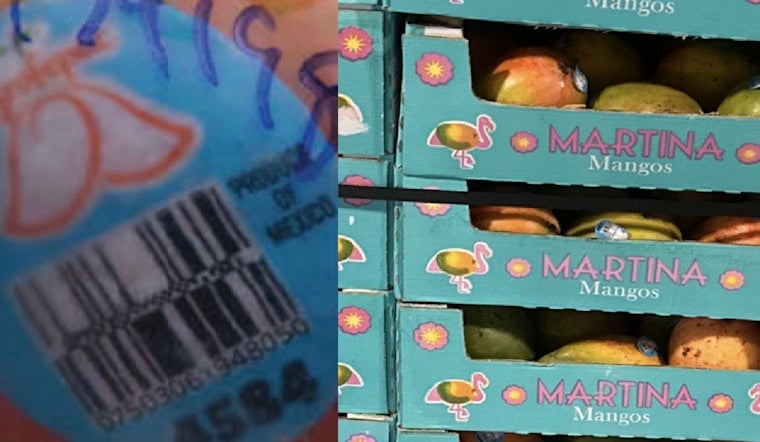
Shoppers who picked up mangoes at select Walmart stores across the tri-state area this month are being told to check their fruit bowls. Panorama Produce has recalled 302 boxes of Martina-brand mangoes distributed between August 10 and August 21 after federal sampling found Salmonella on fruit grown on the same Mexican farm, even though no illnesses have been linked to the recalled boxes and the tested batch itself never entered U.S. commerce.
The recall, first reported by News 12 Bronx, covers mangoes sold in New Jersey, New York, Connecticut and Pennsylvania. According to the U.S. Food and Drug Administration, the recall specifically involves 302 cases of size 9 mangoes — a packing designation meaning nine mangoes fit into each shipping case — and the affected fruit came from the same farm as mangoes that had tested positive for Salmonella. Consumers with questions can contact the importer directly by emailing [email protected].
Mamaroneck, New York-based Panorama Produce shipped the fruit under the Martina brand, and the recalled mangoes carry a light-blue Agrofepac sticker reading “Produce of Mexico,” along with UPC 07503061948050 and PLU code 4584. That PLU designation, according to the International Federation for Produce Standards, is used for conventional, large green mango varieties — including Keitt and Francis cultivars — typically packed at eight to 10 fruits per case, which helps explain why shoppers should look closely at both the sticker and the box rather than relying on appearance alone.
Why a Negative Test Still Triggered a Recall
Federal food safety rules allow importers to initiate voluntary recalls whenever FDA sampling detects pathogens on agricultural products grown on the same farm — even when the specific sample that tested positive never reached store shelves. That is effectively what happened here: the batch sent to Walmart tested negative and caused no reported illness, but its shared origin with contaminated fruit was enough to prompt a precautionary pull. Walmart Corporate posted notice of the recall to its corporate product recall portal, confirming distribution across select stores in the four affected states.
Consumers who purchased the recalled mangoes are advised to throw them away or return them to the store where they were purchased. The FDA notes that Salmonella infection typically causes fever, diarrhea, nausea, vomiting and abdominal pain, but in rare cases can lead to more serious and potentially fatal illness — including, in severe instances, endocarditis, arterial infections or severe arthritis if the bacteria enter the bloodstream.
Part of a Bigger Late-Summer Food Safety Push
This recall lands amid a notably active stretch for produce safety enforcement. The Centers for Disease Control and Prevention and the FDA have simultaneously been investigating a much larger multistate Salmonella Javiana outbreak tied to fresh jalapeño peppers imported from Sinaloa, Mexico, which has sickened at least 431 people across 32 states. That outbreak has triggered its own wave of secondary grocery recalls this month. The same week the mango recall surfaced, the FDA also published notice of an expanded multistate recall by Minneapolis-based Everything Sprouts LLC over potential Salmonella and E. coli contamination in fresh sprout products.
Fresh produce remains a persistent vector for these outbreaks nationally. A joint report from the CDC, FDA and USDA's Food Safety and Inspection Service found that fresh fruits and seeded vegetables account for more than 75% of Salmonella illnesses tied to produce categories in the United States. The CDC separately estimates that non-typhoidal Salmonella causes roughly 1.35 million infections, 26,500 hospitalizations and 420 deaths in the U.S. each year, making it the leading cause of foodborne illness deaths nationwide — context that helps explain why regulators move quickly on precautionary recalls even absent confirmed illness.
Mango-linked contamination has federal precedent. Back in September 2012, health agencies issued a border import alert against Mexican exporter Agricola Daniella after Salmonella-tainted mangoes sickened more than 120 people across 15 states, hospitalizing 36% of those affected, according to The Clark Firm. Import alerts like that one allow federal agents to detain agricultural shipments at the border without prior physical inspection, underscoring how closely foreign produce supply chains are monitored before fruit ever reaches a Walmart shelf.
The current recall is far smaller in scale, and no illnesses have been reported in connection with the Martina-brand boxes. Hoodline has previously covered mango-adjacent recalls, including a mango-linked ice cream bar recall in 2024 and a separate dried mango recall in Philadelphia the same year, part of a recurring pattern in which imported mango products draw federal scrutiny. For now, tri-state shoppers are simply urged to check their fruit bowls for the Martina brand, the light-blue Agrofepac sticker, and PLU 4584 before eating.





