

























































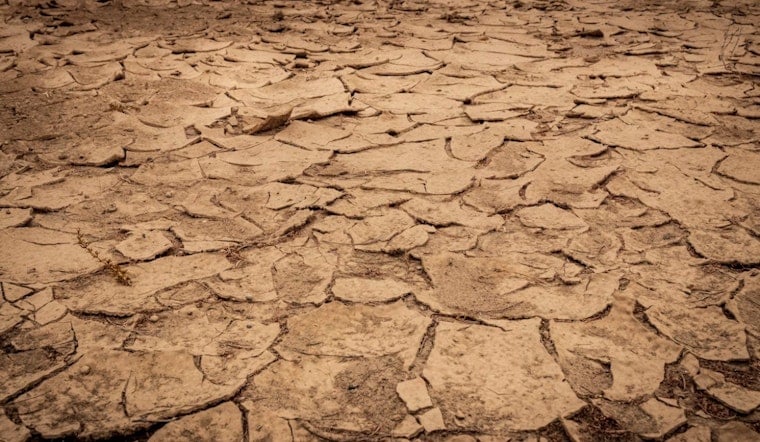
Anglers at Banner Lakes State Wildlife Area near Keenesburg no longer have to worry about bag or possession limits, but that's not good news. Colorado Parks and Wildlife issued an emergency public salvage for the nearly 1,000-acre property in Weld County this week, telling anglers to catch what they can before drought conditions make the fishery unsustainable.
The order marks Colorado's second lake emergency salvage in less than a week, according to KDVR, coming just days after CPW announced a similar emergency salvage on August 12 at McKay Lake in Westminster. CPW had stocked McKay Lake earlier in the summer with largemouth bass, channel catfish and black crappie while water conditions were still viable, according to 9NEWS, only for the lake to deteriorate rapidly weeks later. Banner Lakes had received the same treatment this year, with CPW stocking its ponds with largemouth bass, channel catfish and black crappie before the agency confirmed it is done stocking the site for the year.
Colorado's Driest Year in Decades Squeezes Fisheries
The Banner Lakes fishery is facing imminent loss due to drought conditions, per the salvage order, as Colorado faces its fifth driest year to date on record. By May, roughly 79 percent of Weld County was classified in extreme drought under the U.S. Drought Monitor's D3 rating, with statewide topsoil moisture rated 95 percent short to very short, according to the Kiowa County Press. That kind of moisture deficit translates directly into shrinking wetlands, lower stream flows, and dry landscapes across the region.
Under the Code of Colorado Regulations, the CPW director can declare an emergency public salvage once a waterbody's volume drops below 25 percent of capacity, or when water temperature and oxygen levels reach the point where fish simply cannot survive. Public salvage decisions are grounded in the expertise of biologists, researchers, veterinarians and wildlife managers, per a CPW press release. Officials say the long-term effects of this year's drought on Banner Lakes and similar sites will not be known for a while.
What Anglers Can — and Can't — Do at Banner Lakes
Once an emergency salvage is declared, anglers can use any legal fishing method on the fishable ponds within Banner Lakes State Wildlife Area, including bowfishing, dip nets, and cast nets. For the Banner Lakes order specifically, CPW specified that non-motorized, hand-launched vessels are permitted only as aids for shoreline angling, while commercial fishing remains barred, according to the Denver Gazette.
Colorado regulations also specify that emergency salvages are permitted only during daylight hours, and anglers are legally barred from capturing and transporting live fish away from the water. Anyone 16 or older still needs a valid Colorado hunting or fishing license, or a State Wildlife Area pass, to access the property, per Colorado Parks and Wildlife. Those requirements remain in force even though bag and possession limits have otherwise been lifted.
A Pattern Repeating Across the Front Range and Plains
Banner Lakes is now part of a much larger tally: 48 total drought-related closures and salvages statewide in 2026, including seven emergency fish salvages, according to 9NEWS. Earlier this year, CPW opened a similar salvage at Nee Noshe Reservoir in Kiowa County after multi-year regional drought and reduced operations left the reservoir unlikely to refill anytime soon. In April, biologists moved nearly 1,000 trout out of Antero Reservoir in Park County before Denver Water closed public access for a planned drawdown, and in July, the Town of Timnath partnered with CPW to let anglers harvest fish from Timnath Reservoir before shallow, oxygen-starved pockets could cause die-offs.
CPW says it is monitoring whether other fisheries around the state will face the same fate, noting that outcomes depend on water rights, incoming moisture, evaporation loss, and competing demands on limited supplies. Officials say the agency can help sustain healthy habitats and wildlife populations by adjusting seasons and quotas, closing boat ramps, and establishing fishing closures as conditions warrant, per CPW officials.
Drought's Ripple Effects Extend Beyond the Water
Fish aren't the only wildlife feeling the squeeze. Limited moisture has reduced the annual growth of shrubs that many species depend on, shrinking the number of animals the landscape can support and prompting increased encounters between wildlife and people. CPW received more than 5,000 bear sightings and incident reports in 2026, nearly double the number logged in 2025, a trend officials tie directly to drought-driven habitat stress across the state.





