

























































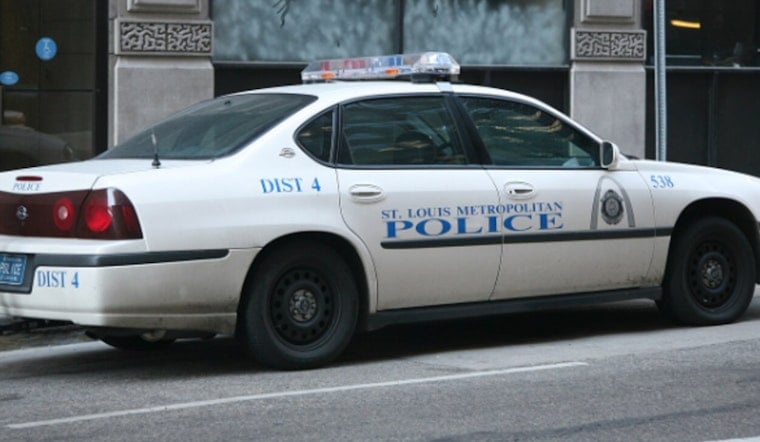
A man shot in an attempted robbery on Highland Avenue back in 2020 has died from those same injuries, and St. Louis police are now investigating his death as a homicide. Krishon Merriweather, 48, died on August 20, closing out a six-year chapter that began with a gunfire-scarred morning in the Wells-Goodfellow neighborhood and ended with a medical finding that connected his final days directly back to that attack.
According to KSDK, police found Merriweather in the backyard of a home in the 5800 block of Highland Avenue shortly after 6:30 a.m. on June 10, 2020. As reported by First Alert 4, officers responding to the shooting that morning found Merriweather suffering from multiple gunshot wounds and took him to a hospital for treatment. He told responding officers, per the police account, that an unknown Black man had approached him and tried to rob him before opening fire while he was walking through an alley.
Medical Examiner Reclassifies the Case
The case sat unresolved for years until the St. Louis Medical Examiner's Office informed police on August 21 that Merriweather's death was due to injuries sustained in the 2020 shooting, according to the medical examiner's finding cited by First Alert 4. That contact set off a formal transfer to the St. Louis Metropolitan Police Department's Homicide Division, the same day the medical examiner's office ruled the death a homicide, per the same account. Police have asked the public for any information about the original shooting, and detectives can be reached at 314-444-5371, while tips can also go to CrimeStoppers at 866-371-8477.
The delayed classification is possible because Missouri law sets no time limit on prosecuting murder. Under Missouri Revised Statutes § 556.036, prosecutors can file first- or second-degree murder charges at any point if a victim eventually dies from injuries caused by a prior assault, according to MRD Lawyers. That framework exists in part because Missouri, like other states, statutorily abolished the old common-law “year and a day rule,” a doctrine that once barred homicide prosecutions if a victim survived longer than a year and a day after being injured, per a report to the Maryland General Assembly.
An Open Question for Investigators
Whatever physical evidence or witness testimony existed from the original June 2020 incident will now need to hold up six years later, a practical hurdle that remains an open question for investigators working the case, per KSDK's reporting. Wells-Goodfellow has seen a steady stream of gun violence in the years since Merriweather was shot, including a fatal shooting of Eric Johnson in a neighborhood yard last September and the killing of 23-year-old La'Trez Clay in February 2025.
The neighborhood's vulnerability is tied in part to its housing stock. As of the 2020 Census, Wells-Goodfellow had 2,589 total housing units, and more than a third of them — 869 units — were classified as vacant, according to data published by the City of St. Louis. That level of vacancy has long been linked to the kind of alley and backyard violence that left Merriweather wounded in 2020.
Citywide Violence Trending Down Since 2020
The case lands even as St. Louis's overall violence numbers have moved sharply in the other direction. The city recorded 140 homicides in 2025, a 12-year low, alongside a 16% drop in Part I violent crime compared to 2024, according to the St. Louis Metropolitan Police Department. A separate analysis from the Council on Criminal Justice found that St. Louis's homicide rate in the first half of 2025 was 40% lower than in the first half of 2019, outpacing an average 14% reduction seen across 38 other major U.S. cities studied.
The city has also built out infrastructure specifically aimed at neighborhoods like Wells-Goodfellow. St. Louis established its Office of Violence Prevention in July 2022 to run community outreach and conflict de-escalation programs, including Show Me Peace, targeting gun violence in high-risk areas. Cases like Merriweather's, where a years-old injury is only later reclassified as a homicide, also show up in regional clearance statistics — St. Louis County Police reported a 104% homicide clearance rate in 2025, a figure driven in part by exactly this kind of delayed case resolution.
Families and survivors dealing with the long-term fallout of gun violence in St. Louis have access to support through organizations including the Crime Victim Center of St. Louis and the Urban League of Metropolitan St. Louis's Neighborhood Healing Network, both of which offer specialized services for violent crime survivors and their families.



