
























































Rogerie Jerome has lived in her Louisville home for five years, and twice this summer heavy rain sent sewage water up through her basement floor — six feet deep, she says, with toilet paper floating on top. The damage topped $10,000. Her homeowners insurance paid out just $5,000.
Jerome told WDRB that her basement first filled with sewage in 2021, then again after back-to-back storms on July 11 and July 22 this year. She was told the water came from Louisville MSD's main sewer system, and she lost personal items, clothing and business machinery in the process. Sewage also seeped into her furnace and water heater, and mold has since taken hold in her drywall, with repairs quoted at $5,000, per the same account.
The financial hit didn't stop there. Jerome was quoted another $5,000 to install a sump pump, according to the report, money she says should never have fallen on her because, in her view, MSD is responsible for the damage to her home. She has since started a Facebook group where 17 other homeowners have reported the same problem in their own basements.
A Suspended Program Leaves Homeowners on Their Own
Jerome contacted MSD about its Plumbing Modification Program after the recent backups, only to learn the utility suspended it in December 2025 due to budget cuts, an MSD representative told the outlet. The program, which covered the cost of installing sump pumps for homeowners, had assisted more than 20,000 households over two decades and represented roughly $50 million in MSD investment before it ended, with the utility saying it wanted to reallocate that funding toward community-wide sewer solutions instead of individual home fixes. The program covered sump-pump installations for homeowners.
Jerome also said MSD did not provide her with instructions for disinfecting her home after the overflow, even as the utility issued sewer overflow advisories warning residents to avoid contact with contaminated water. She said the sewage smell reached her house in Louisville's West End during the backups. Federal public health guidelines classify raw sewage backups as Category 3 biohazardous events laden with pathogens, according to the Centers for Disease Control and Prevention, which recommends immediate professional remediation and full removal of porous materials like drywall — since mold can contaminate saturated building materials.
MSD Points to Extraordinary Rainfall, Not System Failure
MSD has said the backups result from extraordinary rainfall and do not indicate a system failure or malfunction, per its statement to WDRB, adding that exceptionally heavy rain can exceed the combined sewer system's capacity and cause backups in some areas. The utility said it is prioritizing drainage network enhancements, increased underground storage and systemwide solutions rather than case-by-case fixes, and plans to complete $30 million in capital projects over the next five years. MSD has acknowledged that the capital projects will reduce the risk of backups across the community but will not immediately solve every individual property issue, according to its statement. The utility's broader work includes combined sewer overflow control.
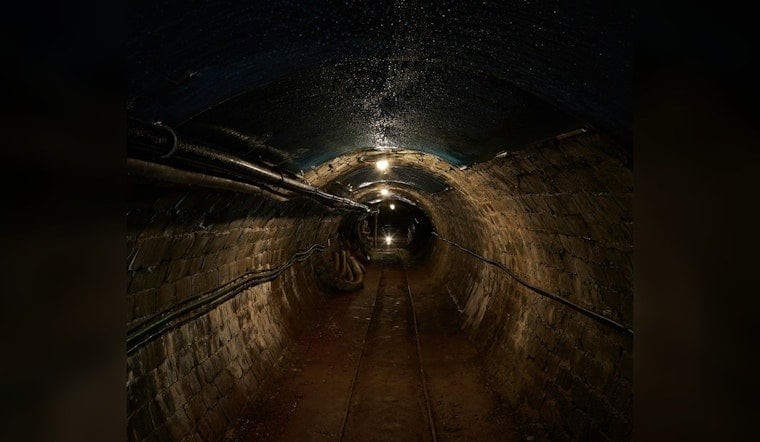
One example of that broader strategy is the Waterway Protection Tunnel, a 4-mile underground storage structure MSD completed in June 2022 at a cost of $221 million. Sitting 200 feet below ground, the tunnel can hold up to 55 million gallons of combined sewage and stormwater during heavy rain, capturing overflows until treatment plants regain capacity, according to Louisville MSD.
Consent Decree Dollars Compete With Neighborhood Repairs
That tunnel exists because of a federally enforceable consent decree MSD entered into with the EPA and state regulators in 2005, committing the utility to an Integrated Overflow Abatement Plan originally set at $850 million, per the U.S. Environmental Protection Agency. In its own consent decree documentation, MSD has acknowledged that directing more than $400 million toward those federally mandated projects reduced the capital available for routine upkeep of neighborhood sewer infrastructure that falls outside the decree.
That trade-off helps explain why aging pipes in neighborhoods like Jerome's have gone without major rehabilitation even as MSD pours money into large regional projects. Extraordinary storms have compounded the strain on MSD's system.
Higher Bills, Limited Insurance Relief
Jerome's ordeal comes as Jefferson County ratepayers brace for higher bills. MSD's board approved a 3.9% rate increase in late July, set to take effect September 1 and add an estimated $3.23 a month to the average residential bill. MSD's proposed operating budget for fiscal year 2027 funded capital work across more than 180 infrastructure projects.
Insurance offered Jerome little cushion. Standard HO-3 homeowners policies exclude sewage backup damage by default, requiring a separate endorsement that typically caps payouts between $5,000 and $25,000, according to The Zebra. That structure explains why Jerome's claim paid out only $5,000 despite damage exceeding $10,000. Property owners in Louisville also contend with private sewer lateral lines connecting their homes to the street main.
CNN reported on Aug. 15, 2022, that a Kentucky disaster showed the United States was ill-prepared and under-insured for devastating floods.
MSD does offer some preventive help: its Downspout Disconnection Program pays property owners $100 for each downspout removed from the sewer system, a step meant to reduce the stormwater volume flowing into combined sewers during heavy rain. For homeowners like Jerome already dealing with mold, lost furniture and a gutted furnace, it's a modest offering against a much larger bill.





