

























































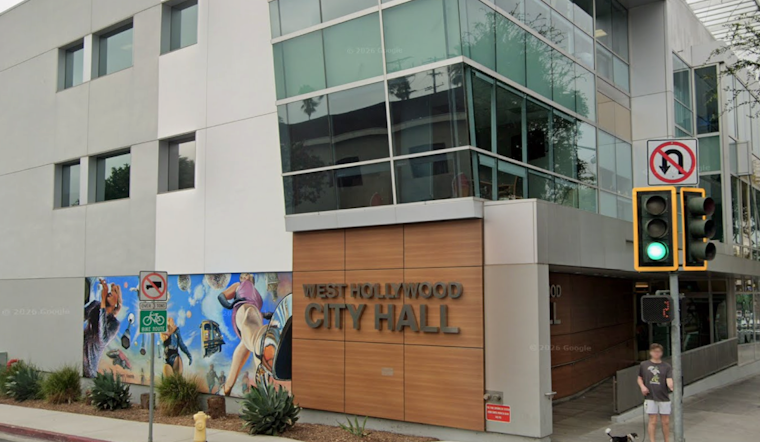
Ten of the 14 qualified candidates vying for three seats on the West Hollywood City Council took the stage this week for the first candidate forum of the campaign, and it didn't take long for the sharpest divides in city politics to surface: Flock Safety license plate cameras, the redesign of Fountain Avenue, and the millions in billboard revenue flowing from Sunset Strip digital signs. The event, sponsored by the League of Women Voters and held at Beaches Tropicana, arrived with 79 days left before the November 3 election.
The forum drew a broad field, from a sitting councilmember to a former two-decade incumbent trying to reclaim his seat. According to WEHOonline, whose reporter Brian Holt covered the event, moderator Patrick Auerbach guided candidates through questions on surveillance, housing and infrastructure despite a livestream plagued by audio that cut in and out. Organizer Wendy Goldman said afterward that she was super happy with how the forum came together, and attendee Steve Martin called it probably the most informative and professional candidates forum he'd seen in years, per the same account. Jacob Shaw provided the venue and additional support for the event.
Three of the 14 candidates hold particular weight in the race. Mayor John Heilman and Councilmember Lauren Meister are both term-limited out of their seats, while Councilmember Chelsea Byers is seeking another term after nearly four years on the council, a citywide contest explained in earlier reporting from WeHo Times. Byers defended her record on the dais, pointing to work including the Metro K Line northern extension and arguing that billboard revenue helps pay for social services and visitor-drawing events, the same forum coverage noted. John Duran, who served on the council for almost two decades before being voted out in 2020, is running again and told the crowd he wants one more term to bring back common-sense governance.
Flock Cameras Split the Field
Surveillance dominated much of the evening. West Hollywood currently uses Flock license-plate readers and around-the-clock cameras, a program that the council voted 3-2 to retain earlier this month, with Heilman, Vice Mayor Danny Hang and Meister in favor and Byers and Councilmember John Erickson opposed over civil liberties and ICE surveillance concerns, according to Canyon News. Candidate Chiedu Egbuniwe said West Hollywood should get rid of Flock entirely, while Larry Block took the opposite view, supporting license-plate readers as a public-safety tool as long as the city owns its own data.
Helen Krieger staked out a middle position, saying Flock holds sensitive information about where people travel and calling for a digital privacy policy governing the system. The updated Flock agreement now requires immediate notice if the company receives a subpoena and bars voluntary disclosure to ICE or Customs and Border Protection without a court order, per the WEHOonline account of the forum. Candidate Kyle Brazeal added that the LAPD paused its own Flock program while seeking similar protections in West Hollywood's agreement. Under the current setup, ALPR data is retained for 30 days, wing replay data for seven days, only two staffers — Fanny Lapkin and Ashley Turner — have access to the data, outside agencies do not have direct access, and unauthorized disclosure carries a $200,000 penalty.
Fountain Avenue Bike Lanes Remain a Flashpoint
Few issues generate more neighborhood friction than the Fountain Avenue Streetscape Project. The 1.8-mile corridor logged 35 severe injury collisions and five traffic fatalities between 2013 and 2024, according to a city staff report cited by the Beverly Press, with roughly 35,000 vehicles using the street daily and about 64% of that traffic simply cutting through without a local destination. The council accepted an $8.2 million state STEP grant in September 2024 to help fund the safety overhaul, and Phase 1 now cuts vehicle travel lanes from four to two, adds protected bike lanes, and eliminates 210 on-street parking spaces between La Brea Avenue and La Cienega Boulevard.
Candidates split sharply over whether that trade-off was worth it. Krieger pointed to 2017 outreach that she said showed overwhelming support for the bike lanes, while Brazeal countered that the council ignored overwhelming neighborhood opposition when it moved forward. Tanya Tsikanovsky called the bike-lanes plan a complete mess, and Duran labeled the removal of one traffic lane in each direction a bad idea. Separately, Susan Pincus described unsynchronized traffic signals turning a short drive on Santa Monica Boulevard into a 25-minute ordeal, underscoring broader frustration with the city's traffic management.
Housing, Shelter Beds and a Contested State Mandate
Homelessness and housing supply drew some of the forum's most personal moments. Kody Christiansen, who said he got sober 11 years ago and spent nearly two years in four different shelters before working at the Harvard Square homeless shelter, later created I Deserve ID, a program that paid for identification cards and helped people apply for housing, food assistance and other benefits. Brazeal said homelessness prevention should come first and backed financial help for residents at risk of losing their homes, while also arguing that a shelter bed should be available before the city demands accountability from people who refuse services. Tsikanovsky countered that West Hollywood already has policies for offering beds and addressing refusals, but that the city simply does not enforce them.
Krieger argued the city has produced 70% less housing in the 40 years since incorporating, and candidates broadly wrestled with California's 6th Cycle Regional Housing Needs Assessment, which requires West Hollywood to plan for 3,924 new units, including 1,063 designated for lower-income households, per the Southern California Association of Governments allocation. Tsikanovsky said she opposes state housing bill SB 79, while a locally designed transit-oriented development alternative program drew support from Brazeal, Christiansen, Duran, Jonathan Cottrell and Tsikanovsky herself, though Byers, Krieger and Stephen Post opposed it. Brazeal separately criticized what he called Sacramento's one-size-fits-all approach to housing mandates, and Duran said he opposed diverting property-tax revenue toward regional transit while residents still need housing and social services. Candidates also generally supported a vacancy tax that avoided a one-size-fits-all structure, though Block called such a tax really, really, really dumb.
Public Safety Staffing and Billboard Dollars
On policing, Duran said he wants the sheriff's department fully funded and argued the city's first responsibility is to taxpaying residents, though he added the city remains obligated to help homeless people. Post instead called for a new community safety officer role positioned between the city's unarmed ambassadors and sworn deputies, along with more support for the ambassador program itself and more funding for the city's Human Services Division. Cottrell said he wants more deputies deployed in the right places alongside better-trained ambassadors.
Billboard revenue also came up as a rare point of fiscal common ground undercut by aesthetic disagreement. Krieger said billboard money provides roughly $8 million annually for social services, a figure that aligns with the city's Sunset Arts & Advertising Program, under which digital sign agreements direct 23% to 25% of gross advertising revenue to the city over multi-decade terms. Christiansen opposed adding new billboards outright, while Byers defended the revenue stream as essential to funding services and drawing visitors. Christiansen also said delivery robots should leave the sidewalks, and Tsikanovsky called for scooters to be removed from them as well.
Financial filings show that West Hollywood's 2026 council candidates have met the $5,000 campaign-balance threshold required for disclosure, though the forum made clear that money in the bank hasn't translated into agreement on policy. With three of five council seats up for grabs and Heilman and Meister exiting through term limits, the race will decide not just who governs but which direction the city takes on surveillance, housing density and street safety — debates that, per WEHOonline's account of the evening, are far from settled with the vote still more than two months away.





