

























































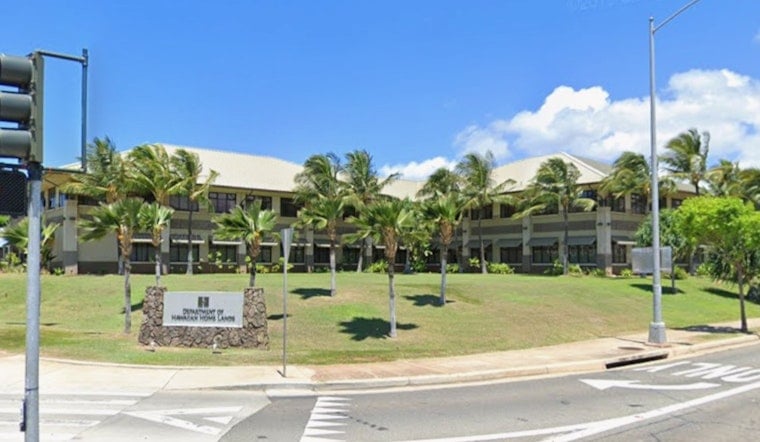
The Department of Hawaiian Home Lands broke ground Saturday on 24 homestead lots scattered across West Oahu, marking the agency's first-ever push into factory-built, single-family modular housing. State officials and legislators gathered in Waiʻanae for the ceremony, which kicks off development on four residential communities split between Kapolei and Waiʻanae.
Of the 24 lots, 16 sit in Kapolei across the Kaʻuluokahaʻi II-B, Kaʻuluokahaʻi II-C, and Kānehili subdivisions, with the remaining eight in Waiʻanae, according to Hawaii News Now. DHHL has branded the effort its West Oahu Scattered Lots Pilot Program, a name that signals the agency is treating this as a test case rather than a one-off project, per the Department of Hawaiian Home Lands. U.S. Rep. Jill Tokuda told the station the groundbreaking represents hope, adding that homes will soon be built so people can receive awards and begin turning keys in doors.
Why Modular, and Why Now
The homes rising on these 24 lots will be DHHL's first factory-built single-family modular units, per the department. DHHL tapped Colorado-based manufacturer Fading West to supply the homes, which are constructed off-site and shipped to Hawaii. The station's report on the groundbreaking follows earlier reporting that laid out the financial logic behind the shift toward prefab construction.
Factory-built construction runs roughly 20% cheaper and can move up to 50% faster than traditional site building, according to Honolulu Civil Beat. Fading West previously delivered 82 modular units for Maui wildfire recovery through a FEMA partnership, the outlet noted. DHHL's Land Development Division estimates conventional home construction on new homestead lots frequently tops $550 per square foot, while prefabricated modular construction averages around $363 per square foot, per CivIQ. Those steep construction costs have historically kept waitlisted Native Hawaiians from qualifying for home loans in the first place.
Federal Dollars and a Long-Term Factory Plan
DHHL allocated $5,423,457 in federal grant funds specifically toward single-family modular housing development for the 2025–2026 fiscal year, according to its Native American Housing Assistance and Self-Determination Act performance report filed with the department. Those NAHASDA grants provide federal funding to support Native Hawaiian housing programs statewide.
Looking further ahead, Hawaii lawmakers and DHHL have explored acquiring a 196,000-square-foot hangar at Kalaeloa Airport to convert into a local pre-fab factory, one capable of producing up to 40 modular homes a month at costs 10% to 15% lower than conventional construction, Civil Beat has reported. The Hangar 111 facility was originally held by the University of Hawaiʻi. Whether shipping modular units from Colorado remains cost-effective compared to eventually manufacturing them on Oahu is a question the pilot program may help answer.
A Waitlist Where Half of Applicants Are Over 65
The urgency behind the pilot traces back to DHHL's homestead waitlist, which carries more than 29,000 Native Hawaiians, with agency demographic data showing roughly half of applicants are over the age of 65, Civil Beat reported. Many beneficiaries have died before ever receiving land. That demographic pressure has pushed DHHL toward issuing project leases before infrastructure is even finished, a strategy the agency is using to grant more than 7,000 leases by the end of this year so families can secure financing and begin preparing for construction early.
Hoodline previously reported on that broader leasing push in its coverage of 815 leases awarded on Oahu and 200 homestead lots in Hilo. The West Oahu pilot fits within a larger housing strategy backed by Act 279, a $600 million general fund allocation the Hawaiʻi State Legislature enacted in 2022 specifically to reduce the homestead waitlist, according to the Department of Hawaiian Home Lands.
Eligibility Rules Still Loom Over the Program
Even as construction methods evolve, the underlying eligibility rules for who can receive a homestead award have not changed. Under the federal Hawaiian Homes Commission Act of 1920, applicants must document a 50% Native Hawaiian blood quantum to qualify for an initial award, though lessees can transfer their lease to qualified relatives who meet a lower 25% threshold, Civil Beat has detailed. That ancestral eligibility rule has faced federal constitutional challenges, including a case Hoodline covered in its report on a lawsuit over the blood quantum rule.
The 16 Kapolei lots sit within the master-planned Kaʻuluokahaʻi community in East Kapolei, which is slated to deliver approximately 700 total housing units for Native Hawaiian families by 2029, according to DHHL. The community's first 115 turnkey homes were slated for occupancy starting this year. Whether beneficiaries embrace factory-built modular homes as readily as custom-built ones, and whether pre-qualification loan requirements still pose barriers for lower-income applicants, remain open questions as the pilot moves forward.





