

























































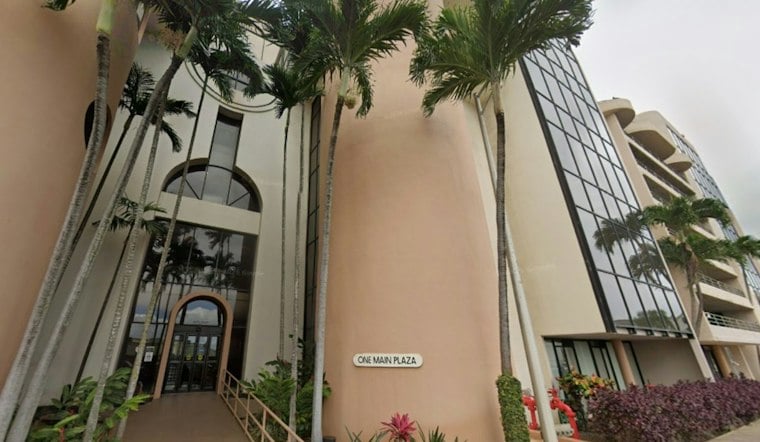
After five hours of public testimony, the Maui Planning Commission voted 6-2 Tuesday to recommend denying hotel-zoning exemptions for all but five of the 48 vacation rental properties that had applied to escape the county's looming phase-out of apartment-zoned short-term rentals. The commission endorsed exemptions covering a combined 397 units, a small fraction of the roughly 3,400 properties that a Maui County Council proposal had sought to carve out from Bill 9.
The proposal traces back to Ordinance 5909, better known as Bill 9, which the Maui County Council adopted in December 2025 to phase out vacation rental use for roughly 6,100 units on the island, according to the Honolulu Star-Advertiser. Under that law, the ban takes effect December 31, 2028 in West Maui and December 31, 2030 in South Maui. Mayor Richard Bissen first announced a plan to repeal the grandfathered legal use of so-called Minatoya list properties on May 2, 2024, one day before Governor Josh Green signed Senate Bill 2919 into law, granting Hawaii's counties explicit home-rule authority to regulate or phase out transient vacation rentals without state preemption concerns.
How the Exemption Push Began
The Minatoya list itself dates to a 1989 zoning amendment, when Maui County excluded vacation condos from apartment districts but grandfathered in preexisting units, per the Star-Advertiser's reporting. Richard Minatoya, for whom the list is named, recommended the zoning change not apply to units completed before March 5, 1991, and county officials later excluded about 1,100 of those units from Bill 9 altogether. The council's Housing and Land Use Committee met July 1 and continued the session to July 6 before voting 7-1 on July 24, 2026, to advance proposed exemptions, with resolutions 26-110 and 26-111 seeking to rezone land under the 48 properties into new hotel zoning classes.
Those hotel zoning classes were created by the council in July, giving Minatoya list condo complexes a procedural path to apply for hotel zoning, according to a Team West Maui Real Estate account. Each property still needed its own public hearing and council approval, a process that began with a far broader ambition: a council Temporary Investigative Group had initially recommended in December 2025 that roughly 4,500 Minatoya list properties be allowed to apply for the new exemptions, according to Courthouse News Service, before council leadership narrowed that list down to the 48 properties that reached the commission.
A Divisive Hearing Room
Testimony before the nine-member commission was, in the Star-Advertiser's telling, highly divisive, pitting local housing advocates against property owners hoping to keep operating as vacation rentals. Dayton Paishon told commissioners that Maui needs housing for people, while Jackie Keefe argued that legal status does not necessarily make something pono, adding that Maui families need homes. Nara Boone said the work leading to Bill 9's passage is being undermined by the exemption push.
Property owners pushed back just as hard. Wendy King urged commissioners to recognize the work and collaboration behind the proposed exemption list. Bob Hansen, who said he bought the Indo Lotus in 1985 as a rental property and has lived on Maui with his wife Donna for 37 years, described a property in Kihei that now commands minimum three-night stays costing around $5,000 to over $7,500. Vittorio Favati, who owns one of 42 leasehold units at Kahana Village, described the property's historical visitor use; converting leasehold properties to long-term housing could prove problematic.
What the List Actually Contains
The 48 properties on the proposed exemption list were a mixed bag: some operate like hotels, some are timeshares, some blend timeshare and transient vacation rental units, some hold county variances allowing continued rental use, and others are single-unit vacation homes valued from $1.6 million to $6 million. All were approved or developed before 1989 in apartment zoning districts, according to the Star-Advertiser's reporting.
The commission majority ultimately endorsed exemptions for five properties: Hale Kaanapali, with 262 units; Kuau Plaza, with 30 units; Maui Schooner, with 58 units; Hono Koa, with 28 units; and Hana Kai, which commissioners endorsed as a hotel. Commissioners Keaka Kamai and Josh Circle-Woodburn dissented from the recommendation, while commissioner Virgilio “Leo” Agcolicol was absent. Notably absent from the approved list were larger complexes such as Kamaole Sands in Kihei, which has 440 units and operates most of them as short-term vacation rentals under a hotel-like operation, Papakea in Kaanapali with 364 units, the Wailea project with 404 combined units, and Luana Kai in Kihei with 113 units.
Shoreline Exposure and the Road Ahead
The commission majority said it sought more objective standards for identifying hotel-like properties going forward, according to the Star-Advertiser. That search for clearer criteria echoes a separate move by the council's Housing and Land Use Committee, which voted 5-4 the week before September 3 to adopt criteria prioritizing hotel-district rezoning for apartment vacation rentals sitting within the county's Sea Level Rise Exposure Area, as reported by Maui Now. Committee members argued that units exposed to sea-level rise by 2100 are unsuitable for long-term resident housing, while community advocates raised concerns about using sea-level rise and coastal hazards to justify rezoning; the council has also considered 32 properties for exemption based on proximity to the shoreline. Greg Pfost said applications could still be received to exempt more properties from the Bill 9 ban.
The underlying tension driving all of this is stark. A March 2025 study by the University of Hawaiʻi Economic Research Organization projected that eliminating Maui's 6,127 active apartment-zoned vacation rentals could grow the island's long-term housing stock by 13%, but would also slash annual visitor spending by $900 million, a 15% drop, and cost the island 1,900 jobs. Bill 9's stated aim is to address a housing shortage worsened by the August 2023 Lahaina wildfire, which the Star-Advertiser reports destroyed close to 5,500 homes.
Whether the Maui County Council will now try to overrule the Planning Commission and grant more hotel-zoning exemptions remains an open question. County law allows the council to approve exemptions the commission did not endorse, but only with a two-thirds vote. Hoodline previously reported on an earlier commission rebuff of similar hotel-zoning proposals, while UHERO's policy analysis projected condo-price declines of 20% to 40%.





