

























































A fourth-generation Japanese American from Cotati is set to open Sonoma County’s first sake brewery next month, pouring drinks that trace back to his great-grandmother’s homemade sake and a family history that survived wartime incarceration. Bruce Shimizu’s Shimizu Sake Company will debut its tasting bar in Windsor in September, offering everything from a $34 medium-bodied junmai to a $75 daiginjo, alongside a lower-alcohol sake seltzer line built for casual sipping.
Shimizu’s path to the brewery was anything but direct. According to The Press Democrat, he studied landscape architecture and later worked in real estate development before turning to sake full time. He first planned to open a Sonoma County sake brewery back in 2020, but the pandemic delayed those plans for years. In June 2026, he finally received his license from California’s Department of Alcoholic Beverage Control to brew sake commercially — a Type 01 Beer Manufacturer license that classifies sake as a brewed beverage and permits on-site tastings and retail sales, a structure detailed by AccelPay.
A Family Recipe Passed Down Through Generations
Shimizu’s connection to sake didn’t start in a classroom. His great-grandmother made homemade sake and used koji to ferment pickles, and after the family returned to Sonoma County, she resumed brewing sake and used the leftover sake lees to marinate meat or fish, per the same report. Shimizu taught himself the craft largely by watching Japanese brewers and home sake makers on YouTube, then completed a professional sake brewer’s course in 2015, the same year he produced his first batch using Yamada Nishiki rice in the Central Valley.
That rice choice wasn’t incidental. Yamada Nishiki, grown in Japan’s Hyogo Prefecture, is often called the “King of Sake Rice” because its large, soft starch core withstands the intense polishing required for high-grade ginjo and daiginjo sakes, according to GuildSomm. While Calrose medium-grain rice accounts for roughly 85% of California’s total rice output, specialized growers in California and Arkansas have cultivated Yamada Nishiki since the late 20th century specifically to supply domestic craft sake makers, according to Offrange.
Roots at Fountaingrove and a Wartime Incarceration
Shimizu’s paternal great-grandparents emigrated from southern Japan and first settled in Hawaii before making their way to Sonoma County sometime between 1900 and 1920. Once there, his great-grandfather went to work for Kanaye Nagasawa, the founder of Santa Rosa’s Fountaingrove Winery. Nagasawa, born Hikosuke Isonaga in Kagoshima, Japan, in 1852, was one of the first Japanese immigrants to the United States and became known as the “Wine King of California” after inheriting the 2,000-acre Fountaingrove estate, according to historical accounts from Paradise Ridge Winery. After Nagasawa’s death in 1934, California’s Alien Land Laws — which restricted property ownership for non-citizens ineligible for naturalization — prevented his Japanese American relatives from legally inheriting the estate, contributing to its eventual dissolution, per Oxford Academic.
Decades later, Shimizu’s family was imprisoned in southeastern Colorado during World War II for roughly three years. The site, known as the Granada War Relocation Center or Amache, incarcerated more than 10,000 Japanese Americans between August 1942 and October 1945 and reached a peak population of 7,318 in 1943, according to Amache.org. The federal government formally recognized that history in March 2024, when the National Park Service established the Amache National Historic Site to preserve the location, per the National Park Service.
What’s Pouring at the Tasting Bar
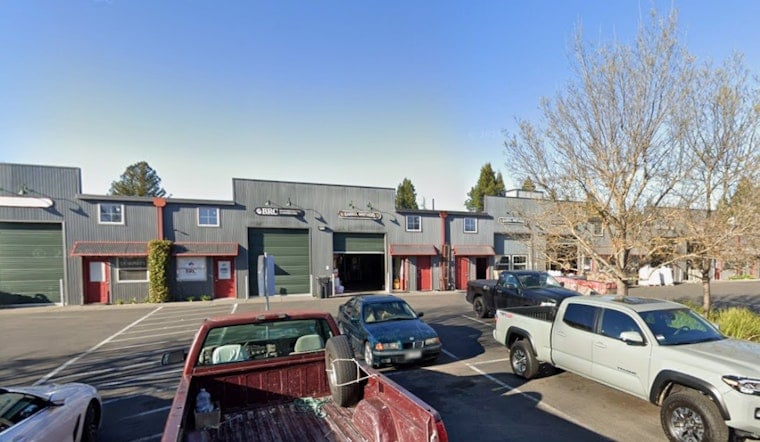
Shimizu Sake Company is located at 399 Business Park Court, Suite 521, in Windsor, a complex that already houses artisanal food and beverage producers including Barrel Brothers Brewing Company and Firefly Chocolate, according to a San Francisco Chronicle guide to North Bay craft producers. The tasting bar is expected to operate from 4 to 10 p.m. Thursdays through Saturdays once it opens in September, and the brewery will also offer visits without tastings by appointment.
The lineup will include a still ginjo sake for $45, a sparkling ginjo for $50, a nigori sake for $35, and the $75 daiginjo, alongside the $34 junmai. Traditional offerings will contain 12% to 14% alcohol. But much of the first batch is going toward something lighter: a sake seltzer sold in 12-ounce cans for $7 apiece, available plain or in locally fruit-infused still and sparkling versions. Planned flavors include Santa Rosa plum and Crane melon, with experimental flavors like Gravenstein apple, mango and pineapple also in the works.
Shimizu told the Press Democrat that he wanted to develop his own sake-making techniques and flavors rather than simply replicate tradition, and he said the seltzer line is designed to support low-alcohol cocktails as well as stand on its own. He also said sake pairs well with savory foods, a pitch aimed at wine country visitors more accustomed to grape-based pairings.
A Growing Market for Craft Sake
Shimizu’s timing lines up with a broader surge in American sake interest. The U.S. sake market reached an estimated $13.3 billion in 2024 and is projected to grow at a compound annual rate of 4.61% through 2033, according to Deep Market Insights. Japanese sake import volume into the United States doubled over a ten-year span to reach approximately 9 million liters in 2022, according to Sake Portal, though imported sake still accounts for roughly 0.2% of the overall U.S. alcohol market.
For Shimizu, the venture is as much about honoring a lineage as it is about capitalizing on that growth. From his great-grandmother’s pickle-fermenting koji to the daiginjo now aging in Windsor, Shimizu Sake Company positions itself as both Sonoma County’s newest craft beverage producer and a living link to a family story that spans Fountaingrove, Amache, and back home again.





