

























































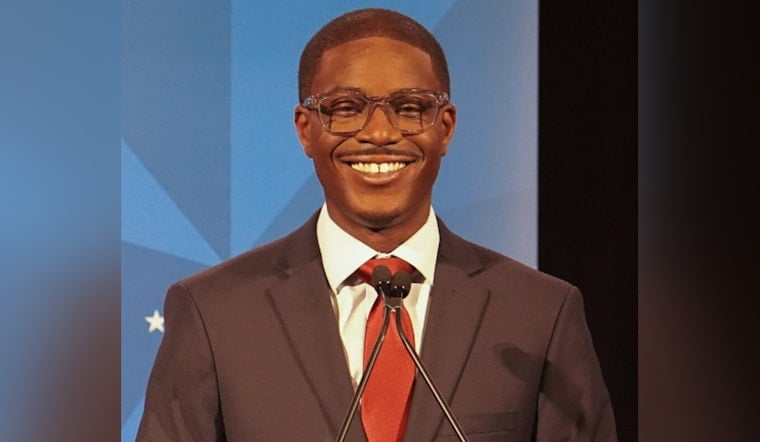
Wisconsin's first open-seat governor's race in over a decade has its first general-election snapshot, and it shows Milwaukee County Executive David Crowley holding a narrow 48% to 44% edge over U.S. Rep. Tom Tiffany. The numbers come from a survey of 500 likely Wisconsin voters conducted August 12 and 13, just days after the state's bruising August 11 Democratic primary set the general-election matchup in motion.
The poll, called the Badger Battleground Poll, was commissioned by Madison-based firm Platform Communications and described by the firm as bipartisan, according to FOX6 News Milwaukee. Republican strategist Keith Gilkes, a former chief of staff to Scott Walker, and Democratic strategist Tanya Bjork both advised on the poll's methodology, according to CBS 58. Crowley's advantage was even more pronounced among independents, where he led Tiffany 42% to 30%, and in battleground Wisconsin Assembly districts, where he was ahead 54% to 35%.
A Name Recognition Gap Looms Large
Despite Crowley's lead, the poll carries a warning sign for Democrats: 31% of voters said they don't know enough about him to have an opinion, according to the same FOX6 report. Gilkes said Crowley's name recognition is significantly lower than Tiffany's, even as Crowley currently holds a favorable view among 43% of voters compared to 38% for Tiffany. Gilkes added that Tiffany is slightly behind but that a four-point August deficit is not insurmountable this early in a general election.
Voter mood in the state also appears to favor an anti-incumbent message, at least on paper. Per FOX6's report, 61% of Wisconsin voters believe the country is on the wrong track, while 51% believe the state itself is moving in the wrong direction. Bjork said Wisconsin voters are not particularly happy right now, which she framed as creating an opening for either candidate depending on how they run their campaigns.
Two Very Different Paths to November
Bjork said Tiffany can try to make the election about change, but that he must first overcome his own negative ratings to do so. She added that Crowley currently has the advantage, but must still convince voters that Democrats deserve another four years in the governor's office. Gilkes framed the central question for Republicans as whether Tiffany can turn statewide dissatisfaction into a compelling case for change, noting that Wisconsin voters are broadly unhappy with the direction of the state.
The educational divide running through the electorate is stark. College-educated voters favored Crowley over Tiffany by 58% to 35% in the same survey, while voters without a college degree leaned toward Tiffany, according to CBS 58's reporting. National headwinds are also part of the equation: the same poll found 56% of respondents held an unfavorable opinion of President Donald Trump, a factor that often shapes down-ballot turnout in swing states.
How Each Candidate Got Here
Crowley, the Milwaukee County executive, won the Democratic nomination on August 11 in a race decided by less than a percentage point, edging state Rep. Francesca Hong 39.88% to 39.38% after briefly suspending his campaign in July and re-entering with Governor Tony Evers' backing, as Hoodline previously reported. Evers, who declined to seek a third term, had endorsed Crowley in the primary, according to Ballotpedia. Hong ran as a democratic socialist with strong support among younger voters, winning counties with high concentrations of 18-to-34-year-olds, while Crowley led by nine percentage points in areas with fewer young adults, per reporting from The Washington Post. If elected in November, Crowley would become the first Black governor in Wisconsin's history.
Tiffany, a member of Congress, secured the Republican nomination after Donald Trump endorsed him in January, prompting rival Washington County Executive Josh Schoemann to drop out of the race within 24 hours, according to PBS. That early consolidation spared Republicans a costly primary fight. Still, history is not on Tiffany's side in one respect: no sitting member of the U.S. House of Representatives has ever been elected governor of Wisconsin, PBS also notes.
Data Centers Emerge as a Policy Flashpoint
Beyond the horse-race numbers, the two campaigns have staked out competing positions on data center development, an issue that has stirred local fights across the state over power usage and tax incentives. Tiffany has pledged to end Evers-era data center subsidies, while Crowley supports banning nondisclosure agreements tied to such developments without committing to a statewide moratorium, Hoodline has reported. The debate echoes local disputes like the one Hoodline covered when Bellevue trustees froze new data center projects for a year.
With the primary now behind them, both campaigns have roughly three months to close the name-recognition gap and shape voter perceptions before Election Day. The Badger Battleground Poll offers an early read, but as both Gilkes and Bjork indicated, the fundamentals of the race, from Trump's approval ratings to each candidate's ability to define themselves to undecided voters, remain very much in motion.



