

























































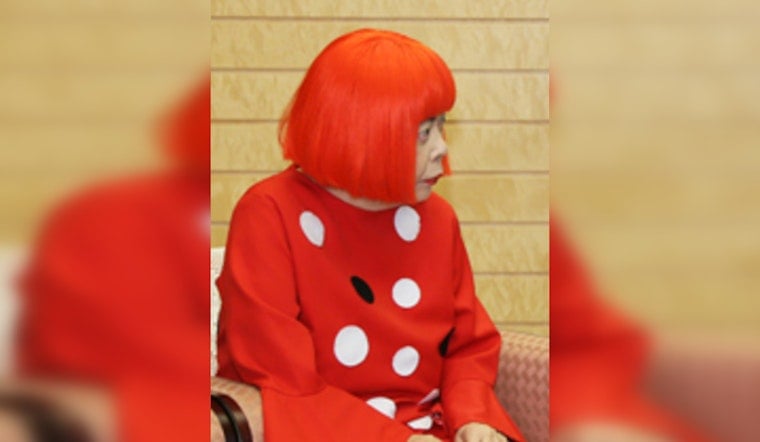
Yayoi Kusama, the Japanese artist whose polka-dotted Infinity Mirror rooms turned museum visits into viral social media moments, has died at 97. She died on August 14 at a hospital in Tokyo, though her passing was not publicly confirmed until Thursday, nearly two weeks later.
The cause was multiple organ failure, according to a statement from her studio and foundation reported by The Straits Times. As WSB-TV reported, her studios said Kusama continued painting until her final days, closing out an artistic career that spanned more than seven decades and included paintings, sculptures, performances, films, novels, and poetry. Her official website statement said her art aims to bring hope and strength to people around the world, and her studios said they would continue to honor her wishes through art.
Atlanta's Record-Setting Farewell to the Tour
Nowhere did that ubiquity play out more dramatically than in Atlanta. The station's report notes that when the High Museum of Art hosted “Yayoi Kusama: Infinity Mirrors” in 2018, it served as the final stop on the broader Infinity Mirrors retrospective tour, and the museum sold out every advance ticket for the show. The Atlanta exhibition featured six immersive mirror rooms along with more than 60 other works, including “The Souls of Millions of Light Years Away” and “All the Eternal Love I Have for the Pumpkins,” and ran from November 18, 2018, through February 17, 2019, per the same account.
The presale alone brought the High Museum 4,900 new memberships, more than twice the 2,000 the museum had anticipated, the outlet reported. Demand was so intense that the museum began releasing about 100 additional tickets each day, and fans camped overnight for a chance at walk-up passes, according to the same report. Local frenzy tracked with a broader national wave; Digital Molt reported that when advance sales opened for the Atlanta run, all roughly 140,000 available tickets sold out within three days, with online queues exceeding 11,000 people. Online, the hashtag #InfiniteKusama reached 91 million Twitter and Instagram accounts in 2018, per the WSB-TV report, and the Infinity Mirrors retrospective sold out at every stop on its run.
Patterns Rooted in Childhood and a Letter From O'Keeffe
Kusama's signature repeated patterns, the dots and nets that came to define her visual language, originated from visual experiences she began having as a child, according to WSB-TV's reporting. The Washington Post adds further context: she began experiencing vivid hallucinations of repeating patterns during her childhood in Matsumoto, Japan, a detail that frames the deeply personal roots of an aesthetic that would later blanket museum walls and merchandise shelves worldwide.
Her path to New York was shaped by an unlikely mentor. According to the Daily Art Magazine, Kusama's 1957 move from Japan to New York was catalyzed by a 1955 letter from American painter Georgia O'Keeffe, who responded to the then-unknown young artist's inquiry with advice and encouragement after Kusama discovered O'Keeffe's work in a secondhand bookshop back home. Kusama went on to create her first mirrored environment, “Infinity Mirror Room – Phalli's Field,” in 1965 at New York's Castellane Gallery, filling the space with red-and-white polka-dotted soft sculptures, as detailed by Tate Etc.
A Voluntary Home in a Tokyo Psychiatric Hospital
In 1977, after suffering severe panic attacks and hallucinations, Kusama voluntarily admitted herself into Seiwa Hospital, a psychiatric facility in Tokyo, according to the Washington Post. She lived there by choice for nearly 50 years, walking daily to her nearby studio to paint, a routine that effectively wove mental health care directly into her creative practice until her death.
Her international standing had faded through the 1970s and 1980s, when her work was largely overlooked by major Western art institutions. That changed in 1993, when Kusama represented Japan as a solo artist at the 45th Venice Biennale, an installation that earned critical acclaim and marked a major turning point in re-establishing her reputation, according to ArtDependence.
Record Prices and a Museum Built in Her Name
The renewed attention eventually translated into blockbuster auction results. Kusama achieved her highest sale in May 2022, when her 1959 canvas “Untitled (Nets),” one of the early white net paintings she created shortly after arriving in Manhattan, sold for $10.5 million at Phillips in New York, according to HENI, cementing her status as one of the world's top-selling female artists.
Institutions built around her work reflected the same surge in popularity. The Infinity Mirrors retrospective, organized by the Hirshhorn Museum and Sculpture Garden, drew 475,000 total visitors during its 2017 Washington, D.C. run and boosted Hirshhorn membership from 150 to over 10,000, the Los Angeles Times reported. That same October, a dedicated five-story Yayoi Kusama Museum opened in Tokyo's Shinjuku neighborhood, designed by Kume Sekkei and operated by her foundation with a cap of 200 visitors per day, according to Sotheby's.
The selfie-driven enthusiasm around her installations occasionally created problems for museums. During the 2017 Hirshhorn exhibition of “Infinity Mirrored Room — All the Eternal Love I Have for the Pumpkins,” the room was briefly closed after a visitor trying to take a photo lost their balance and accidentally crushed one of the installation's yellow pumpkin sculptures, Sotheby's reported, an incident that prompted stricter viewing rules and timed room limits across later tour stops.
Kusama's mirror rooms have continued to travel and inspire well after that Atlanta run closed. Hoodline previously reported on a Kusama pumpkin room's arrival at the Cincinnati Art Museum, a reminder of how far her immersive installations have spread across the country in the years since her Atlanta sellout.





.jpg)