

























































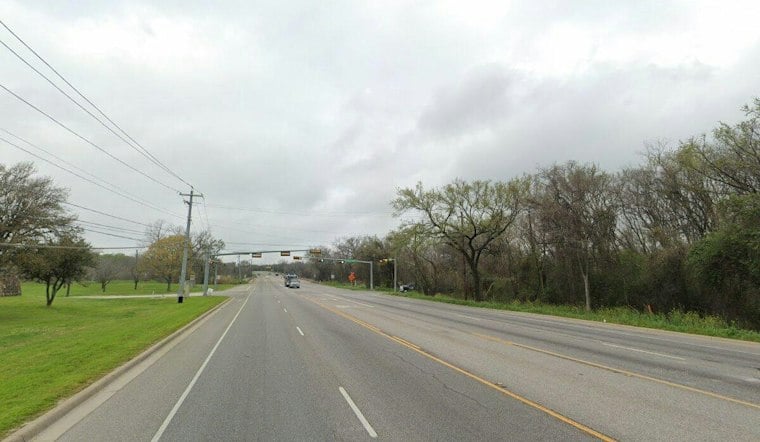
More than 100,000 gallons of raw sewage spilled from two manholes into a storm drain in Northeast Austin on September 14, 2026, flowing into a private stormwater pond before crews managed to stop the leak. Austin Water crews responded near 2500 E. Howard Lane, and the utility says it has not yet determined what caused the failure.
Sewage Traced to Storm Drain Feeding Private Pond
According to a release from the City of Austin, the discharge occurred near East Howard Lane and Old Gregg Lane, where raw sewage flowed from two manholes into a storm drain connected to a private stormwater control wet pond. The release identifies the pond as a private stormwater control wet pond. The Austin American-Statesman reported that Austin Water said the leak was stopped on September 14, and crews planned to remain onsite until final repairs were complete.
The utility said the city's centralized drinking water supply was not contaminated by the spill, per the Statesman's report. Still, out of caution, Austin Water warned that private wells within a half-mile of the spill site should be boiled before use for drinking, cooking, bathing, or brushing teeth, and that affected wells should be tested and disinfected if needed. Anyone exposed to the waste was advised to bathe and thoroughly wash their clothing as soon as possible. Austin Water also notified the Texas Commission on Environmental Quality about the incident, the paper noted.
State Rules Set Strict Reporting and Safety Thresholds
The advisory reflects mandatory protocols under Texas law. Under Texas Water Code § 26.039, utility operators are required to notify the commission within 24 hours and to notify local-government officials and media when the discharge may adversely affect a public or private drinking-water source. TCEQ separately lists a 100,000-gallon threshold for public notification under specified criteria. Utilities must also report to TCEQ regional offices within 48 hours to confirm public notice was issued.
The boil-water guidance applied to private wells within a half-mile of the spill site, where residents were advised to boil water before personal use. Public-health warnings accompanied the raw sewage spill.
Pattern of Recent Spills Across the Austin Water System
The Howard Lane incident is not an isolated event for the utility. Just four days earlier, on September 10, Austin Water responded to a reclaimed-water main break near 5951 E. Stassney Lane in Southeast Austin that spilled 574,000 gallons of non-potable reclaimed water, according to the Statesman's reporting. That reclaimed water is treated wastewater typically used for irrigation, toilet flushing, and industrial purposes rather than for drinking. And on August 17, Austin Water reported a separate 73,000-gallon wastewater sludge spill at Decker Lane and FM 969 near the Walnut Creek Wastewater Treatment Plant, where the sludge flowed into a storm drain and a nearby private pond but was ultimately contained there, the paper reported. People were advised to avoid contact with that waste material and any potentially affected soil or water.
Further back, in December 2025, an equipment failure at an Austin Water lift station released an estimated 198,000 gallons of domestic wastewater into a tributary of Gilliland Creek, causing a fish kill and prompting a private well boil-water advisory, as reported by KVUE. That spill extended downstream to Cameron Road before it was contained. And a year prior, in September 2025, Austin Water handled a 523,000-gallon spill at the Wildhorse Ranch Wastewater Treatment Plant near Manor, which was contained with no reported harm to wildlife.
A System Under Strain — and a Major Expansion Underway
These recurring overflows point to broader pressure on Austin Water's aging network. The utility manages roughly 3,000 miles of wastewater mains and nearly 4,000 miles of water mains, serving more than 1 million residents across a 538-square-mile service area, according to the City of Austin. The utility's wastewater network spans that sprawling system.
To address the strain, Austin Water presented a $2.7 billion five-year Capital Improvement Plan to city officials in October 2025, according to Citizen Portal. The plan includes major projects like the 3.5-mile Williamson Creek interceptor.
The root cause of the manhole failure on Howard Lane has not been disclosed, and it remains unclear how long remediation of the local soil and the affected wet pond will take.





