

























































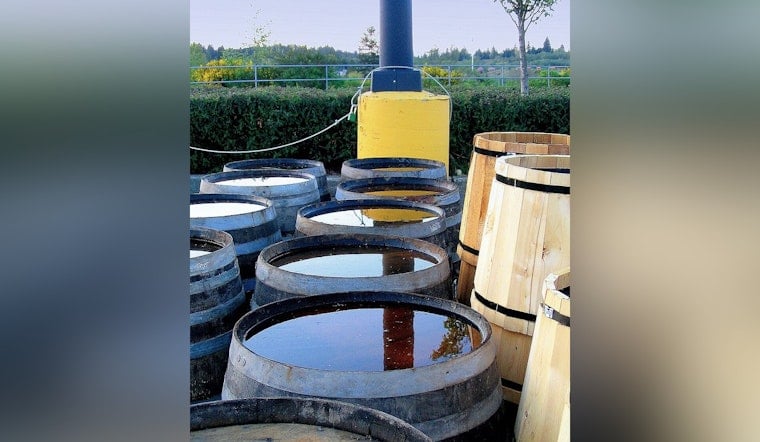
A West Maui nonprofit best known for cooking hot meals after the 2023 Lahaina wildfires is now handing out free rain catchment systems, with 120 households across the region set to receive zero-cost kits complete with barrels, soil amendments, irrigation parts, and step-by-step instruction manuals. The program, called Rain to Resilience, launches under the foundation's newly formed Lahaina Innovation & Arts Center.
The initiative comes from Hua Momona Foundation, a tax-exempt nonprofit based at Hua Momona Farms in Kapalua, which has spent the years since the fires building trust in West Maui first through disaster relief and now through longer-term resilience projects, according to Maui Now. Hawaiʻi Community Foundation's Maui Strong Fund granted funding for Rain to Resilience, part of a broader philanthropic effort that has funneled tens of millions of dollars into Maui recovery, food security, and environmental restoration since the fund was created immediately after the August 2023 wildfires, per the Hawaii Community Foundation.
Each household enrolled in Rain to Resilience receives hands-on training and equipment to install its own system, and the kits themselves are designed to be renter-friendly and portable. The modular systems can be dismantled and reinstalled if a resident needs to relocate, according to the same Maui Now report, a detail that matters in a region where many families spent months in temporary housing after losing homes to the fire.
Building on a Farm to Table Foundation
Rain to Resilience did not emerge from nowhere. Hua Momona Foundation's Farm to Table program, which has operated since August 8, 2023, has served more than 100,000 hot, ready-to-eat meals and distributed more than 30 tons of produce as of this past July, the outlet reports. The program prepares and distributes hot meals at community distribution points, coordinates volunteers, and donates fresh produce, work that echoes the foundation's early role as one of West Maui's primary remaining hot-meal providers in partnership with grassroots groups like Hungry Heroes Hawaii, as YES! Magazine reported in the weeks after the disaster.
That history of hot meals is part of why the leap into rainwater catchment fits the foundation's mission. The stated goal now is to mitigate stress on freshwater systems while supporting backyard food production, according to Maui Now, at a moment when West Maui's water infrastructure is still recovering from the fire's damage.
A Regulatory Opening for Rainwater
The timing lines up with real pressure on the island's water system. A 2026 academic study on post-wildfire drinking water noted that thermal degradation of plastic plumbing during the August 2023 fires released volatile organic compounds into municipal lines, triggering extended Do Not Use advisories for West Maui residents, according to a study published in PubMed Central; the county lifted the final Lahaina advisories in August 2024. In March, Maui County implemented Water Conservation Ordinance 5929, which restricts outdoor landscape watering with potable water between 9 a.m. and 5 p.m. but explicitly exempts non-potable irrigation systems that draw entirely from rainwater catchment, per the County of Maui Department of Water Supply.
That exemption gives West Maui residents a legal, low-barrier way to keep gardens alive without straining a municipal system still under strain. It also helps explain why the county's earlier Rain Barrel Catchment Giveaway Program filled its capacity and closed applications amid high resident demand, the Department of Water Supply has noted, demand that nonprofit grants like Rain to Resilience are now stepping in to help meet.
Regulatory oversight of these home systems remains minimal by design. The Hawaii State Department of Health's Safe Drinking Water Branch does not regulate individual residential rainwater catchment systems and does not require permits for non-potable onsite installations, though the department offers maintenance guidelines rather than direct oversight. That light-touch approach reflects longstanding practice in the state — University of Hawaii's College of Tropical Agriculture and Human Resources has estimated that 30,000 to 60,000 residents statewide already rely on private catchment systems for daily water needs, guidance that historically targeted rural, off-grid homes rather than fire-recovery neighborhoods.
Four Weeks of Training, Then a Kit
Participating households complete a four-week workshop before receiving their zero-cost catchment kits, which include rain barrels, soil amendments, planting materials, irrigation components, and detailed instruction manuals, Maui Now reports. The program launches under the Lahaina Innovation & Arts Center, a Hua Momona Foundation initiative that brings together inventors, artists, educators, entrepreneurs, students, and community partners.
Among the fellows tied to the center's broader network is Suntana Villanueva, a Native Hawaiian farmer described as advancing regenerative agriculture and local food security, alongside Prof. Alan Tratner, who helped establish Earth Day and is also listed among the program's fellows.
Funded by a Summit and a Music Festival
Money for the rain catchment push flowed in part from RISE Maui, an inaugural sustainability summit held August 17 through 21 at the Hyatt Regency Maui Resort and Spa, which Hoodline previously covered as a Kaanapali benefit tied to the foundation's Maui Music & Food Experience. RISE Maui featured a keynote from Dr. Sasha Luccioni, an AI and climate expert, and an innovation conversation co-moderated by executive producer Rod Roddenberry and Hua Momona Foundation founder Gary Grube.
RISE Maui ran into the Maui Music & Food Experience, held August 21 through 22 at the same resort. Combined, the summit and festival welcomed 1,200 guests and raised $150,000 to support the foundation's work across Maui, according to Maui Now's report. The festival's culinary program was curated by Chef Zach Laidlaw of Hua Momona Farms and featured chefs Taylor Ponte of Aurum and Alvin Savella of Coco Deck, alongside musical acts including 3 Pounds of Kalo, John Cruz, Taimane, and Los Lobos.
The foundation's youth programs also fed into the moment. Its music program has averaged about 10 participants joining each week and has welcomed roughly 43 young Maui musicians across two cohorts, connecting them with mentors including Billy Cox, Bernard Fowler, Darryl Jones, and John Cruz, per the outlet's account.
What Rainwater Catchment Can and Cannot Do
Households considering catchment systems should understand the limits state health guidance places on them. Because the Department of Health's rules apply to non-potable domestic use, officials advise against drinking untreated roof runoff, and there is a documented water-chemistry wrinkle specific to Hawaii: rainwater collected in volcanic ash or vog-exposed areas can turn acidic, which can leach heavy metals from roofing materials into catchment tanks unless residents monitor pH or treat the water with baking soda, according to the Hawaii Interagency Vog Information Dashboard. That distinction — safe for gardens and yards, not necessarily safe to drink without treatment — remains the central caveat as more West Maui households add barrels and irrigation lines to their properties under the county's water rules.





