

























































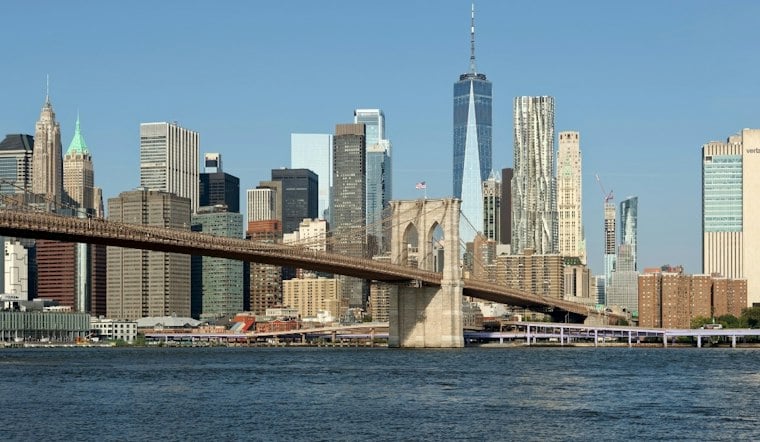
Forty life-size buffalo puppets, built from plywood, metal, and burlap, are set to roam the streets of Lower Manhattan and Downtown Brooklyn this weekend in a free public art event that pairs giant-scale puppetry with Indigenous ceremony and live performance. The two-day procession, titled Return of the Buffalo: Tatanka Owe Akupi, moves from Bowling Green Park to Foley Square on Friday before crossing into Brooklyn on Saturday, ending at Brooklyn Bridge Park.
According to News12 New York, the event is free and open to the public, with native New Yorkers, actors and others joining the Manhattan march before the herd moves into Downtown Brooklyn on September 19. Per 1 Minute Critic, the Manhattan leg runs from 5 p.m. to 7:30 p.m. on September 18 between Bowling Green Park and Foley Square, while the Brooklyn leg runs from 2 p.m. to 4:30 p.m. on September 19 between Abolitionist Place and Brooklyn Bridge Park, linking historic civic spaces in Manhattan to Brooklyn's waterfront.
The full title of the project, Return of the Buffalo: Tatanka Owe Akupi, was created by playwright Amir Nizar Zuabi in partnership with elders from the Lenape and Lakota tribes, as reported by BKReader. The project uses the Lakota phrase “Tatanka Owe Akupi” alongside the English title “Return of the Buffalo.” The same outlet reports that the life-size puppets were built from plywood, metal, and burlap by the Cape Town, South Africa-based Ukwanda Puppets under puppetry director Craig Leo.
150 Volunteers Trained to Animate the Herd
Operating 40 buffalo puppets through city streets takes a small army. More than 150 volunteers from across the country and the world were welcomed to animate the herd. The volunteers received training.
Indigenous leaders are guiding ceremonies and storytelling along the route, per the same BKReader report. Lakota Sicangu elder Tokala Two Elk is sharing the Prophecy of the White Buffalo, alongside Lenape elder John Thomas Delaware and Jason Baldes of the Wind River Tribal Buffalo Initiative, who works on reintroducing wild bison to tribal lands in Wyoming.
A Cast of Performers Along the Route
Brooklyn Heights Parents reported that featured performers along the route include Laurie Anderson, Rhiannon Giddens, Pilobolus, and the Brooklyn United Marching Band, with pop-up musical and spoken-word performances staged at designated stops along the way.
The project is produced by St. Ann's Warehouse, KBH Arts, and The Walk Productions, the same creative collaboration that brought Little Amal, a 12-foot puppet representing a Syrian refugee girl, to New York City in 2022, according to Time Out. That earlier puppet's 2022 visit involved more than 50 events across all five boroughs. Hoodline previously covered Little Amal's Boston debut in 2023.
Bison, Bronx Zoo, and America's 250th
Organizers timed the event to coincide with preparations for America's 250th anniversary, positioning the buffalo as a symbol of North American history, Indigenous survival, and ecological repair, according to ICT. The installation emphasizes North American history predating 1776. ICT describes the 40 puppets as a 38-plus-two symbol.
ICT also reports that while wild bison never roamed the streets of New York City, the city played a pivotal role in saving the species from total extinction through early 20th-century efforts involving captive bison. Nineteenth-century mass extermination reduced wild bison herds from an estimated eight million in 1870 to fewer than 500 around 1890 before restoration efforts began.
Eight Historic Stops Through Brooklyn
The Brooklyn Eagle reported that the September 19 route includes eight historic stops, beginning at Abolitionist Place in Downtown Brooklyn and progressing to Brooklyn Borough Hall, Montague Street, Brooklyn Heights Promenade, Columbia Heights, and Fulton Ferry Landing before terminating at Brooklyn Bridge Park. The Brooklyn route includes both Abolitionist Place and Fulton Ferry Landing.
Public can experience the performances and celebrations at no cost across both days, with the herd's march framed as a reflection on the 19th-century slaughter of American bison and its devastating impact on Native communities, even as its return through New York's streets is presented as a symbol of resilience.





