

























































More than 100 local and national fine artists will set up shop in Pittsburgh's Mellon Park this weekend as the Craftsmen's Guild of Pittsburgh stages the 57th annual A Fair in the Park, a free three-day festival running Friday through Sunday, September 11-13.
The event, organized by the Craftsmen's Guild of Pittsburgh, is expected to draw an estimated 15,000 to 20,000 visitors over its run, according to the guild. As CBS News Pittsburgh reported in a preview of this year's edition, the fair will feature more than 100 artists working across visual art categories, drawing crowds to the historic East End park for what has become a late-summer tradition.
The guild strikes a careful balance between showcasing homegrown talent and bringing in outside names: roughly 60 percent of participating artisans are active Craftsmen's Guild members, while the remaining 40 percent are chosen by a jury from national and international applicants, per the guild's own event details. That mix has helped the fair build a reputation well beyond Pittsburgh — it was ranked No. 16 in Sunshine Artist Magazine's national rundown of the top 200 fine art and design shows, a distinction the guild highlights among its credentials.
A Historic Estate Turned Community Gathering Space
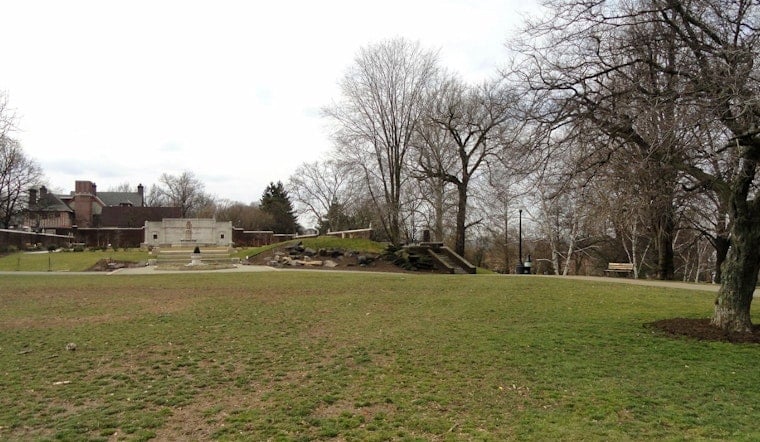
Mellon Park itself carries plenty of history. The park was established in 1943 on the grounds of industrialist Richard B. Mellon's former estate, and it earned a spot on the National Register of Historic Places on February 2, 2023, according to Pennsylvania Historic Preservation. The grounds straddle Fifth Avenue at Shady Avenue, linking three East End neighborhoods — Shadyside, Squirrel Hill, and Point Breeze — which helps explain why the fair draws foot traffic from across that corner of the city.
The park has also been the site of more somber news in recent years. Hoodline previously reported on a stabbing near Mellon Park in October 2024 that left two men in critical condition, a reminder that the same public space hosting this weekend's festivities has also seen its share of neighborhood safety concerns.
Strict Standards for Every Booth
Vendors don't just show up and set up a table. Festival rules require that every artisan present only self-conceived and self-executed original work, use commercial white 10-by-10 tents secured with 40-to-50-pound weights, and carry at least $500,000 in general liability insurance, according to guidelines published on EntryThingy. Those standards are part of what keeps the fair's jury process competitive and its national ranking intact.
The festival footprint extends beyond the outdoor tents. It takes place adjacent to the Pittsburgh Center for Arts & Media at 1047 Shady Avenue, which is coordinating open house events, live craft demonstrations, and art exhibitions alongside the outdoor fair, per a post from the center. Visitors moving between the park and the center can catch demonstrations that complement the juried booths outside.
More Than Just Art on Display
Beyond the visual art spread across 10 categories, the three-day event includes live acoustic performances on two stages, artist demonstrations, regional food trucks, and an interactive scavenger hunt, according to a Patch event listing. The added entertainment and food options have helped transform the fair from a strictly art-focused event into more of a weekend-long neighborhood gathering.
The Craftsmen's Guild of Pittsburgh traces its roots back to 1944, when it was founded by a small group of potters, before formally incorporating as a non-profit organization in 2001. Today it operates as a registered 501(c)(3) visual arts non-profit headquartered in Pittsburgh, according to Cause IQ. More than eight decades after its founding, the guild is still using the fair as its flagship event to fulfill an educational mission centered on preserving craft standards while giving both established and emerging artists a stage in Pittsburgh's East End.





