

























































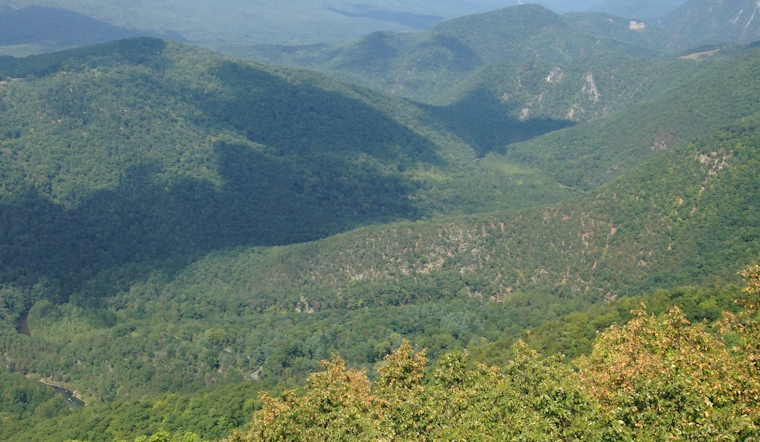
A 75-year-old man from Virginia died Sunday afternoon after falling roughly 50 feet while rock climbing in Smoke Hole Canyon, part of the Monongahela National Forest in Pendleton County, West Virginia. Pendleton County 911 reported that a climber had fallen, and first responders located the man dead at the scene from suspected injuries related to the fall. He had not been publicly identified.
According to CBS Pittsburgh, the man was climbing near Upper Tract on Sunday around 3 p.m. when he fell. Dispatch records reviewed by West Virginia Public Broadcasting show Pendleton County 911 sent emergency crews at 3:11 p.m. to Smoke Hole Road, about half a mile north of U.S. Route 220 near Upper Tract, after reports of a fallen climber. The Upper Tract Volunteer Fire Department, Pendleton County Emergency Rescue EMS, and West Virginia State Police all responded, with state police among the first agencies on scene.
Pendleton County 911 said in a statement, “Our thoughts and prayers are with the victim's family and climbing partners.” Emergency personnel who reached the remote site found the man had already died.
A Second Fatal Fall in Two Months
The Sunday accident marked the second fatal climbing fall recorded in Monongahela National Forest in roughly two months. On July 11, 76-year-old Mike Robinson of Stafford, Virginia, fell to his death while attempting to climb the east face of nearby Seneca Rocks, according to the same CBS Pittsburgh report. The two men, both Virginia residents in their mid-to-late 70s, represent an unusual demographic overlap among the forest's recent climbing deaths, the outlet noted.
Robinson was remembered as a longtime outdoorsman. The Daily Voice reported he was a member of the Washington Canoe Club and had helped with Scouting America. The American Canoe Association said Robinson “embodied the spirit of outdoor adventure,” per the CBS Pittsburgh account.
A Dangerous Backdrop of Rugged Terrain
The area's geography helps explain why falls here are so often fatal and so difficult to reach. Smoke Hole Canyon is a 20-mile-long gorge cut by the South Branch Potomac River between Cave Mountain and North Fork Mountain, and The Nature Conservancy has recognized it as one of the most biologically rich places in the eastern United States, according to the e-WV: The West Virginia Encyclopedia. Parts of the canyon are isolated enough that they can only be reached on foot or by water.
Nearby Seneca Rocks, a 900-foot fin of Tuscarora quartzite towering over the North Fork River valley, offers more than 400 established climbing routes ranging from beginner scrambles to technical multi-pitch ascents, the encyclopedia notes. Historical records and park signage indicate that between 15 and 22 fatal falls have occurred at Seneca Rocks since the early 1970s, according to West Virginia Public Broadcasting's reporting. Climbing crags within Smoke Hole Canyon itself, including Reed's Creek and Entrance Walls, feature a mix of bolted sport routes and traditional multi-pitch climbs, per route documentation on Mountain Project.
Federal Land With a Storied Climbing History
Both Seneca Rocks and Smoke Hole Canyon sit within the Spruce Knob–Seneca Rocks National Recreation Area, a 100,000-acre swath of Monongahela National Forest that President Lyndon B. Johnson established under Public Law 89-207 in 1965 as the first national recreation area located inside a national forest. The site's climbing reputation dates back decades: during World War II, the U.S. Army's 10th Mountain Division used Seneca Rocks in 1943 and 1944 as an assault-climbing training ground, with soldiers later putting those skills to use in cliff assaults in Italy's Apennine Mountains, according to The Historical Marker Database.
Rescues in this stretch of Pendleton County often demand specialized coordination across agencies because of the steep, isolated terrain. In August 2025, the Maryland State Police Aviation Command carried out a helicopter hoist rescue to extract an injured climber from a remote cliff at Seneca Rocks, FOX 5 DC reported at the time, since steep terrain frequently rules out ground-based medical evacuation. Sunday's fall in Smoke Hole Canyon underscores how quickly a day of climbing in the region's backcountry can turn fatal, even for experienced outdoor enthusiasts.



