

























































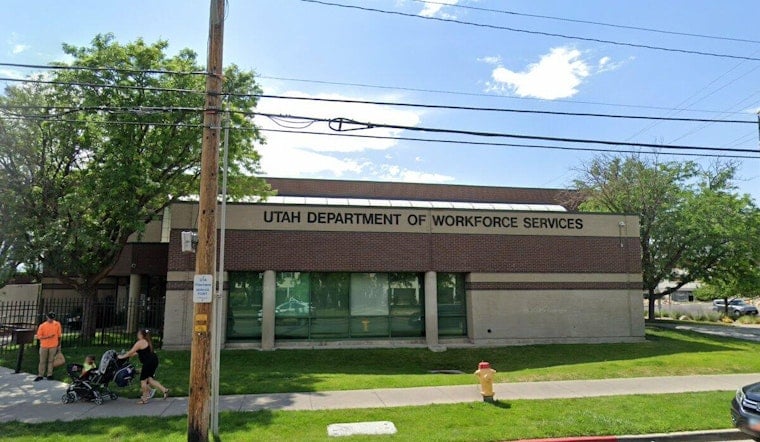
About 900 families across Utah are set to lose their child care subsidies starting October 1, after a federal funding cut forced the state to tighten who qualifies for help paying for daycare. Families previously qualified for the child care assistance program with income up to 85% of the state median income, but that threshold is dropping sharply, leaving some working parents facing an impossible choice between their jobs and their kids.
The change stems from a $21 million cut in federal funding to Utah's child care assistance program, according to KUTV. Utah provides no state funding for child care subsidies of its own, meaning the program is funded entirely with federal dollars — so when Washington trims the allocation, the state has little choice but to shrink the pool of eligible families. According to the Utah Department of Workforce Services' 2016 Child Care and Development Fund plan, child care assistance was available as funding permitted. Under the new rules, new applicants will qualify with income up to only 50% of the state median income, while families already enrolled will be capped at 65% during their annual review.
A Family Weighing Whether to Quit
Azteca Valerio-Bedolla, who receives child care assistance for her daughters, is one of the parents who will lose her subsidy on October 1. She and her husband each work two jobs, and she said having her children safely cared for while she worked boosted her mental health. Now she says she will quit her job to stay home with her kids once the subsidy disappears.
Valerio-Bedolla called the loss of her subsidy unfair and unethical, and she criticized Utah leaders' child care policies, according to the same KUTV report. Advocates warn that the loss of affordable child care could push women out of the workforce broadly, and that the cuts could force many parents to leave their jobs altogether — a risk that lands hardest on families just above the new income cutoffs.
Providers Brace for Fallout
Christina Robles, who owns Brighter Steps Childcare in Magna, Utah, said the funding cuts could affect both providers and the families who rely on them. Her center serves families in Magna, Kearns and Taylorsville, and about 95% of the households she serves are low-income. Robles said she could not sustain her business for two months if enrollment drops sharply once subsidies end.
Robles has called for Utah to invest its own state dollars into subsidized child care rather than leaving the program dependent entirely on federal funding, per the KUTV report. Utah currently offers no other financial relief to families who are losing their subsidies, and the responsibility for finding a state-funded fix now rests with Utah lawmakers. Not every family will be hit at once — the Utah Department of Workforce Services is notifying affected families as their cases come up, and losses will happen during each family's next annual review, with about 90% of currently subsidized families expected to remain in the program, according to Mallory Adams.
How Utah Got Here
The federal shortfall driving these cuts reflects reduced Child Care and Development Fund allocations, according to the Utah Department of Workforce Services. Monthly enrollment in the child care assistance program has increased in recent years, per the Utah Office of Child Care. The program has also faced growing financial pressure. According to the Utah Legislature's Annual Report 2019, Utah had been able to provide adequate subsidy payments, reflected in participation by over 95 percent of the state's child care programs. According to the Utah Legislature's Annual Report 2022, Utah used the funds to increase child care provider subsidy payment rates in October 2020 and later increased them again. As a past policy precedent, Utah's House Bill 199 of 2015 directed the Department of Workforce Services to develop eligibility criteria for child-care program participation, according to a department report.
A 2026 federal rule rescinded prior requirements that had capped family co-payments at 7% of household income and mandated enrollment-based payments to providers, giving states like Utah wider latitude to redraw their own eligibility and copay scales. Utah is far from alone in tightening the door: comparative state data presented to Utah officials in July 2026 showed 15 states now set initial subsidy eligibility at or below 50% of state median income, while some states maintain waitlists or frozen enrollment altogether.
A Deeper Supply Problem
The eligibility cuts land on top of a child care system that was already stretched thin before federal pandemic stabilization funds temporarily eased the strain. A 2020 state report by the Utah Office of Child Care found that licensed child care capacity across the state met only 35% of total estimated family need. Research cited by Utah child advocacy groups has found that 75% of Utah is classified as a child care desert, a shortage estimated to drag $1.36 billion a year out of the state economy through lost work hours and parents leaving the workforce, according to KSL NewsRadio. According to FOX 13 News, four of Utah's 29 counties have no licensed child-care providers, underscoring that the subsidy cuts are occurring amid broader gaps in child-care supply.
State lawmakers have responded with measures aimed at the private sector rather than direct subsidy funding. During the 2026 legislative session, the Utah Legislature passed House Bill 190, raising the state tax credit for small businesses that provide employee child care from 10% to 30%, letting small employers combining state and federal credits recover up to 80% of qualified child care expenses. Lawmakers also passed House Bill 379 in April 2026, exempting child care providers from commercial restaurant-grade kitchen requirements to lower overhead for home- and center-based daycares, according to Utah House Republicans. Neither measure replaces the direct subsidy dollars families like Valerio-Bedolla's are losing, leaving the question of whether the state will appropriate its own funds to fill the gap unresolved.





