

























































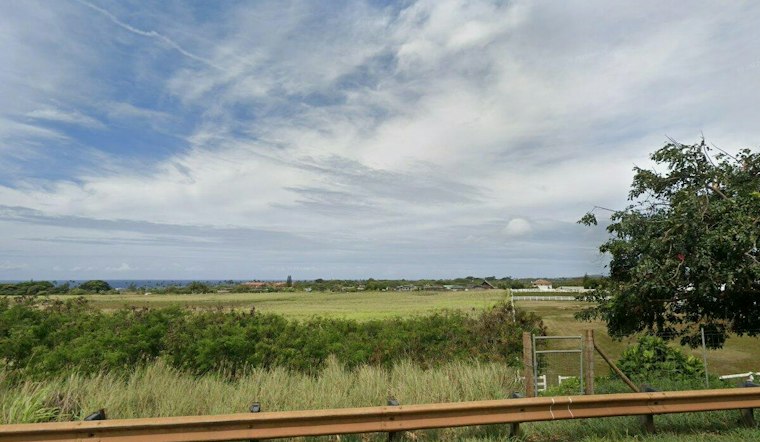
Hurricane Lowell damaged about 90% of the Meephol family’s fields on Kauaʻi, destroying more than 300 trees just as the family expected its largest fruit harvest yet. The storm’s immediate losses included mangoes and avocados that had been central to the farms’ income, according to Kauai Now.
The damage is significant not only for one family but also because it struck a county with a sizable farm economy. Kauaʻi County farms recorded $96.705 million in market value of products sold in 2022, up 58% from 2017, according to the USDA National Agricultural Statistics Service. That countywide figure does not measure the Meephols’ losses or establish how the hurricane will affect island production.
An orchard loss with a long recovery
Usa Meephol’s family farms in Kōloa, Moloaʻa and Kalepa include 198 varieties of trees. After the storm, the family gathered more than 10,000 pounds of mangoes and 4,000 avocados from the damaged orchards, but the salvageable fruit could not replace the trees and future harvests that were lost, Kauai Now reported.
The family has said its recovery work will involve clearing debris, repairing the farms and replacing trees. How much financial assistance it will receive, how quickly the orchards can be replanted and when production can return to normal remain unresolved.
The storm’s wider agricultural footprint
The Meephols were among farmers dealing with a broader wave of orchard damage. Hurricane Lowell knocked down thousands of avocados across Kauaʻi near the beginning of the island’s usual September avocado season, prompting residents to distribute or sell fallen fruit to businesses, chefs and neighbors, according to a separate Kauai Now report.
That surplus produced a short-term community response rather than a substitute for intact orchards. Nearly 200 people attended the Great Kauaʻi Guac-Off in Old Kapaʻa Town on Sept. 17, where 25 entries competed and more than $5,000 was raised for KKCR, the same report said.
Other farms also reported structural damage and preservation challenges. At Aloha Ola Farms, a greenhouse was flattened and fruit trees were uprooted; the farm used generators to protect its remaining inventory while working through the aftermath, according to Pacific Business News.
A family operation built over two decades
The Meephol family’s farming history on Kauaʻi follows an earlier migration from Thailand. Sakda Meephol and other Thai farmers were recruited to work in Hawaiʻi in 2004; after Sakda’s trafficking ordeal and return to Thailand with FBI assistance, the family eventually established itself on Kauaʻi, according to Grove Farm.
Sakda later became known as a diversified farmer growing crops including mangoes, bananas, watermelons, longans and pineapples. The family began its first Grove Farm lease in Kōloa in 2012 and has since operated farms and a fruit stand serving the island’s south side, according to Grove Farm and The Garden Island.
Lowell also altered parts of Kauaʻi’s physical landscape. Rocks and debris changed the course of the Wainiha River, leaving the former main channel carrying about 10% of the flow while roughly 90% moved through a channel that had previously been smaller, according to the Honolulu Star-Advertiser.
For the Meephols, the next phase is less visible than the storm’s overnight destruction: clearing fields, determining what can be saved and rebuilding an orchard that took years to develop. The family has said it intends to continue farming, but the timing and scale of that recovery will depend on the condition of the land and the assistance available.





