

























































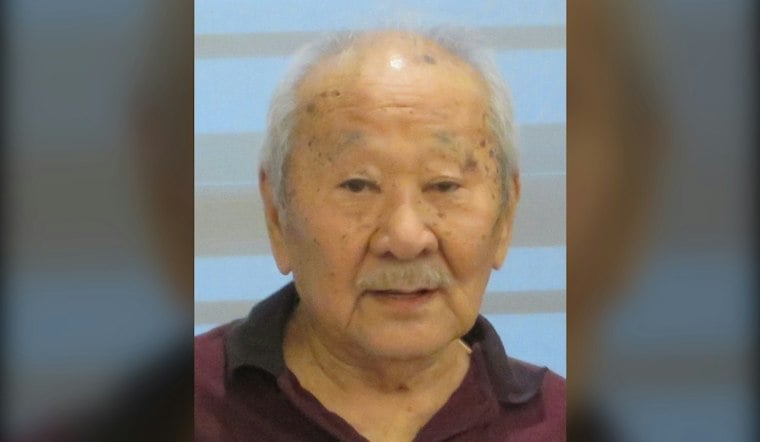
A state-owned Satoru Abe sculpture installed at the former Aloha Stadium box office is in the way of planned roadway work, creating a funding and preservation question for Hawaiʻi arts officials. The 45-year-old bronze and copper work, titled Volcano, may require nearly $600,000 or more to move, store, conserve, and maintain during redevelopment. Commissioners of the Hawaiʻi State Foundation on Culture and the Arts have been weighing whether to relocate it, seek public funding, or remove it from the state collection.
Volcano was created and installed at the Aloha Stadium Box Office Plaza in 1981, according to the Public Art Archive. Aloha State Daily reported that the sculpture, formerly positioned in front of the stadium ticket office, now must be moved as construction proceeds. Karen Ewald, executive director of the Hawaiʻi State Foundation on Culture and the Arts, estimated the combined cost of relocation, storage, conservation, and maintenance at about $600,000 or more.
The Works of Art Special Fund receives 1% of state appropriations for construction or renovation of state buildings. The SFCA's current webpage, citing HRS section 103-8.5 as amended by Act 122 in 2026, lists upkeep, storage, and transportation of artworks among allowable uses. The question for Volcano is whether that framework provides a sufficient and clearly authorized source for a construction-related relocation.
A funding question rooted in the state's percent-for-art law
Hawaiʻi's percent-for-art program has deep roots. The state became the first in the nation to pass a percent-for-art statute when it enacted the Art in State Buildings Law in 1967, according to the Hawaiʻi State Foundation on Culture and the Arts. The legislature later established the Works of Art Special Fund in 1989 under Act 389, codified as Hawaiʻi Revised Statutes § 103-8.5, to expand the assessment to building renovations, per the Hawaiʻi State Legislature.
How public artworks have been handled in Hawaiʻi
Volcano is not the first SFCA artwork to face a change in stewardship, although the circumstances differ. In 2020, the foundation worked to transfer two bronze sculptures at Kakaʻako Waterfront Park to the Honolulu Mayor’s Office on Culture and the Arts after the park changed ownership, according to the Hawaiʻi State Foundation on Culture and the Arts. That case involved a transfer between public agencies, rather than moving an artwork to accommodate road and stadium construction. The transportation changes around the former stadium are part of a broader adopted plan. The City and County of Honolulu’s Hālawa Area TOD Plan, adopted in October 2020, calls for new roads and internal street connections and envisions gateways marked by features such as art, landscaping, lighting, signage, or building orientation. Those plans provide the redevelopment context for discussions about both Volcano’s current location and a possible new one.
That history helps explain the dispute over Volcano. The SFCA owns the sculpture and is responsible for its relocation, but officials are considering whether the special fund can cover the full range of work required when a state artwork must be moved because of a major redevelopment project.
To clarify that authority, Ewald proposed legislation expanding the allowable uses of the Works of Art Special Fund, according to the same reporting. The proposed amendment would cover conservation, preservation, transportation, relocation, installation, reinstallation, maintenance, and upkeep of artworks in the state collection. SFCA commissioners voted unanimously to seek an amendment to HRS § 103-8.5.
Commissioners Weigh Three Paths Forward
Commissioners also considered three broader options: pursuing the special-fund amendment, requesting a general-fund appropriation, or deaccessioning Volcano from the SFCA collection. They voted unanimously to request a general-fund appropriation for the move, saying the general fund does not currently have enough money to cover the estimated cost.
Konrad Ng, chairperson of the SFCA board, raised private partnerships as another possible funding source. Chris Kinimaka of the state Department of Accounting and General Services said the redevelopment plan identifies Volcano's current area as a gateway to the stadium. Aloha Hālawa District Partners has worked with the SFCA and its art advisory committee to identify a potential new location within the redevelopment.
Demolition Timeline Adds Urgency
The timing is pressing. Demolition of the old Aloha Stadium began in December 2025, and the new stadium and entertainment district is scheduled to open in 2029. The area is planned to receive visitors through Skyline, Kamehameha Highway, and other approaches, according to the outlet's account, making the sculpture's current location part of a larger redesign of how people will enter the district.
The redevelopment itself is a $650 million project, with a developer selected in late 2024. Private developer investments will fund the remainder of the mixed-use sports and entertainment district beyond the roughly $350 million in state taxpayer funds committed to the project. The Works of Art Special Fund's own contribution to the new stadium project was about $3.4 million, though consultant fees reduced that contribution by about $100,000, per the reporting. Ground leases and development agreements finalized last year set the demolition and construction timelines now playing out at the site.
Concern over Volcano's fate became public in July, when KHON2 reported that demolition work had put the sculpture's future in jeopardy. The debate carries added cultural weight because of the artist behind it. Satoru Abe was born in Honolulu, graduated from McKinley High School, and became a Guggenheim Fellow, sculptor, painter, and printmaker whose work is held by museums and displayed in front of First Hawaiian Bank in downtown Honolulu.
Honoring a Hawaiʻi Living Treasure
Abe's stature in Hawaiʻi's art world runs deep. He was a founding member of the Metcalf Château in 1954, an influential collective of seven Asian American artists in Honolulu credited with helping ignite the state's modern art movement, according to the University of Hawaiʻi. The Honpa Hongwanji Mission of Hawaii designated him a Living Treasure in 1984, honoring his artistic accomplishments and his support for emerging artists, per the Whitney Museum of American Art.
Abe died at age 98 in 2025. Just prior to his death, the Honolulu Museum of Art launched Satoru Abe: Reaching for the Sun, his first museum retrospective in 25 years, showcasing more than 80 works spanning seven decades. That timing has added weight to the current debate: lawmakers and SFCA commissioners are now being asked to decide the fate of a piece by an artist who was being celebrated for his lifetime body of work at almost the same moment demolition crews arrived at his sculpture's doorstep.





