

























































Daniel “Danny” Clavel, an Anaheim grandfather, died after complications from a West Nile virus infection, according to New Santa Ana. His death comes during a season of elevated West Nile activity in California; surveillance totals are snapshots that depend on when they are reported.
Clavel's death was reported by New Santa Ana, which detailed his passing alongside accounts of several other Southern California residents struggling with the virus's aftermath. Orange County has reported new West Nile infections this season, and West Nile virus is described in the report as California's most common and serious mosquito-borne disease. Most infections are mild, but the outlet's report notes that severe neurological disease develops in roughly 1 in 150 cases, and that severe cases are fatal in about 1 in 10 instances.
The same report described severe illness among three other Southern California residents: Dorothy Stringer of Torrance, who developed West Nile-related encephalitis and now requires round-the-clock care; Greg McNally of Redondo Beach, who spent six weeks in an induced coma and is recovering; and Steven Moreno of Long Beach, who was hospitalized with fatigue and neurological symptoms and faces lost income and ongoing medical bills.
State and County Surveillance
New Santa Ana cited the California Department of Public Health's assessment that West Nile activity was at a five-year high. The outlet reported 147 human cases and 10 fatalities statewide, along with 3,544 positive mosquito samples and 623 positive dead birds; the figures are not accompanied here by an as-of date. Since West Nile virus was first detected in California in 2003, the state has recorded more than 8,000 human cases and over 400 deaths, according to the report.
How to interpret the season's numbers
A separate dated snapshot offers a point of comparison: the Fontana Herald News, relaying a California Department of Public Health statement, reported 30 human cases and three fatalities statewide as of Aug. 14, with activity above the five-year average for that point in the year. That report does not list each of the five prior years' counts, and its dated tally cannot be directly compared with the undated figures cited above. For Orange County historical context, CBS Los Angeles reported that nine people died in the county's worst-ever recorded West Nile season, in 2014—a historical figure, not a current-season total. On weather and disease spread, the Los Angeles Times quoted epidemiologist Matt Willis saying rising temperatures may contribute to some pathogens or insects moving northward. That broader concern does not establish that climate change caused this season's West Nile activity or any individual's infection.
New Santa Ana reported 19 positive mosquito samples in Orange County this season and 39 in Fullerton in July. The outlet described Santa Ana as a high-risk urban zone with recurring positive birds and mosquito pools, and listed Anaheim and Buena Park as confirmed at-risk areas and Cypress as potentially at-risk. Residents can check localized updates from Orange County's Vector-borne Diseases program.
Transmission, Severity and Broader Trends
West Nile virus was first identified in Uganda's West Nile district in 1937 and reached the eastern United States in 1999. New Santa Ana reported that scientists believe it arrived in the Los Angeles area around 2003, likely carried by infected birds or mosquitoes along travel or shipping routes. The virus cycles between mosquitoes and birds, including crows, jays and robins; people can become infected when bitten by an infected mosquito.
Peer-reviewed research offers some insight into why West Nile can turn severe. A study published via the National Institutes of Health notes that “the causes and frequency of acute paralysis and respiratory failure with West Nile virus (WNV) infection are incompletely understood,” even though such complications have been documented. Separate research describes WNV as “a reemerging pathogen that causes fatal encephalitis in several species, including mouse and human,” according to findings published on pmc.ncbi.nlm.nih.gov.
There is no vaccine for West Nile virus. New Santa Ana linked warming temperatures and changing precipitation patterns to the spread of Aedes mosquitoes in Southern California, and cited locally acquired dengue cases in Pasadena in 2023 and 12 additional locally acquired cases in Los Angeles County the following year. The report also mentioned chikungunya and Zika, which are spread by Aedes mosquitoes. These broader trends do not, on their own, establish what caused this season's West Nile activity.
What Public Health Officials Are Urging Residents to Do
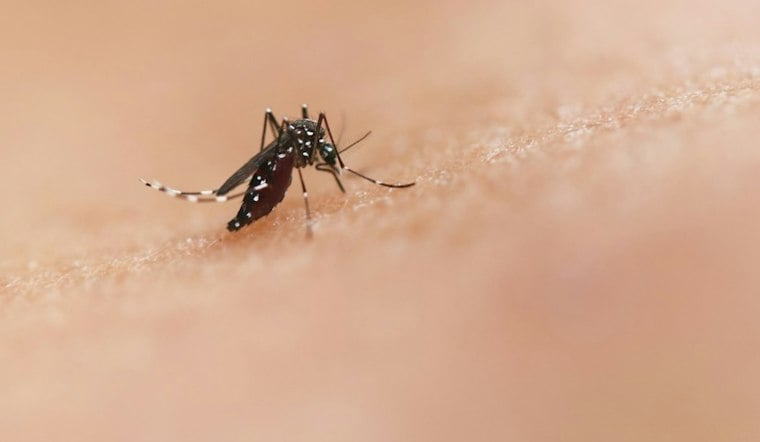
With August and September marked as peak West Nile transmission months, public health agencies are emphasizing basic prevention: avoiding mosquito bites and reducing breeding sites around homes. Culex mosquitoes, the primary carriers of West Nile virus, are most active at dawn and dusk, while Aedes mosquitoes bite aggressively during the day, according to the report.
Recommended precautions include wearing long sleeves and long pants at dawn and dusk, using EPA-registered insect repellent on exposed skin, and making sure window and door screens are intact. Residents are also urged to drain standing water weekly, maintain clean pools and spas, and report dead birds, which can signal virus activity in a neighborhood. Health officials are asking residents to follow updates from their local vector control district and to take extra precautions through the remainder of September as the season's risk continues.





