

























































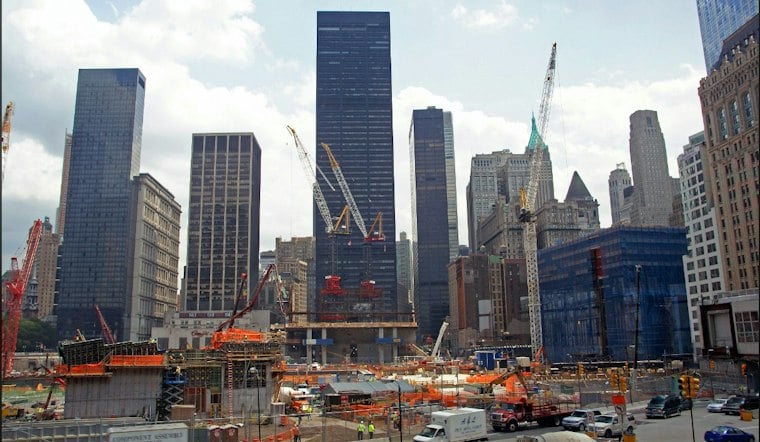
A software company from Ann Arbor, Michigan, spent three-and-a-half years building the technology that helped identify victims of the September 11 attacks — and a quarter-century later, that same DNA-matching system is still finding names for the missing. In August 2026, the New York City Office of Chief Medical Examiner announced it had used a new genetic technology to identify a previously unknown 9/11 victim, the 1,654th person confirmed dead among the 2,753 killed.
The story of how an Ann Arbor company ended up at the center of the nation's largest forensic identification effort begins with Howard Cash, president and CEO of Gene Codes Corporation and Gene Codes Forensics, as reported by WXYZ Channel 7. Gene Codes had built its reputation on Sequencher, a DNA sequence assembly program released in 1991 that had become a staple in academic and government laboratories, according to Bionity. The company had also worked in forensic identification before, beginning development of forensic mitochondrial-DNA capabilities in 1997, per Gene Codes Forensics' own historical account.
After watching the attacks, Cash reached out to federal and municipal contacts, offering technical help, according to WEMU 89.1. The New York City Office of Chief Medical Examiner soon asked Cash to help organize the mountain of victim-identification data pouring in from Ground Zero. He described the request as a call to national service, per the WXYZ report.
Building a System From Bone Fragments
To meet the need, Gene Codes built the Mass Fatality Identification System, or M-FISys, according to a report published by Bio-IT World. Ann Arbor software programmers and computer scientists worked around the clock on the effort, and Cash personally flew updated versions of the software to New York each week, per the WXYZ account. New York police and fire crews sifted through roughly 17,000 tons of debris from Ground Zero, while recovery workers ultimately pulled more than 21,900 individual fragments of human remains from the site, most badly degraded by heat, crushing force, and chemical contamination, according to The Guardian.
The scale of the destruction meant standard DNA testing methods often failed. M-FISys was engineered specifically to handle that problem, building consolidated “virtual profiles” that merged short tandem repeat, single nucleotide polymorphism, and mitochondrial DNA data into single unified records, according to Promega's technical documentation. Heat, bacteria, and chemicals such as jet fuel made analysis difficult, forcing forensic teams to combine multiple types of testing just to get a usable result. In its first run, M-FISys produced 55 new victim identifications, per the WXYZ report, and Cash went on to dedicate three-and-a-half years to the identification effort for the 2,753 people killed in New York City.
A Firefighter Finally Brought Home
Among the identifications tied to the software's ongoing use was FDNY Firefighter Dana Hannon, according to GovInfo. Hannon was one of 343 firefighters killed in the collapse of the World Trade Center, and his remains had not initially been recovered. Per the WXYZ report, Hannon's remains were eventually found after Cash repeatedly checked new data sets against the missing-persons records as forensic techniques advanced.
Jonathan Hoyle, referenced in the WXYZ report, said victim identifications like Hannon's allowed families to finally mourn and move forward. Cash, who is attending the 25th anniversary memorial service in New York, said he feels fortunate to have helped bring peace to families affected by such tragedies, per the same account.
From Ground Zero to Global Disaster Response
What began as an emergency build for one city's medical examiner became something larger. Gene Codes Forensics has since assisted with victim identification following mass disasters from Asia to South America, and M-FISys has been deployed internationally, including after the 2004 South Asian tsunami in Thailand and during the 2023–2024 Israel-Hamas war, according to WEMU 89.1. The system's kinship analysis algorithms allow investigators to identify victims through extended family DNA even when a victim's own personal effects are unavailable.
In New York, the identification work goes on. City officials announced three new World Trade Center identifications in August 2025 — Ryan Fitzgerald, Barbara Keating, and an unnamed woman — bringing the total to 1,653 identified victims, according to New York City government statistics. A year later, in August 2026, the Office of Chief Medical Examiner reached a new landmark, using forensic investigative genetic genealogy for the first time on a 9/11 case to identify an adult woman as the 1,654th victim. That method combines specialized DNA testing with genealogical research. Even so, 1,099 victims of the September 11 attacks remain unidentified, a quarter-century after the towers fell.



