

























































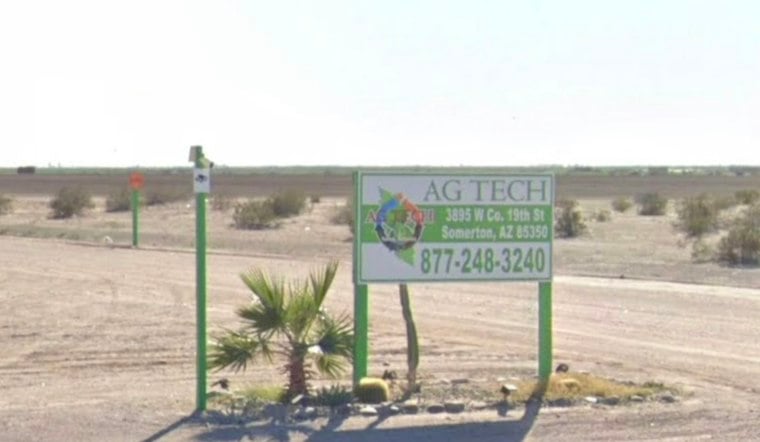
Arizona has terminated five state land leases held by AgTech LLC, the company that has spent more than two decades spreading treated sewage sludge on farmland across Yuma County. Gov. Katie Hobbs announced the move, capping months of complaints from residents, growers and local officials over flies, odors and worries about what was seeping into the soil and water.
AgTech had leased state trust land since 2002, according to facts cited in reporting from KTAR News 92.3 FM, which first reported the lease terminations. The Arizona State Land Department found AgTech out of compliance with one lease and declined to renew four others, effectively ending the company's ability to keep applying biosolids on state trust ground in the county. KTAR reported that AgTech did not respond to a request for comment by its deadline.
The company itself, however, has since pushed back publicly. AgTech LLC announced plans to challenge the state's decision under Arizona law, arguing its land stewardship was backed by testing from the Arizona Department of Environmental Quality, according to KAWC. The company said it was evaluating all legal options to protect its workforce and operations following the state land department's notice.
A Two-Decade Pipeline of California Waste
AgTech applied more than 68,000 dry metric tons of treated sewage sludge in Yuma County in 2025 alone, per facts reported by KTAR. Over 97% of that material originated from California utilities, including the Orange County Sanitation District and Escondido's municipal utility, the report's own analysis found. Southern California sanitation districts have frequently turned to regional agricultural applicators like AgTech because of strict local disposal restrictions back home.
The material AgTech handles is known as Class B biosolids — sewage sludge that undergoes pathogen reduction but can still carry trace heavy metals and pharmaceuticals, subject to specific land-use and grazing restrictions compared to Class A material, the outlet's reporting notes. AgTech used the biosolids to grow feed crops like alfalfa and Sudan grass on state trust land before selling them through commercial brokers. State reporting released this month identified AgTech as the only business registered in Arizona to apply domestic septage and municipal biosolids at a commercial scale on state trust land, underscoring how few direct alternatives exist within that system.
The scale of the operation drew scrutiny on its own. AgTech's Yuma County site received an estimated 47 truckloads of material daily, and the company applied roughly 140 dry metric tons per acre — far above the state average of about 7 tons per acre used by other biosolids applicators, according to KTAR's reporting.
The Governor's Case for Cutting Ties
Hobbs framed the cancellations around the legal purpose of the land itself. State trust land is designated to generate revenue for public education, and the governor argued improper sludge application harmed trust beneficiaries including K-12 public schools, according to a statement from the Office of Governor Katie Hobbs. Arizona State Trust lands were granted at statehood specifically to provide ongoing financial support for public education.
Per KTAR's reporting, Hobbs said Arizona is not a disposal site for California's treated sewage sludge. The governor's office also emphasized that the action does not affect other Arizona farmers who responsibly apply biosolids on state trust land, according to the same report.
Local pressure had been building for close to a year before the state acted. The Yuma County Board of Supervisors formally petitioned the Arizona State Land Department in December 2025 to terminate AgTech's agricultural lease, which had already slipped into a month-to-month holdover status, per facts reported by KTAR. County officials had no direct authority to break a state trust land lease without the land department's intervention, leaving the petition as their primary lever.
Regulatory History Includes a Closed Violation
The Arizona Department of Environmental Quality issued a notice of violation against AgTech on August 19, 2025, according to KAWC. ADEQ closed that case on January 8, 2026, after determining the company had satisfied evidence-of-compliance requirements — a resolution that predates the state's decision to end the leases this month.
Attorney General Kris Mayes opened a separate investigation after complaints from Yuma-area residents, growers and business owners, according to facts reported by KTAR. That inquiry followed a July 2026 town hall in Yuma that drew more than 250 residents, as reported by the Arizona Attorney General's Office. Mayes said Yuma residents were told to live with flies, smell and uncertainty about what was entering their soil and water, and said the investigation will continue even after the leases were terminated. The Attorney General's Office is conducting its own soil and potential contamination testing at AgTech's site, with findings expected by December 2026.
Growers Report Crop Losses as Vector Control Finds No Larvae
Yuma County date growers reported crop losses amounting to millions of dollars every year, attributing the damage to conditions aggravated by biosolid application, according to KTAR's reporting. Yet Yuma County Vector Control inspected six AgTech locations in April and August 2026 and reported finding no fly larvae at those sites, according to KAWC — a finding that conflicts directly with ongoing complaints from nearby residents and agriculture leaders about severe fly outbreaks. Local citrus and date growers have argued the infestations degraded both their crop operations and residential quality of life nearby.
Yuma's Own Sewage Still Needs Somewhere to Go
The lease cancellations create an immediate tension for the city of Yuma, which relies on AgTech for its own wastewater processing. Just over a week before the lease terminations were announced, the Yuma City Council approved a $940,000 annual contract renewal with AgTech to process 12 million gallons of local liquid sewage, according to Consumo Nexo. City officials noted that landfilling the material or trucking it to Phoenix instead would add an estimated $2.5 million annually to city expenses. Yuma's treatment plant runs around the clock and produces roughly 12 million gallons of liquid biosolids each year, per the same report.
That leaves an open question that state officials have not yet answered: how California municipalities that relied on AgTech will reroute their sludge, and how Yuma and other Arizona communities will manage their own sewage disposal without absorbing the added cost. AgTech's stated legal challenge, combined with the ongoing Attorney General investigation expected to conclude by December, means the fight over Yuma County's biosolids is far from settled.





