

























































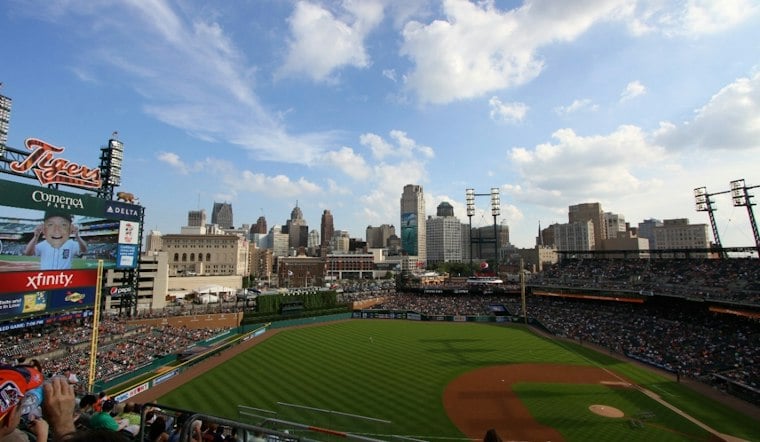
Oakland Athletics third baseman Zack Gelof is suing the Detroit Tigers, Ilitch Holdings Inc., and the Detroit-Wayne County Stadium Authority, alleging exposed metal fencing at Comerica Park sliced open his right knee during a July slide and nearly ended his season. The injury happened during the third inning of the July 9 game between the Athletics and Tigers, when Gelof made a sliding catch and struck the fencing along the left-field foul line with his knee.
According to ClickOnDetroit, the impact tore Gelof's uniform and caused a deep laceration beneath his kneecap that narrowly missed his patellar tendon. He was unable to continue playing after the collision and ultimately missed about 30 days of professional baseball. The lawsuit was filed Monday in Wayne County Circuit Court by Detroit-based Marko Law.
The complaint alleges the fencing was rigid, sharp, inadequately protected, and positioned in an area where the defendants knew or should have known players would run and slide. It further claims the defendants failed to provide sufficient padding or clearance, failed to inspect and identify the hazard, and failed to repair, redesign, relocate, or guard the fencing, per the same report.
Padding Appeared Only After the Injury
Per the attorneys, protective padding was installed over the fencing area within weeks of Gelof's injury, and the complaint includes a photograph purporting to show that padding in place during a Tigers game in August 2026. The lawsuit also alleges Tigers outfielder Riley Greene acknowledged the wall area was made of metal and could be unforgiving during a hard slide, per the lawsuit.
Marko Law attorney Jon Marko said basic protective padding could have prevented the injury, adding that the incident could have been avoided by installing cheap padding before Gelof was hurt. Gelof, 26, whose primary residence is in West Palm Beach, Florida, is seeking compensation for physical pain, medical expenses, lost wages, economic losses, professional damages, and emotional damages, along with attorney fees and costs allowed under Michigan law.
Ownership Structure Complicates the Legal Fight
The complaint alleges the Detroit-Wayne County Stadium Authority owns and controls Comerica Park, while the Tigers and Ilitch Holdings operate, manage, and maintain it. That split matters because Comerica Park is publicly owned by the stadium authority and run under lease management by private entities including Ilitch Holdings, according to Sportsmatik, which notes the $300 million ballpark opened in April 2000 to replace Tiger Stadium.
Because a government body owns the venue, Gelof's legal team faces a steep statutory hurdle. Under Michigan law, public agencies are shielded by sovereign immunity unless an injury stems from a dangerous or defective condition of a public building under their control, and plaintiffs must provide formal written notice within 120 days, according to Metro Detroit Injury Lawyers. That exception also requires proving the public entity had actual or constructive knowledge of the defective condition.
The lawsuit includes claims for premises liability, negligence, and negligent design and construction of a recreational attraction, alongside the public-building exception claim aimed specifically at the stadium authority. Gelof was selected by Oakland in the second round of the 2021 MLB Draft out of the University of Virginia and made his major league debut in July 2023, according to Wikipedia. He earned a pre-arbitration base salary of $790,000 during the 2026 season and wasn't eligible for arbitration until 2027, per FanGraphs. He was activated from the 10-day injured list on August 4, 2026, after a brief rehab stint with the Triple-A Las Vegas Aviators, according to MiLB.com.
Not the First Ballpark Hazard Lawsuit
Gelof's case follows a pattern of athletes taking legal action, or considering it, after being hurt by exposed stadium hardware. Former MLB player Dustin Fowler sued the Chicago White Sox and the stadium authority after tearing his patellar tendon on an unpadded electrical box at Guaranteed Rate Field in 2017, a case that ended in a confidential settlement in 2022, as reported by Sports Illustrated. In 2018, a St. Louis jury awarded former NFL player Reggie Bush $12.5 million after he suffered a season-ending knee injury on unpadded concrete at the Edward Jones Dome, a verdict often cited as a benchmark for venue owner liability.
More recently, Yankees slugger Aaron Judge tore a toe ligament in June 2023 after hitting an unpadded concrete wall base at Dodger Stadium; the Dodgers reinforced the outfield boundary wall within weeks even though Judge chose not to sue, per Sports Illustrated. Gelof's case adds Comerica Park to that list of venues facing scrutiny over hazards players say should have been padded before, not after, someone got hurt.
The lawsuit also lands amid a bigger transition for the ballpark itself. The Tigers announced on September 21, 2026, that Comerica Park will be officially renamed Fifth Third Park starting with the 2027 season, ending the Comerica brand name after 26 years, according to The Big Lead. Separately, the Tigers are bound by a 1998 Concession and Management Agreement requiring them to donate 50,000 stadium tickets annually to youth organizations in Detroit and Wayne County, a covenant detailed by BridgeDetroit.


