

























































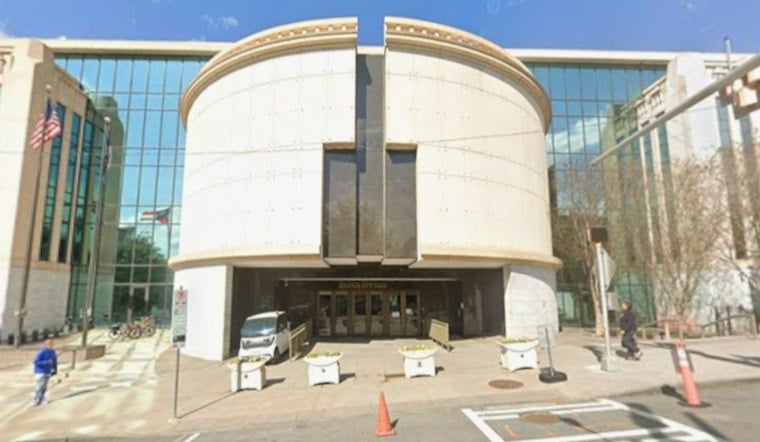
Atlanta City Council members are set to vote next Monday on a resolution that could finally force city leaders to answer a question that has lingered for years: will light rail ever actually circle the 22-mile Beltline loop? Councilmember Kelsea Bond's measure now carries 11 co-sponsors on the 15-member council and has cleared two committees, putting momentum behind a demand for a binding roadmap and funding strategy for the full corridor.
The resolution comes after a rocky stretch for the Beltline rail vision. As Axios reports, the joint city-MARTA Program Governance Committee voted on May 27, 2025, to halt design funding for the Streetcar East Extension, and Mayor Andre Dickens withdrew his support for starting light rail on the Eastside Trail back in March 2025. Bond's resolution does not specify which Beltline segment should be built first, but it does ask Atlanta leaders to produce an implementation and funding strategy covering the entire corridor.
A Roadmap With Teeth, and a Deadline
Under the substituted version of the resolution, the Mayor's Office, MARTA, Beltline officials and other city departments would need to deliver that roadmap to committee by January 26, 2027, and follow it with quarterly updates. The substituted resolution also requires affordable housing and anti-displacement measures to be built into the plan, along with recommended, realistic and available funding pathways for the full loop, according to the same Axios report.
Bond has said officials need to give the public a clear decision if Beltline rail cannot move forward, rather than letting the project drift in administrative limbo. Atlanta City Council President Thomas Worthy said the resolution creates a framework for public discussions about the engineering and funding hurdles still facing the project, per Axios, though he also acknowledged that More MARTA funding alone lacks enough money to pay for Beltline rail.
The Long Road to This Vote
The idea of running transit around a continuous freight-rail loop dates back to a 1999 Georgia Tech master's thesis by then-student Ryan Gravel, according to the Georgia Institute of Technology repository holding his original work. Atlanta voters later gave the vision a funding mechanism in November 2016, approving a half-penny sales tax referendum expected to generate $2.5 billion over 40 years for the More MARTA expansion program, per MARTA's own account of the vote.
Implementation has been anything but smooth. Public documents revealed in January showed that the joint city-MARTA Program Governance Committee voted 7-1 back on May 27, 2025, to halt design funding for the Streetcar East Extension after spending $9.1 million of its roughly $250 million budget, as Hoodline reported in its coverage of the quiet vote. MARTA officials maintained at the time that the decision was a routine project sequencing pause that did not require full board approval.
That freeze fed into a broader dispute between City Hall and MARTA over More MARTA sales tax dollars. A $52 million settlement involved transfers into the More MARTA Atlanta Reserve Account.
Dickens' Alternative and a Competing Vision
Mayor Dickens has pursued a different transit strategy in the meantime. In March 2024, he proposed four new MARTA heavy-rail infill stations, including one tied to the Beltline-adjacent Murphy Crossing development, marking the first additions to MARTA's heavy-rail lines since 2000, according to WABE. Hoodline has previously reported on how that project could reshape the surrounding neighborhood in its coverage of the Murphy Crossing redevelopment plans.
Not everyone wants to see rail built at all. Ken Edelstein, chair of the advocacy group Better Atlanta Transit, has said his organization worries the City Council will resume spending civic energy on a project that may never be built. Better Atlanta Transit argues that funding should instead be spent in other parts of Atlanta, and the group proposes repurposing land reserved for a future parallel transit line as additional trail or micro-mobility space rather than fixed-guideway rail.
The Technical Case Beltline Officials Are Making
Atlanta Beltline, Inc. presented its final Federal Transit Administration-funded Beltline Transit Study recommendations on September 3, outlining a 22-mile, $3.5 billion light-rail loop projected to generate 4.2 million annual passenger boardings across three routes running 18.5 hours a day, according to Railway-News. The study also selected the CSX freight rail corridor as the locally preferred transit route for the northwest quadrant, citing faster speeds, lower capital costs, higher projected ridership and direct access to Piedmont Hospital over competing alignments along Peachtree Road and Ottley Drive, the outlet reported. Beltline officials are holding a public-comment period on the proposed transit plan through November 3.
Whether Monday's vote translates into shovels in the ground remains an open question. But with the MARTA settlement resolved, the technical study complete, and a supermajority of the council now behind Bond's push, Atlanta finds itself closer than it has been in years to forcing a public answer on the fate of light rail around its signature 22-mile loop.





