

























































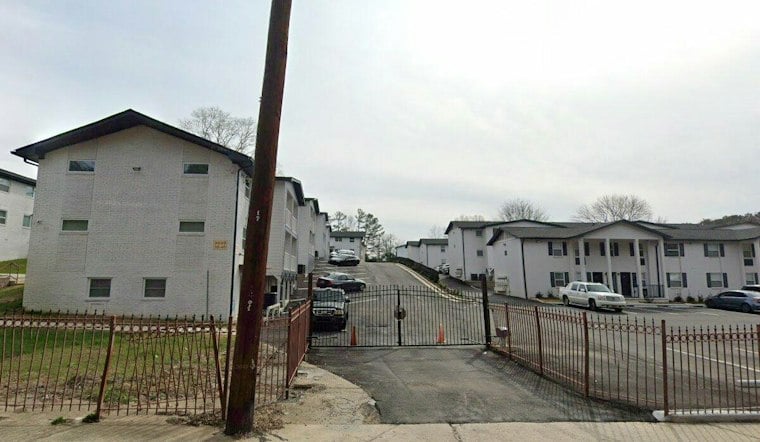
Dallas Spruill went to the Sierra Ridge Apartments on Delmar Lane in Atlanta on Feb. 10, 2017, expecting to sell a few televisions. He was found dead in the back seat of a car instead, killed by multiple gunshot wounds. Nearly seven months later, police arrested the man they say pulled the trigger, and a jury eventually convicted him of felony murder — a conviction Georgia's highest court has since upheld.
A TV Sale That Turned Fatal
According to court records reviewed by Harris v. State, Spruill was planning to sell several televisions and had gotten a ride from Christian Boss, who owned the car. Before heading to the deal, Spruill, Boss and a woman named Pamela Blue stopped at an abandoned house so Spruill and Blue could grab more TVs — and, notably, an assault rifle. Blue is the one who had arranged the meeting, having contacted the eventual buyer, Denarius Harris, about the purchase.
Once the group arrived at Sierra Ridge Apartments, Harris came to look inside the trunk at the televisions, the same court record shows. Spruill stayed in the back seat while Blue went back to the vehicle and, per the court's account, asked to see the assault rifle. Boss told investigators he noticed Spruill was also holding a handgun around this time, and it was that detail — Spruill armed while seated in the back — that set the fatal sequence in motion.
Conflicting Accounts of the Shooting
Harris opened Spruill's door to speak with him about the transaction, and testimony described in the Georgia Supreme Court's opinion indicates he tried to back out of the deal after apparently spotting the handgun in Spruill's lap. Harris testified that he believed Spruill was raising his hand to shoot him, and that he fired first out of fear for his life. Boss, however, told the court that three quick shots rang out once Blue had already taken the rifle from the trunk, and that Spruill was hit while still in the back seat. Boss said he heard the gunfire and fled the scene, though he later returned to speak with investigators and told police that it was Blue who knew the buyer interested in the televisions.
Spruill's age at the time of his death has been reported inconsistently: Crime Solvers Central lists him as 22, while The Atlanta Journal-Constitution reported he was 23. Both accounts agree he died from multiple gunshot wounds, and police were pronounced him dead after several calls came in reporting a shooting at the complex.
Months on the Run, Then an Arrest
Investigators spent months working to identify who was responsible, according to the Journal-Constitution's report on the case. Detectives eventually got Harris's name from another resident of the apartment complex, per the account in Harris v. State, and made the arrest several months after the killing — nearly seven months, according to the Journal-Constitution's timeline. Harris initially faced murder and armed robbery charges before a grand jury indicted him on six counts total, including malice murder, felony murder predicated on both aggravated assault and armed robbery, aggravated assault, armed robbery, and possession of a firearm during the commission of a felony.
At trial, Harris raised a self-defense claim, arguing Spruill's movements in the back seat convinced him he was about to be shot. The jury rejected that defense. Jurors found Harris guilty of felony murder predicated on aggravated assault, aggravated assault itself, and possession of a firearm during the commission of a felony, though notably not on the malice murder or armed robbery counts. He was sentenced to life in prison for the felony murder conviction plus an additional five years for the firearm charge, a sentence confirmed in court documents cited by midpage.ai's case summary.
Appeal Rejected by State's Highest Court
Harris appealed, arguing the trial court's jury instructions on self-defense were flawed. The Georgia Supreme Court disagreed, concluding the instructions were legally sound and affirming both his convictions and his sentence, according to the opinion published on FindLaw's case archive. The case has drawn renewed attention after being detailed in a recent explainer from The Cinemaholic, which examined the shooting and its aftermath as part of its coverage of true-crime television cases.
What began as a routine electronics sale in a Southwest Atlanta parking lot ended with one man dead and another facing a life sentence after his claim of self-defense failed to persuade a jury — and, later, failed to persuade the state's highest court.





