

























































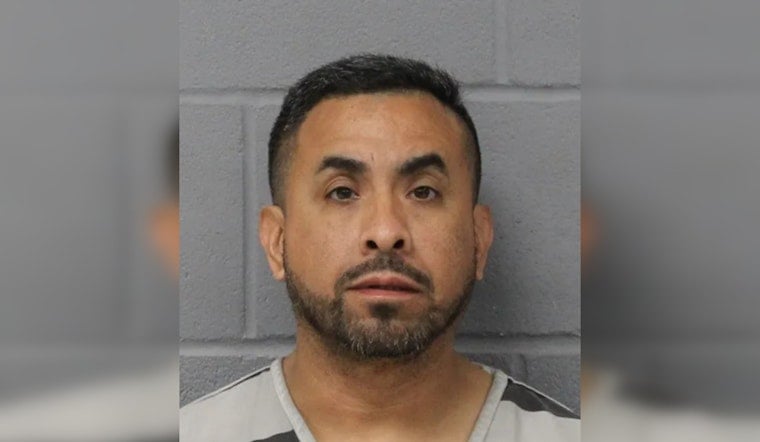
A man who attacked two women in North Austin more than two decades apart in two separate crimes has been sentenced to 15 years in prison, after DNA evidence that sat unmatched for 23 years finally identified him as the suspect police had long believed was responsible for both attacks. Michael Lance Gamez was sentenced by Judge Chantal Eldridge of the 331st District Court in Travis County on August 3, closing a case that stretched back to the final months of 1999.
The first attack happened on September 9, 1999, between 9:15 and 9:30 p.m., when a woman stepped off a northbound Leander bus at the Capital Metro Pavilion Park and Ride in the 12400 block of Research Boulevard. An unknown man physically assaulted her and attempted to sexually assault her there, according to the Austin Police Department. Less than five months later, on February 8, 2000, a second woman was attacked inside her own apartment in the 9000 block of Northgate Boulevard, per the Austin Police Department's account of the case.
In that second attack, around noon, an unknown man knocked on the woman's door asking for help, then forced his way inside once she opened it. He restrained her and attempted to sexually assault her before she fought him off and he fled, the department's release states.
Investigators Knew It Was the Same Man — For 23 Years, They Just Didn't Know His Name
Austin police did not have to wait decades to connect the two crimes. The Texas Department of Public Safety Crime Laboratory notified the department on April 3, 2000 — less than two months after the second attack — that DNA collected at both scenes belonged to the same unknown male suspect. That meant investigators knew from the start they were hunting one man responsible for both assaults; what they lacked, for more than two decades, was his identity.
That changed on October 11, 2023, when state crime lab analysts identified the DNA profile from both cold cases as belonging to Gamez. The match sent APD Detectives William Costello and Grace Wolfsbane to track him down, and the pair executed a DNA search warrant in February 2024 to confirm the finding, the department's report notes.
Confirmation, Arrest, and a Sentence 25 Years in the Making
The Texas Department of Public Safety Crime Laboratory confirmed on October 30, 2024, that Gamez's DNA matched evidence from both crime scenes. Austin police arrested him on November 15, 2024, on charges that included Aggravated Kidnapping, according to the department. Nearly two years after his DNA was first flagged, Gamez stood before Judge Eldridge in Travis County District Court and received his 15-year sentence.
The case was only prosecutable so long after the fact because of specific provisions in Texas law. Under Article 12.01 of the Texas Code of Criminal Procedure, sexual assault charges carry no statute of limitations when biological evidence containing DNA has been collected and preserved, according to FindLaw's summary of the statute. That provision only works, though, if the evidence still exists — which is where a separate mandate comes in.
Why the Evidence Was Still There to Test
Article 38.43 of the Texas Code of Criminal Procedure requires law enforcement agencies and crime labs to retain and preserve biological evidence from felony investigations for at least 40 years when a suspect remains unapprehended, per FindLaw. That retention rule is why the DNA collected from the 1999 bus stop and the 2000 apartment break-in was still available for testing a quarter-century later, once forensic technology and database matching caught up to the case.
Under Texas Penal Code Section 22.021, aggravated sexual assault is classified as a first-degree felony carrying penalties ranging from 5 to 99 years or life in prison, while standard sexual assault under Section 22.011 is a second-degree felony punishable by 2 to 20 years, according to a breakdown from HLJ Defense. Gamez's 15-year sentence falls within that broader statutory range.
Part of a Wider Pattern in Austin Cold Cases
The resolution of the Gamez case follows a broader pattern at the Austin Police Department, which has increasingly leaned on advanced DNA technology to resolve decades-old unsolved crimes. That trend included the high-profile breakthrough last September in the 1991 Yogurt Shop Murders, as reported by Texas Public Radio. Hoodline previously covered that DNA breakthrough, part of a string of cold cases the department has closed using forensic genetic matching in recent years.





