

























































The Bahamian government has formally accused the United States of running rogue DEA agents on its soil without permission, a grievance serious enough that a delegation traveled to Washington this month to raise it directly with the U.S. Department of Justice. The dispute centers on whether American drug agents exceeded a decades-old treaty limiting their footprint in the island nation, and it has already drawn a sharp public rebuke from the top U.S. diplomat in Nassau.
A Formal Complaint Lands in Washington
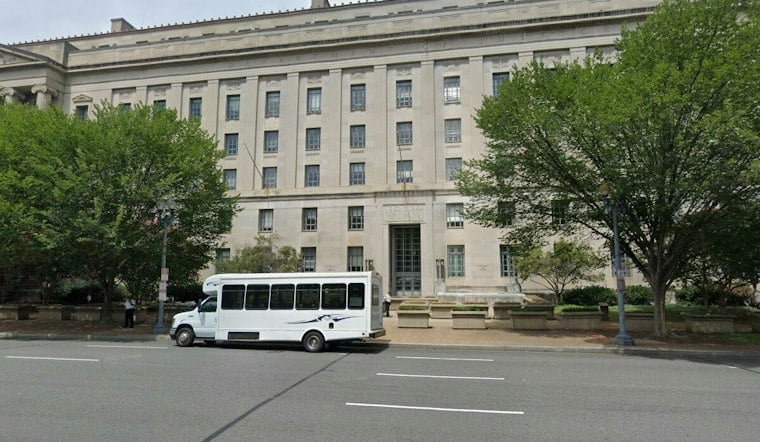
Bahamian officials met with U.S. Department of Justice representatives on September 18 in Washington, according to KSL.com, which reported that Bahamian Ambassador to the United States Wendall Jones said rogue DEA agents have been operating without the consent of the Bahamian government or the Royal Bahamas Police Force. The Bahamian delegation included Assistant Commissioner of Police Dwight Adderley and National Intelligence Agency Director Anthony Ferguson, and they met with acting Deputy Assistant Attorney General Brian Skaret, according to The Tribune. Jones said the complaint threatens to strain U.S.-Bahamian law enforcement cooperation and raises questions about Bahamian sovereignty, per the same KSL report, though he did not provide an estimate of how many DEA agents may have operated without authorization or say how long the unauthorized activity has been happening — only that it has occurred over many years.
The Trump administration has told Bahamian officials it will investigate the matter, KSL reported. A DEA spokesperson said the agency's personnel operate under the authority and oversight of the U.S. chief of mission and that the DEA remains committed to working with Bahamian authorities to dismantle drug trafficking organizations, which it said pose a threat to the region. Both the U.S. State Department and the Justice Department declined to comment when asked about the complaint, according to the wire report.
Ambassador Walker Calls the Complaint Fake News
U.S. Ambassador to The Bahamas Herschel Walker publicly dismissed the accusation as fake news, per KSL, and, according to The Tribune, he also questioned why Bahamian officials would object to U.S. assistance in arresting a known drug trafficker. Walker, a former NFL player and 2022 Georgia U.S. Senate candidate, was appointed by President Donald Trump as the 14th U.S. Ambassador to The Bahamas and officially took up the post on December 9, 2025, according to the U.S. Embassy in The Bahamas.
The Case That Set Off the Dispute
The diplomatic rift traces back to the U.S. federal prosecution of alleged Bahamian drug trafficker Jonathan “Player” Gardiner, who was taken into U.S. custody after a plane crash off Florida on May 12, 2026, while carrying $30,000 in cash inside a bag labeled with a Bahamian politician's name, according to the Washington Post. A sworn DEA affidavit filed that same month in the U.S. District Court for the Southern District of New York alleged that undercover DEA operatives met an unnamed high-ranking Bahamian politician inside the Bahamian Parliament building in October 2024 to negotiate security for a 1,000-kilogram cocaine shipment, as reported by The Independent. The allegation that undercover American agents operated inside the host nation's own legislative chamber has become a flashpoint in Nassau's broader complaint about unauthorized DEA activity.
Bahamian House Speaker Patricia Deveaux dismissed the affidavit's claims in June as frivolous and malicious gossip, while opposition lawmakers demanded independent investigations into government links to drug syndicates, according to Our News Bahamas. The scandal surfaced during a period of intense debate in the House over the government's ties to drug trafficking networks.
A Treaty With a Seven-Agent Limit
U.S. counter-narcotics missions in The Bahamas are governed by Operation Bahamas, Turks and Caicos, or OPBAT, a trilateral agreement from 1982 among the U.S., The Bahamas and the U.K. that permits American aircraft and personnel to conduct interdiction operations in Bahamian territory. That framework authorizes only seven DEA agents to operate in the country, according to KSL, and the Bahamas' complaint centers on the allegation that agents operated beyond that authorized presence and without government consent. The archipelago sits roughly 50 miles from Miami, and joint interdiction efforts under OPBAT led to the seizure of 219 metric tons of illegal drugs in 2019 alone, according to the U.S. Department of State, underscoring how much traffic the archipelago's 700 islands funnel toward American shores.
Corruption Charges Loom Over the Dispute
U.S. investigators indicted more than half a dozen Bahamians in a case tied to the broader controversy, including senior members of the Bahamian police and defense forces, who were accused of participating in an operation to smuggle drugs from South America through the Bahamas into the United States, per KSL. Separately, federal prosecutors in the Southern District of New York charged 13 individuals in November 2024 — including a Royal Bahamas Police Force Chief Superintendent and a Royal Bahamas Defence Force officer — with taking bribes to protect U.S.-bound cocaine shipments, a case that led to the resignation of the Bahamian police commissioner, according to the U.S. Department of Justice. Ambassador Jones said those indictments did not factor into the Bahamas' complaint about rogue DEA agents, according to KSL's reporting.
Part of a Wider Regional Pattern
The Bahamas is not alone in pushing back against unauthorized U.S. security operations. Mexican officials alleged that two U.S. agents who died in an April 2026 car crash in Chihuahua were working in Mexico without authorization, according to KSL, and Mexican President Claudia Sheinbaum's federal prosecutors launched national security investigations after the crash followed a drug lab raid conducted without Mexican federal authorization, per Anadolu Agency. The parallel disputes suggest a broader regional friction over how far American counter-narcotics agents can operate inside partner nations without explicit local sign-off.




