

























































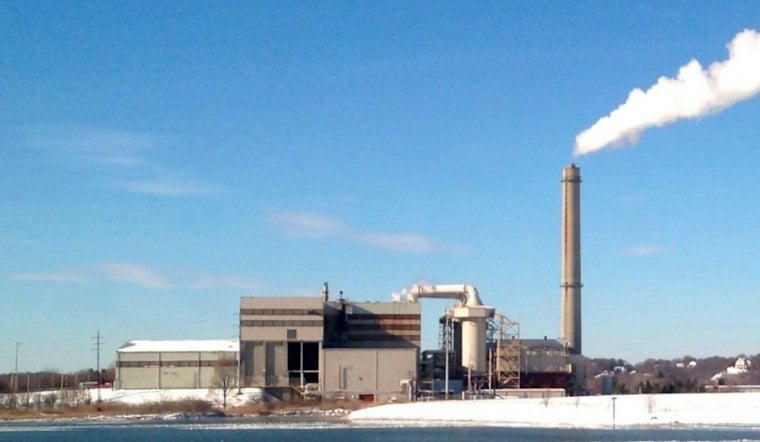
Baltimore County will keep trucking its garbage to a South Baltimore incinerator for at least five more years after the county council voted 4-3 to approve a new contract with WIN Waste Innovations. The deal, which took effect immediately and did not require County Executive Kathy Klausmeier's signature, commits the county to paying WIN Waste $68 million over five years, with the possibility of extending the arrangement through annual reassessments for another five years — and up to $155 million total — through 2036.
A Contentious Vote With Deep Divisions
The council's 4-3 vote split council members over whether burning trash remains the county's best option, according to The Baltimore Banner. Council members Izzy Patoka, David Marks, and Todd Crandell all voted against the contract. Crandell said burning trash to create pollutants throughout urban areas is not the long-term answer, per the same report.
Council chair Mike Ertel, who supported the deal, described the county's predicament in blunt terms, saying the county is between a rock and a hard place and calling the incinerator a necessary evil. Baltimore County produces the equivalent of four Ravens Stadiums of garbage every year, and under the new agreement it will send about 215,000 tons of that waste annually to WIN Waste's boilers — as much as one-third of the incinerator's total annual volume, the outlet reported.
Landfill Space Running Short, Alternatives Costly
The county's previous contract with WIN Waste spanned six years, and officials say the calculus behind renewing it comes down to a shrinking set of options. Baltimore County's landfill is running out of space, and the county does not dispose of enough waste through recycling and other cleaner means, the Banner's reporting noted. Lauren Buckler said the next-best waste-management option was trucking waste to out-of-state landfills — an alternative WIN Waste itself argued would cost county residents more and create environmental problems of its own.
Timothy Vaughan of WIN Waste said the incinerator remains the more economical and sustainable alternative to landfilling. The company has invested $45 million in pollution controls and other upgrades at the facility, according to the same account. Still, the WIN Waste incinerator is Baltimore's largest single source of greenhouse gas emissions and continues to pollute the air even as it generates energy by burning trash.
Health Costs and a Civil Rights Complaint
The renewed county commitment lands amid mounting evidence of the incinerator's toll on nearby communities. A research paper estimated health consequences for the surrounding area at roughly $54 million in 2024, and a separate July 2025 study from researchers at the Johns Hopkins Bloomberg School of Public Health and the University of Maryland School of Medicine found that the WIN Waste facility and the nearby Curtis Bay Medical Waste Incinerator together cause a combined $90.7 million in annual health damages across Maryland and Washington, D.C., according to a study indexed on PubMed.
South Baltimore advocates filed a civil rights complaint in 2024 over the city's dependence on the incinerator, and the U.S. Environmental Protection Agency opened a formal Title VI investigation into the Baltimore City Department of Public Works that July following a 39-page complaint alleging the city's solid waste plan unfairly burdens predominantly Black and Latino South Baltimore neighborhoods, as reported by Baltimore Brew. Jennifer Kunze said trash incineration is the worst possible option for Baltimore County waste management, and the Clean Water Action coalition warned council members and Kathy Klausmeier about the environmental consequences of renewing the WIN Waste contract.
Baltimore City's Own Incinerator Contract, and a Mayor's Reversal
Baltimore County isn't alone in leaning on the South Baltimore incinerator. Baltimore City is under contract to send trash to the same facility until 2031, a commitment rooted in a November 2020 settlement that resolved a federal lawsuit over the city's 2019 Clean Air Act complaints, requiring $39.9 million in facility emission control upgrades, according to Waste Dive. Both Baltimore City and Baltimore County rely heavily on the incinerator to handle their trash.
Mayor Brandon Scott had promised before his 2020 mayoral election to end incineration at the WIN Waste facility, but he later supported a 10-year extension after securing the Democratic nomination for mayor. Meanwhile, the financial ground beneath the incinerator has shifted: Maryland lawmakers ended a long-standing renewable-energy subsidy for trash incinerators in May 2025, when Governor Wes Moore signed the Next Generation Energy Act removing waste combustion from Tier 1 of the state's Renewable Energy Portfolio Standard, according to Beveridge & Diamond PC. The designation had allowed incinerators to earn sellable renewable energy credits.
A Regional Squeeze on Waste Disposal
The pressure on landfill capacity is playing out across the Baltimore region simultaneously. Baltimore City's Board of Estimates doubled the city's landfill tipping fee from $67.50 to $135 per ton at the Quarantine Road Landfill in October, a move that drove private haulers away and cut landfill deliveries from 8,585 tons in late 2024 to 4,364 tons in late 2025, as Hoodline previously reported. That same WIN Waste incinerator delivered nearly 100,000 tons of toxic incinerator ash to the Quarantine Road Landfill in 2025 — a residual waste stream that still needs somewhere to go even after burning.
Baltimore County has faced its own version of this squeeze. In April 2024, the county council unanimously approved a 20-year, $1.2 billion contract with BFI Waste Services to haul commercial garbage out of state to Virginia landfills, while raising county tipping fees to $125 per ton to help fund the deal, according to Baltimore Brew. The county's 2019–2028 Ten-Year Solid Waste Management Plan also relies on four transfer stations in White Marsh, Cockeysville, and Halethorpe to route municipal waste to outside disposal facilities as internal landfill capacity dwindles.
The dilemma isn't confined to central Maryland. Montgomery County is weighing a similar choice this month over whether to shut down its Dickerson trash incinerator by 2027 or extend operations through 2031 under a contract with Reworld Montgomery, a debate Hoodline covered in its recent coverage of the standoff. Across Maryland, suburban jurisdictions are running out of easy answers as landfill space shrinks and opposition to burning trash grows louder.





