

























































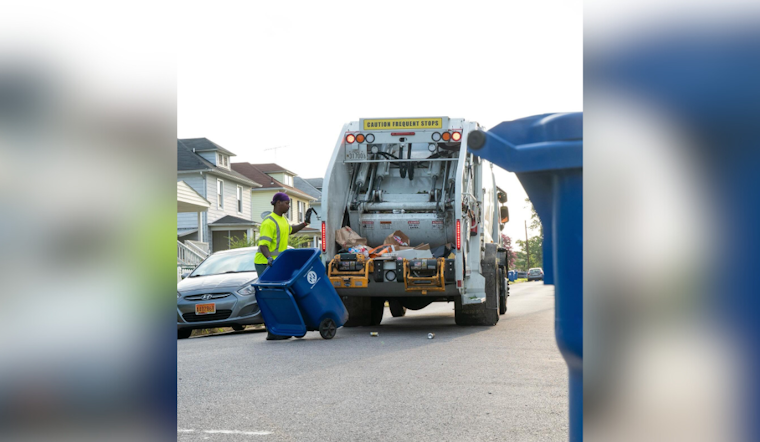
Baltimore's main landfill just got a lot quieter. Since the city more than doubled what big customers pay to dump trash at the Quarantine Road landfill, deliveries have dropped off sharply, rattling budget projections and raising a blunt question at City Hall: if the garbage is not going there, where is it going, and who is footing the bill?
On Oct. 1, the Board of Estimates signed off on raising the combined tipping fee from $67.50 to $135 per ton, a jump that took effect Nov. 1 for commercial haulers and large residential loads, according to CBS Baltimore. City officials and the Department of Public Works said the fee had not been updated since 1993 and pitched the move as a way to discourage out-of-area dumping and stretch the life of the landfill, describing it as the facility's first fee hike in over three decades. The increase was supposed to pour millions into the fiscal 2026 budget, but the early numbers are already throwing that promise off balance.
Deliveries plunge as haulers change course
Department of Public Works data show Quarantine Road took in 8,585 tons in November and December of 2024, but only 4,364 tons in the same months of 2025, a steep drop reported by The Banner. That outlet also reported that WIN Waste Innovations, the operator tied to the BRESCO incinerator, sent nearly 100,000 tons of incinerator ash to Quarantine Road in 2025, and that council members at a recent hearing blamed large private haulers for quietly shifting their loads elsewhere.
Local haulers and waste companies have not publicly challenged the overall downward trend. Industry sources, though, point out that long-term contracts, disposal capacity limits, and cross-state hauling deals can redirect large volumes of trash on short notice, especially when a key price suddenly doubles.
Community groups that pushed hard for the fee hike say the sudden decline proves that pricing can change behavior. At the same time, they are frustrated that the new money is not being steered directly into zero-waste programs. South Baltimore advocates argue that if neighbors are living with decades of pollution, the least the city can do is turn tipping-fee dollars into cleaner options.
Environmental organizer Jennifer Kunze said she was surprised and encouraged by how fast the tonnage fell, but warned that the revenue should be locked in for composting, recycling, and community protections, a concern highlighted in local reporting by Baltimore Brew. At that same May council hearing, members singled out Waste Management, Cockey's Enterprises, and Republic Services as likely candidates for rerouting material to other facilities.
The shift in trash flows is already echoing through the budget books. City briefings and the Department of Finance had baked the higher fee into fiscal 2026 expectations, but finance officials now say the change will bring in roughly $4 million less than they originally projected, and DPW data suggest the landfill could hit capacity earlier than planners assumed, figures first detailed in The Banner. The city's capital plans outline a major expansion option with an eight-figure price tag, while advocates argue that any new revenue should be locked into zero-waste infrastructure instead of disappearing into the general fund, a debate outlined by analysts at the Maryland Center on Economic Policy.
Legal and regulatory fallout
The drop in landfill deliveries is unfolding against a tense legal backdrop. Community organizers have filed a federal civil-rights complaint under Title VI over how the city treats neighborhoods near the incinerator and landfill, a move that prompted the U.S. Environmental Protection Agency to open an inquiry, according to Clean Water Action. Any eventual federal finding could reshape how City Hall directs tipping-fee revenue and whether it pursues more landfill expansion or more aggressive diversion projects.
For now, city officials say they are tracking tonnage and contract patterns while the council weighs budget amendments and the Department of Public Works looks at alternatives to expanding Quarantine Road. Residents and activists are watching closely to see whether the higher fee has bought enough time for serious investments in composting, curbside food-scrap collection, and recycling that could cut Baltimore's long-term dependence on burning and burying its trash.





