

























































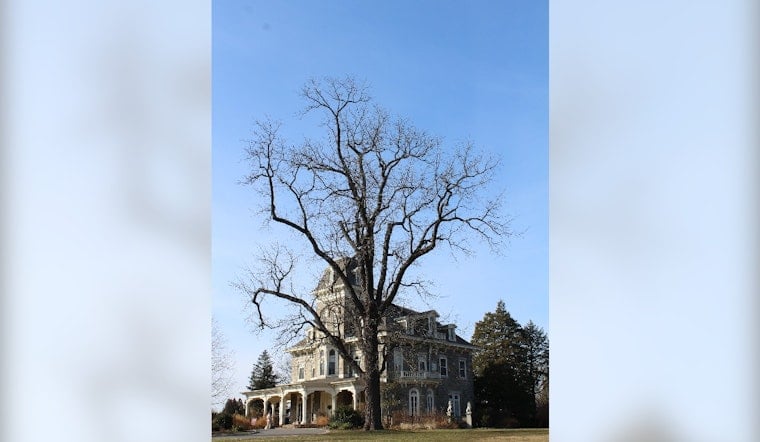
Baltimore has an official new city tree for the first time in 50 years, and it's a native giant that can soar up to 200 feet tall and live for three centuries. TreeBaltimore announced the Tuliptree as the winner on Thursday during its summer gathering at Cylburn Arboretum, ending the Chanticleer pear's run as the city's symbolic tree since 1974.
The announcement caps a public nomination and voting campaign that TreeBaltimore launched in February, according to CBS News, which reported that TreeBaltimore narrowed the field to six finalists before nearly 2,000 people cast votes. Those finalists included the overcup oak, American sycamore, blackgum, bald cypress and bitternut hickory, but the Tuliptree pulled in far more votes than its competitors, per the Department of Recreation and Parks. Mayor Brandon M. Scott said Baltimore residents had a voice in choosing the tree that will represent the city for generations, per the same account.
TreeBaltimore built its selection criteria around regional nativity, presence in Baltimore, potential to provide a large canopy, resilience to climate, pests and disease, and the ability to encourage community stewardship. The Tuliptree checked every box: it's known for its size, fast growth, useful wood, showy flowers, distinct leaf shape and cultural importance. Its scientific name, Liriodendron tulipifera, translates to “lily tree bearing tulips,” per TreeBaltimore, and its leaves resemble either a tulip flower or a cat's face depending on who's looking.
Why the Pear Had to Go
The Chanticleer pear was chosen by then-Mayor William Donald Schaefer in the 1970s, but decades of maintenance headaches followed. Parks officials acknowledge the Callery pear provided valuable canopy throughout Baltimore, but the species has proven invasive to the region, can outcompete native species, requires significant branch maintenance and is vulnerable to more severe storms. That track record helped push Maryland toward its Biodiversity and Agriculture Protection Act of 2024, which established a statewide phase-out on the commercial sale of invasive plants including the Callery pear, according to Friends of Native Trees in Takoma.
The Tuliptree, part of the magnolia family, blooms with nectar-producing flowers in late spring and can grow tall enough and with the right branch structure to host the hanging nests favored by Baltimore orioles. Baltimore's city champion tree — the tallest in Maryland — stands in Druid Park, per the seed reporting. Poet Walt Whitman once described tuliptrees as tall, graceful, robust and sinewy, a description that still fits the species growing across the region today.
Roots Tied to Maryland History
The species carries symbolic weight beyond Baltimore's city limits. Maryland's original “Liberty Tree” in Annapolis, where Revolutionary War patriots organized against British rule, was a giant tulip poplar that survived until 1999, according to Boundary Stones. Genetic descendants of that historic tree are currently being planted across all 23 Maryland counties and Baltimore City, reflecting Maryland's Revolutionary heritage.
Dr. Reginald Moore said the unveiling reflects forward-thinking work by Baltimore's forestry team, according to the seed reporting, and the Department of Recreation and Parks said the new official city tree represents Baltimore's commitment to a diverse and resilient urban forest able to withstand climate change, pests and disease. Baltimore's forestry team makes science-based decisions to protect the city's forests, environment and communities, the department said. Tuliptrees will be honored and planted throughout Baltimore streets and parks starting in 2027.
The Bigger Canopy Challenge
The symbolic win arrives as Baltimore struggles with the underlying math of its urban forest. The city's overall tree canopy coverage sits at roughly 27.4% to 28%, well below its official 40% target, according to the Baltimore Tree Trust. A comparison using U.S. Forest Service data found average canopy cover across Baltimore census tracts fell from 16.4% in 2011 to 13.6% in 2021. Reports also cite the highest canopy-loss rate in northwest residential neighborhoods.
The stakes go beyond aesthetics. Research from Baltimore Green Space found that cleared, non-forested neighborhood patches in Baltimore run at least 10 degrees Fahrenheit hotter than adjacent forested patches — a gap that matters most in paved rowhouse communities with little shade. More than 20% of Baltimore's tree canopy exists in neighborhood forest patches outside public parks, underscoring how much of the city's cooling depends on trees planted well beyond formal parkland.
Nonprofit partners are already working to close the gap. In 2025, the Baltimore Tree Trust planted 2,840 trees across 86 neighborhoods and engaged more than 2,500 local Tree Stewards. Plantings have been prioritized in low-canopy areas, while Cherry Hill and Cedonia have been mentioned in coverage of the group's work. But fitting large native species like the Tuliptree into rowhouse blocks isn't simple: sidewalk space can limit the room available for root growth, making street-tree planting more difficult.
TreeBaltimore, the city's tree-planting program, is involved in that work. Neighboring Baltimore County has taken its own run at the canopy problem, investing $4.2 million in urban reforestation between 2021 and 2024 and planting more than 7,100 trees through Operation ReTree, a program shifting focus toward historically underserved suburban neighborhoods.





