

























































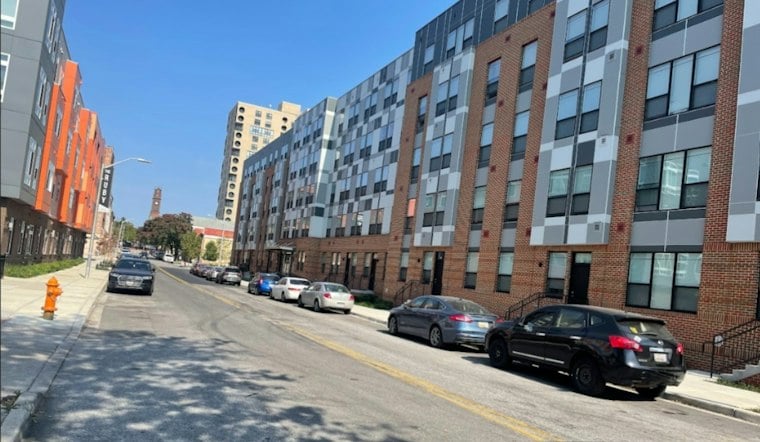
Baltimore is rebuilding one of its oldest public housing footprints into a $1 billion mixed-income neighborhood, with 411 new units already completed and more on the way near downtown and the waterfront. The Perkins-Somerset-Oldtown Transformation Plan is replacing aging public housing that traces back to the late 1930s with modern housing, new schools, parks, and recreation facilities meant to knit the isolated superblocks back into the surrounding city.
The Housing Authority of Baltimore City leads the effort, according to WMAR 2 News, which reports that public, private, and nonprofit investment flowing into the area now totals more than $540 million. That figure sits within a broader $1 billion master plan for the 244-acre PSO footprint, which calls for replacing 629 legacy public housing units and delivering approximately 1,345 total new residential units, according to Hord Coplan Macht, the design firm behind the master plan.
The federal funding that jump-started the project traces to July 2018, when the U.S. Department of Housing and Urban Development awarded a $30 million Choice Neighborhoods Implementation Grant to the Housing Authority of Baltimore City and the city, with an additional $10 million added in fiscal year 2023, per the Housing Authority of Baltimore City. The State of Maryland pledged nearly $230 million more through Project C.O.R.E., state rental financing programs, and federal Low Income Housing Tax Credit equity, the state government has said.
From Barracks-Style Blocks to Phased Construction
The original Perkins Homes were built in 1942, during World War II and an era of state-enforced segregation, as racially segregated public housing meant to house low-income families and shipyard workers, according to the Baltimore Curriculum Project. Demolition of those barracks-style buildings began in August 2021, after the Housing Authority of Baltimore City relocated all 586 resident households under policies guaranteeing a right to return to new units without rent increases, per CBS News. WMAR 2 News reports that legacy residents retain that right to return, and that community members guided the project through extensive engagement sessions dating back to 2017, with resident input shaping building designs and neighborhood amenities.
Construction in the Perkins Square portion of the site has proceeded in five phases. Phase 1 delivered 103 units in 2023, Phase 2 added 156 units in 2024, and Phase 3 finished 152 units in October 2025, bringing the total to 411 completed units, according to a report from EJP Consulting Group. Phase 4A/B reached financial closing in June 2025, the same report notes, setting up the next wave of construction. The land itself remains publicly owned by the Housing Authority of Baltimore City through Baltimore Affordable Housing Development Inc., which leases it under long-term ground agreements to private developers such as McCormack Baron Salazar to build and manage the properties, according to the Maryland Department of the Environment.
Bond Financing and a Neighborhood Built Around More Than Housing
In February 2024, the Baltimore City Planning Commission unanimously approved Tax Increment Financing legislation establishing the PSO Development District, authorizing municipal bond issuances to be repaid using property tax revenue generated by the new construction, according to the City of Baltimore. That financing mechanism lets the city fund public infrastructure within the redevelopment zone without an immediate rate hike for taxpayers elsewhere.
Beyond housing units, the master plan calls for a 1.8-acre central public park, complete-street improvements along Caroline Street, and a full renovation of the historic Chick Webb Memorial Recreation Center, per Hord Coplan Macht. WMAR 2 News reports the broader plan also includes new parks, renovated recreational facilities, and a brand-new K-8 school, alongside stronger connections linking downtown Baltimore to the waterfront. The project is also generating thousands of construction jobs for local workers, according to the station's report.
A School Rebuilt Alongside the Neighborhood
One of the anchors of that rebuilt neighborhood is City Springs Elementary/Middle School, which sits inside the PSO footprint. The school was established in 1966 and became the first charter school operated by the Baltimore Curriculum Project in 1996, and it is now slated for a relocated, state-of-the-art facility as part of the broader transformation, per the Baltimore Curriculum Project.
Baltimore public housing itself dates back to the late 1930s, and city officials describe the PSO effort as part of a broader push to build diverse communities that blend income levels while providing comprehensive resident services, WMAR 2 News reports. The Perkins-Somerset-Oldtown project continues expanding through multiple phases, with officials framing it as a source of new opportunities for families needing affordable housing.




